Davis, California · 2027
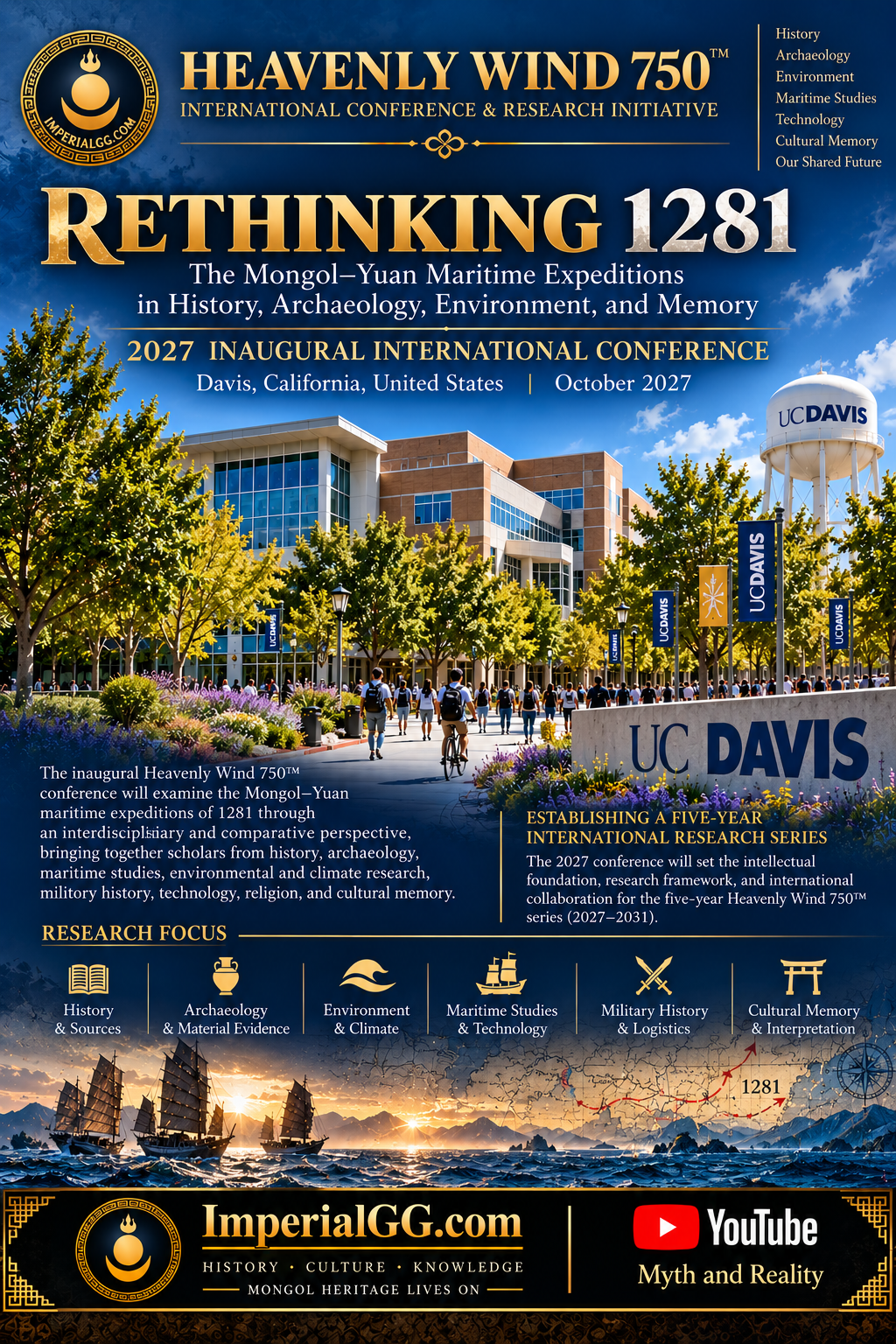
THE MONGOL WORLD OF 1281: GLOBAL AND COMPARATIVE PERSPECTIVES
The inaugural Heavenly Wind 750™ conference will examine the Mongol–Yuan maritime expeditions of 1281 within the wider history of Eurasia and East Asia. The conference brings together scholars from history, archaeology, maritime studies, environmental and climate research, military history, technology, religion, and cultural memory.
Rather than treating the “Kamikaze” narrative as a complete explanation, the conference will examine 1281 through primary sources, archaeological and maritime evidence, environmental conditions, technology, and later historical memory.
Research Focus:
Mongol Imperial History · Maritime History & Archaeology · Environment & Climate · Military History · Technology · Historical Memory
2027 marks the intellectual foundation of the five-year Heavenly Wind 750™ international research series.
2028 — MONGOLIA
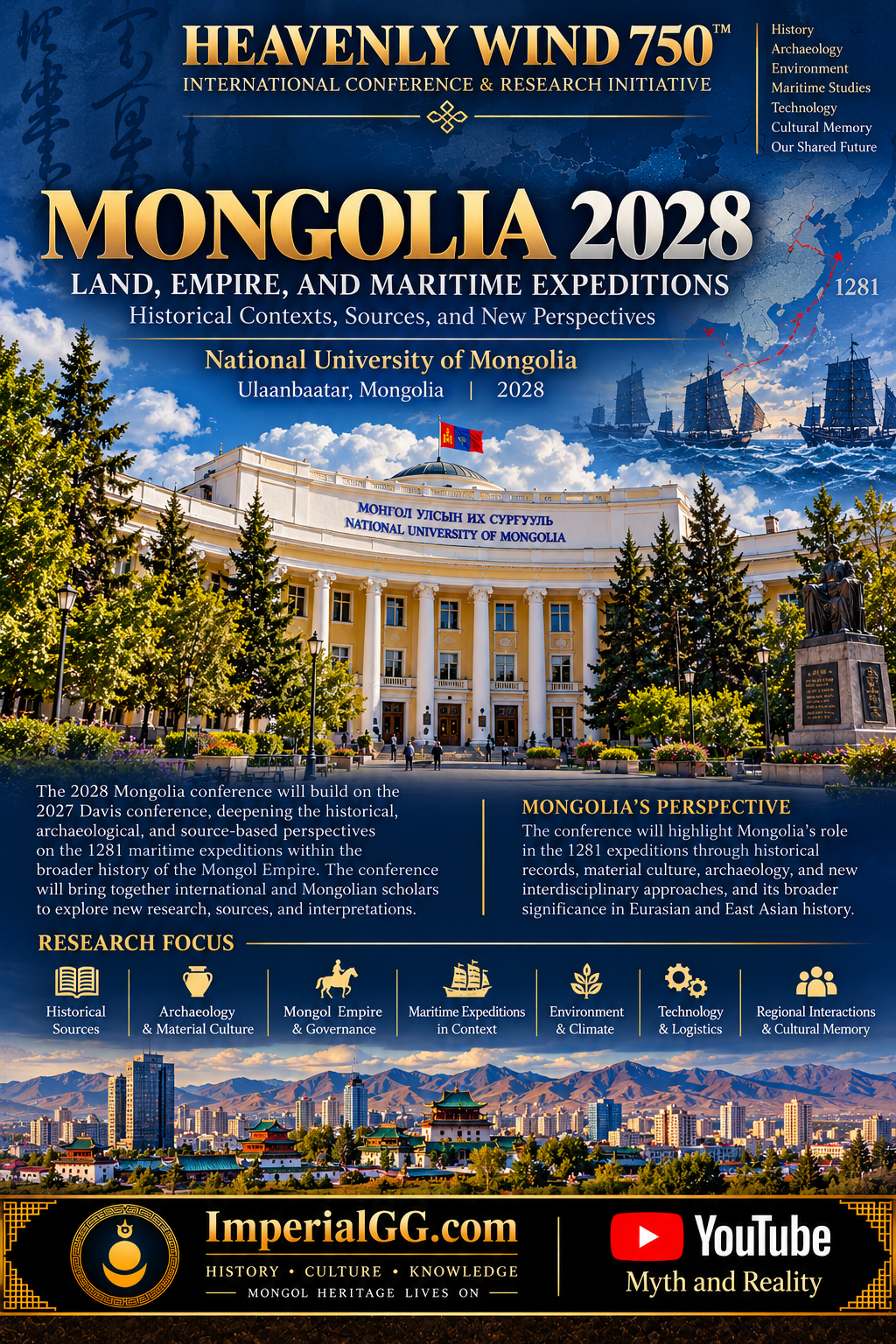
IMPERIAL CONTEXT & STEPPE WORLDVIEW
November 26, 2028 · Ulaanbaatar, Mongolia
The 2028 Mongolia Conference will continue the research framework established at the 2027 inaugural conference in the United States, focusing on the imperial and steppe context of the late thirteenth century.
The conference will examine the political structure of the Mongol Empire, imperial decision-making, steppe political traditions, military organization, economic networks, and the broader historical environment in which the Yuan maritime campaigns of 1281 emerged.
Bringing together Mongolian and international scholars, the conference will place the 1281 expeditions within their wider imperial, political, military, and economic context, while advancing the cumulative research program toward the 2029 conference in China.
MONGOLIA 2028 therefore represents the second stage of the five-year research trajectory: from the global comparative framework established in 2027 to the imperial and steppe context of the Mongol world.
2029 — CHINA
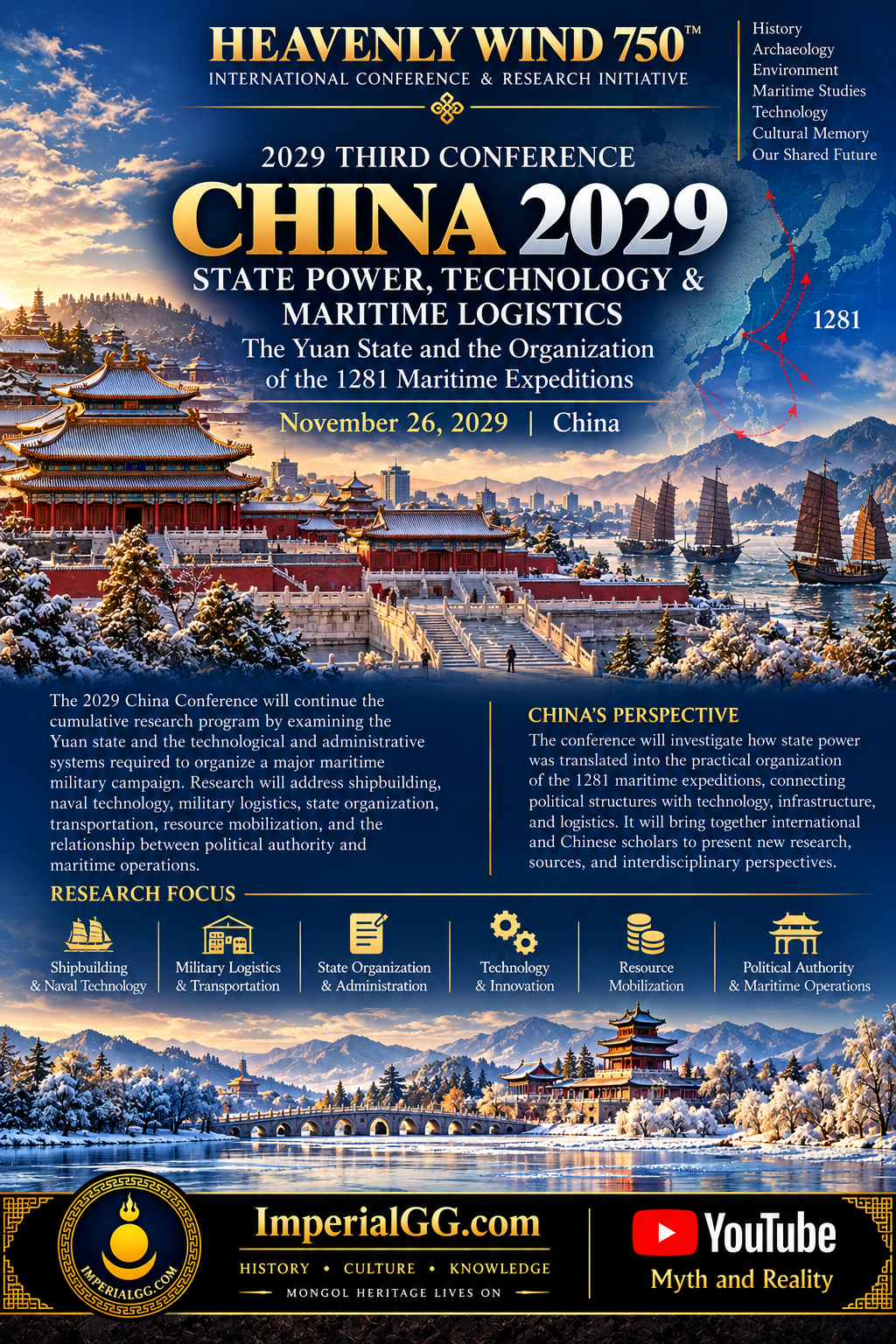
STATE POWER, TECHNOLOGY & MARITIME LOGISTICS
November 26, 2029 · China
The 2029 China Conference will continue the cumulative research program by examining the Yuan state and the technological, administrative, and logistical systems that supported the Mongol–Yuan maritime expeditions of 1281.
Particular attention will be given to shipbuilding and naval technology, military logistics, transportation, resource mobilization, state organization, and the relationship between political authority and maritime operations.
Building on the imperial and steppe perspectives developed in Mongolia in 2028, the conference will investigate how state power was translated into the practical organization of a large-scale maritime campaign, connecting political structures with technology, infrastructure, and logistics.
CHINA 2029 therefore represents the third stage of the five-year research trajectory: from imperial context to the state, technology, and maritime systems that made the 1281 expedition possible.
2030 — SOUTH KOREA
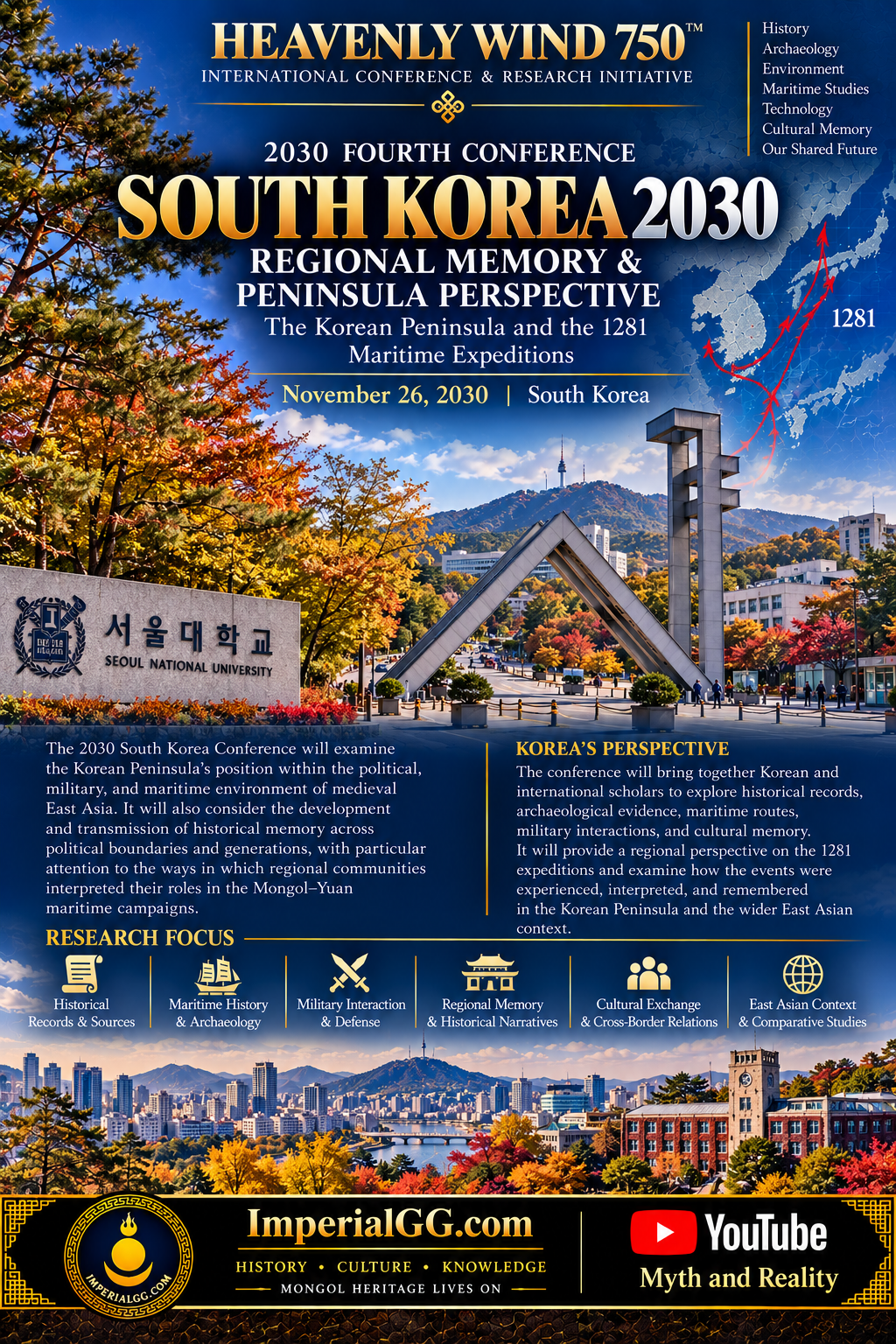
REGIONAL MEMORY & PENINSULA PERSPECTIVE
November 26, 2030
The fourth conference will examine the Korean Peninsula’s position within the political, military, and maritime environment of medieval East Asia.
It will also consider the development and transmission of historical memory across political boundaries and generations, with particular attention to the ways in which regional communities interpreted their roles in the Mongol–Yuan maritime campaigns.
RESEARCH FOCUS
Historical Records & Sources · Maritime History & Archaeology · Military Interaction & Defense · Regional Memory & Historical Narratives · Cultural Exchange & Cross-Border Relations · East Asian Context & Comparative Studies
2031 — JAPAN
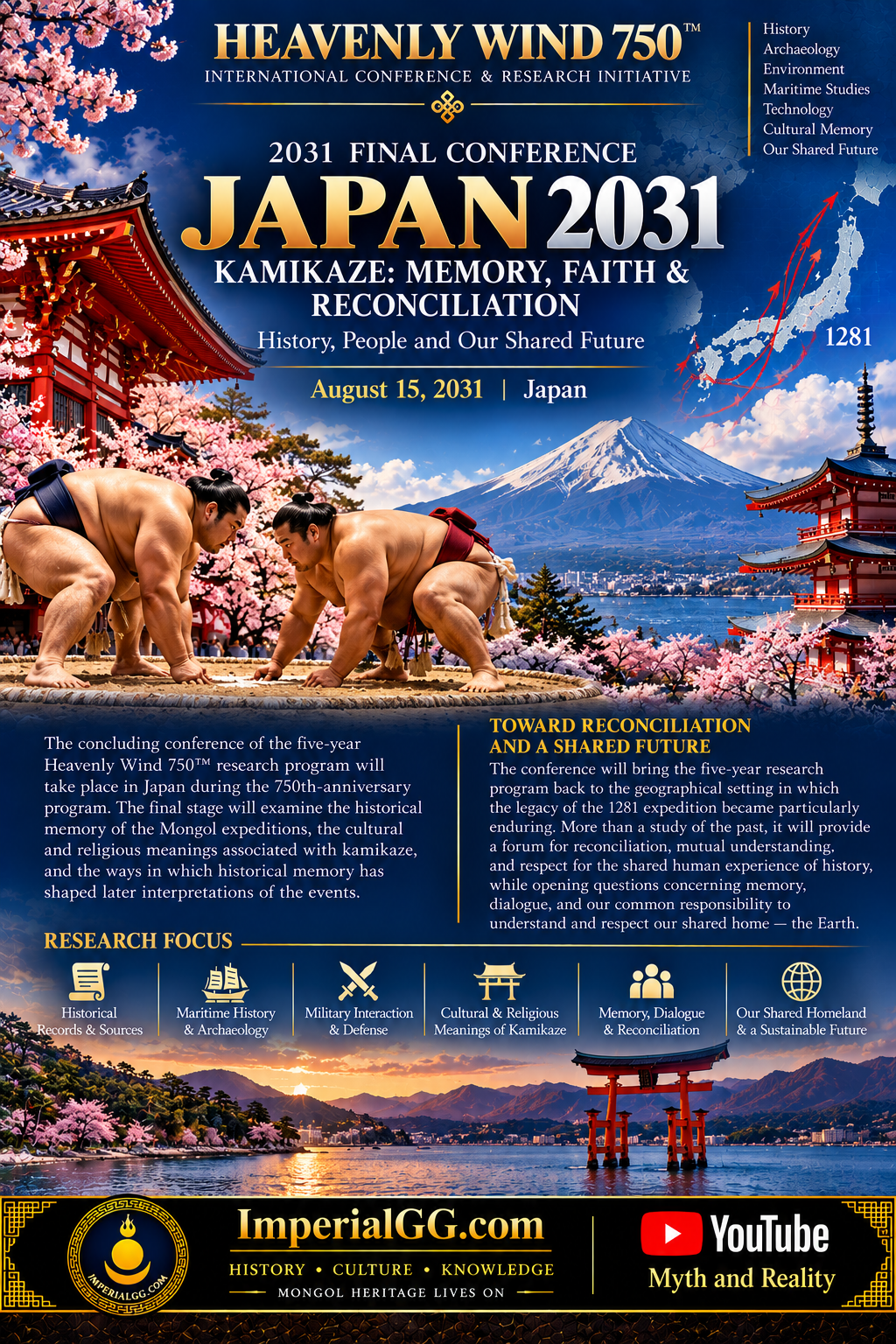
KAMIKAZE: MEMORY, FAITH & RECONCILIATION
August 15, 2031 · Japan
The concluding conference of the five-year Heavenly Wind 750™ research program will take place in Japan during the 750th-anniversary program.
The final stage will examine the historical memory of the Mongol–Yuan expeditions, the cultural and religious meanings associated with kamikaze, and the ways in which historical memory has shaped later interpretations of the events.
More than a study of the past, the conference will provide a forum for reconciliation, mutual understanding, and respect for the shared human experience of history. It will explore how societies can remember conflict without allowing historical memory to become a barrier between peoples.
The conference will bring the five-year research program back to the geographical setting in which the legacy of the 1281 expedition became particularly enduring. From this setting, scholars and participants will consider questions of memory, dialogue, reconciliation, and our shared responsibility to understand and respect our common homeland—the Earth.
FINAL THEME
FROM MEMORY TO UNDERSTANDING
FROM CONFLICT TO RECONCILIATION
FROM THE PAST TO A SHARED FUTURE
ONE RESEARCH PROGRAM, FIVE REGIONAL PERSPECTIVES
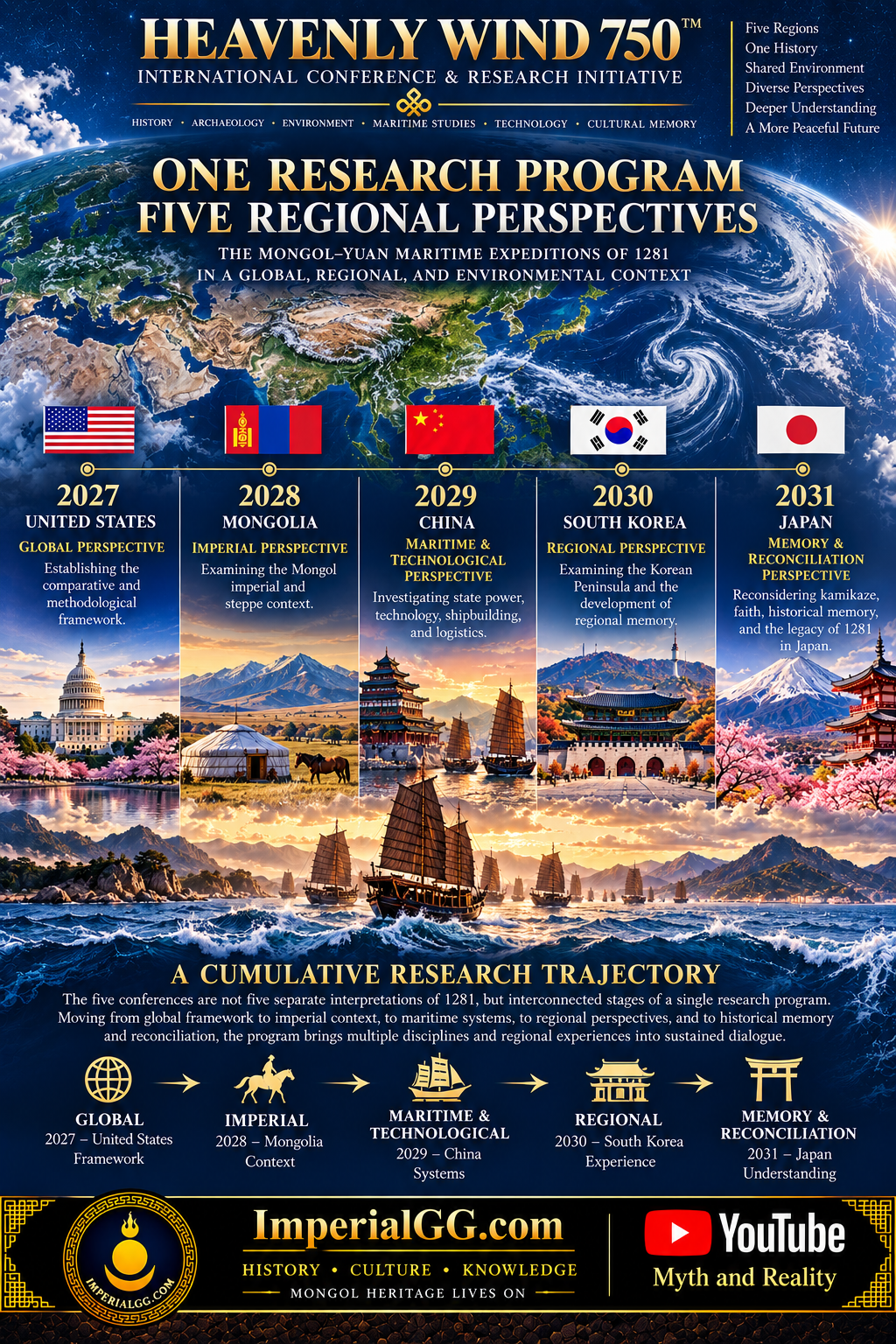
The Heavenly Wind 750™ conference series is conceived as a single cumulative research program rather than a sequence of independent conferences. Each meeting examines a distinct geographical and thematic dimension of the historical problem surrounding the Mongol–Yuan maritime expeditions of 1281, while building upon the questions, evidence, and methodological approaches developed in the preceding stage.
The five conferences therefore do not seek to produce five separate interpretations of 1281. Rather, they constitute five interconnected stages of one research trajectory, moving from broad comparative and methodological inquiry toward increasingly specific imperial, technological, regional, and historical-memory perspectives.
2027 — GLOBAL
Establishing the Comparative and Methodological Framework
The inaugural conference establishes the intellectual and methodological foundation of the five-year program, defining the principal research questions and establishing a framework for interdisciplinary and comparative inquiry.
2028 — IMPERIAL
The Mongol Imperial and Steppe Context
The second stage examines the political, military, economic, and social structures of the Mongol imperial and steppe world from which the Yuan maritime campaigns emerged.
2029 — MARITIME & TECHNOLOGICAL
State Power, Technology, and Maritime Logistics
The third stage investigates the technological, administrative, and logistical dimensions of maritime warfare, including shipbuilding, transportation, resource mobilization, and the organization of large-scale military operations.
2030 — REGIONAL
The Korean Peninsula and Historical Memory
The fourth stage examines the Korean Peninsula within the political, military, and maritime environment of medieval East Asia, while investigating the formation and transmission of regional historical memory across political boundaries and generations.
2031 — MEMORY & RECONCILIATION
Kamikaze, Faith, Historical Memory, and the Legacy of 1281
The concluding stage returns to Japan, where the historical legacy of the 1281 expedition became particularly enduring. It examines kamikaze, religious and cultural interpretations, historical memory, dialogue, reconciliation, and the continuing significance of the past for relationships between peoples.
A CUMULATIVE RESEARCH TRAJECTORY
Taken together, the five stages form one integrated research program. The geographical movement from the United States to Mongolia, China, South Korea, and Japan is therefore not simply a sequence of locations. It represents a progression of scholarly inquiry:
GLOBAL → IMPERIAL → MARITIME & TECHNOLOGICAL → REGIONAL → MEMORY & RECONCILIATION
The program moves from framework to context, from context to systems, from systems to regional experience, and from regional experience to historical memory and reconciliation.
Its central purpose is not to replace one established narrative with another, but to bring historical sources, archaeology, environmental evidence, maritime studies, technology, regional perspectives, and cultural memory into sustained interdisciplinary dialogue.
Five conferences. Five regional perspectives. One research program.