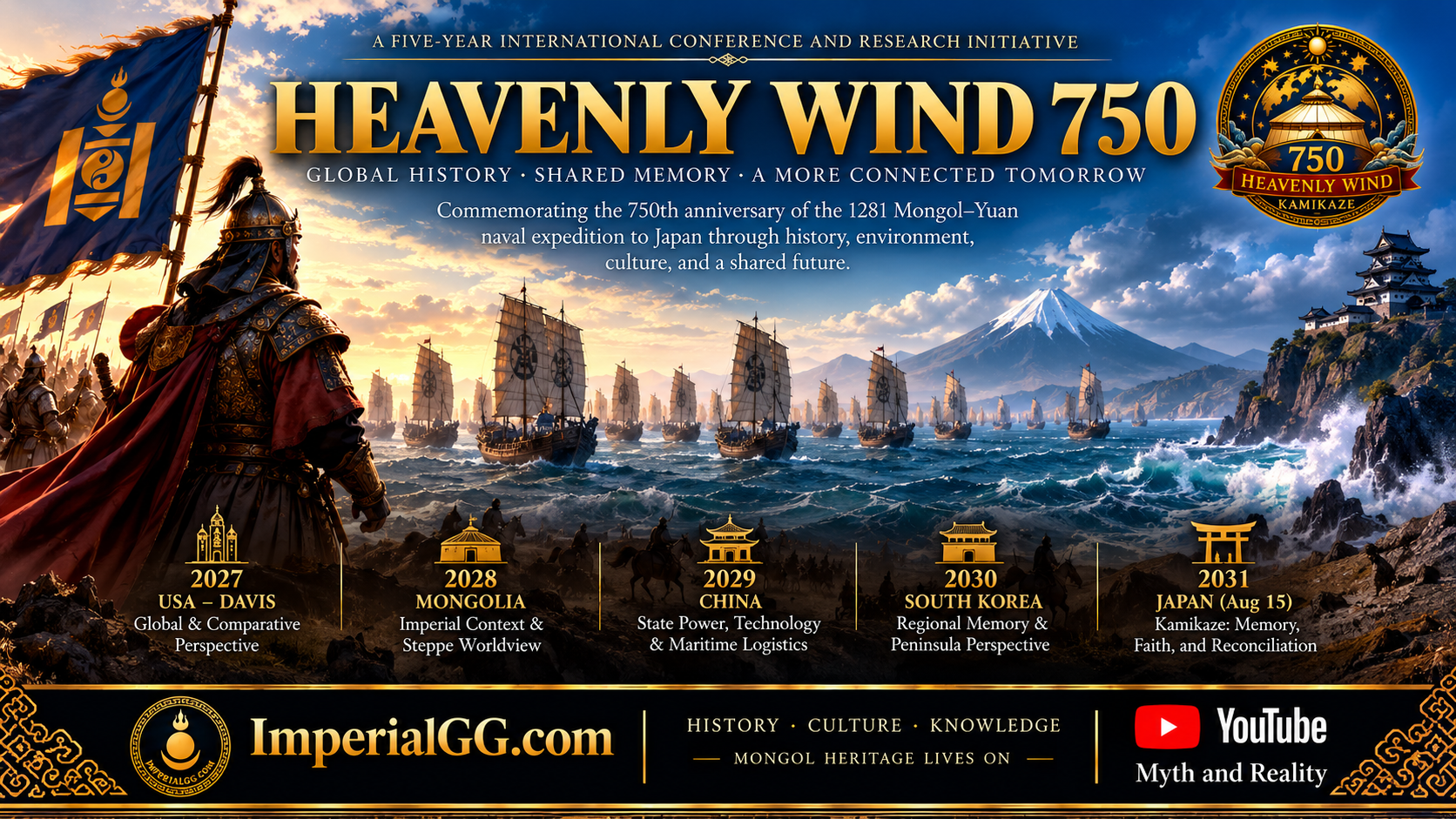
MISSION
VISION
OUR VALUES
To advance interdisciplinary research into the Mongol–Yuan maritime expeditions of 1281 and their historical, environmental, and cultural dimensions.
We bring together scholars from history, archaeology, environmental science, maritime studies, and related fields to examine evidence and deepen our understanding of the past.
To create an international platform where scholars and researchers can examine history through evidence, collaboration, and open scholarly inquiry.
Heavenly Wind 750 connects researchers across countries and disciplines to explore a shared chapter of Eurasian and East Asian history.
Evidence · Collaboration · Discovery
We distinguish documented evidence from interpretation, hypothesis, and historical memory. We encourage interdisciplinary research, open scholarly dialogue, and the examination of historical questions from multiple perspectives.
KUBLAI KHAN’S INVASIONS OF VIETNAM (1285–1288)
KUBLAI KHAN’S EXPEDITION TO JAVA (1293)
THE INTERNAL STRUGGLE OF THE MONGOL EMPIRE
THE LANGUAGE OF THE ORKHON INSCRIPTIONS: A MONGOLIC HYPOTHESIS AND THE PROBLEM OF HISTORICAL LINGUISTIC CLASSIFICATION
THE LEGITIMACY OF THE GREAT KHANATE: ARIQ BÖKE, QUBILAI, AND THE MILITARY TAKEOVER OF IMPERIAL POWER, 1259–1264
THE MONGOLIAN WORLD, 1264–1294
MYTH & REALITY I
BEFORE HISTORY WAS WRITTEN, HUMANITY REMEMBERED
MYTH, ORAL TRADITION, AND THE HUMAN MEMORY OF THE PAST
AUTHOR’S THESIS
Humanity did not begin to remember its past with the invention of writing. Long before chronicles, archives, manuscripts, and libraries became the principal instruments through which civilizations recorded their histories, communities transmitted knowledge of ancestors, migrations, conflicts, sacred places, rulers, heroes, natural forces, and the origins of the world through speech, song, ritual, genealogy, legend, epic, and myth. These traditions were not uniform, nor were they necessarily intended to preserve events in the precise chronological form expected of modern historical writing. Yet they constituted systems of cultural memory through which societies selected, interpreted, performed, and transmitted knowledge from one generation to the next.[1]
The word myth therefore requires particular care. In modern everyday English, myth is frequently used as a synonym for something false or invented; in the study of mythology, anthropology, folklore, and oral tradition, however, the term refers to a much broader category of traditional narrative. UNESCO places myths alongside legends, tales, epic songs and poems, prayers, chants, songs, and other forms of oral expression, emphasizing that such traditions transmit knowledge, cultural and social values, and collective memory. The important distinction is that a myth is not automatically a historical record, but neither does its legendary or supernatural character make it historically meaningless.[2]
The historian’s question, therefore, should not begin and end with “Did this happen exactly as the story tells it?” A more productive question is “What kind of memory does this tradition preserve, how was that memory transmitted, and what can be tested against independent evidence?” This distinction is fundamental because oral traditions are processes rather than fixed texts. Jan Vansina defines oral tradition as the transmission of messages from one generation to another by word of mouth, emphasizing that every surviving version represents a particular moment within a longer process of transmission. The tradition may therefore contain continuity, adaptation, performance, interpretation, and change at the same time.[3]
This does not make oral tradition useless to historians. It makes its interpretation more demanding.
I. THE HUMAN ARCHIVE BEFORE THE WRITTEN ARCHIVE
Before writing became a widespread technology of administration and historical record, human societies had to preserve knowledge through human memory itself. Information could be transmitted through repeated narration, poetic structure, musical performance, ritual, genealogy, proverbial language, and formal storytelling, while the authority to preserve particular bodies of knowledge could belong to specialized individuals or social groups. UNESCO notes that in many societies professional performers were regarded as guardians of collective memory, and specifically identifies traditions such as the African griot and dyelli alongside oral traditions found in Europe, North America, and elsewhere.[4]
This form of transmission should not be imagined as a simple process in which one individual memorized a completely fixed text and repeated it word for word for centuries. Oral traditions can involve reproduction, improvisation, and creation, with the form of a narrative influenced by the performer, audience, social occasion, and historical circumstances. This explains why a single traditional narrative can survive in multiple versions while retaining a recognizable core.[5] In historical research, such variation is not merely an inconvenience; it is also evidence that allows scholars to investigate how communities transformed, emphasized, or reinterpreted their inherited memories.
Jan Vansina’s methodological contribution is particularly important here because he distinguishes the existence of an oral tradition from the historian’s evaluation of its historical content. Oral material must be examined in relation to its transmission, performance, social context, chronology, possible transformations, and relationship to other evidence. In this sense, an oral tradition is neither automatically true nor automatically false: it is a source whose historical value must be assessed.[6]
The distinction is crucial for MYTH & REALITY.
Myth should not be believed simply because it is ancient.
Myth should not be dismissed simply because it is legendary.
Myth should be investigated.
II. ASIA: WHEN HISTORY LIVES IN EPIC
Asia contains some of the world’s most extensive traditions in which epic performance, genealogy, mythology, social values, and memories of the past have remained interconnected.
The Mongolian Tuuli provides an especially important example for understanding this relationship. UNESCO describes Mongol Tuuli as an oral tradition consisting of heroic epics ranging from hundreds to thousands of lines and incorporating blessings, praise, spells, myths, folk songs, and other forms of traditional expression. Epic singers combine memory, vocal performance, improvisation, music, and theatrical elements, while the epics themselves reflect nomadic lifestyles, social behavior, religion, mentality, and imagination. UNESCO further notes that these performances transmit historical knowledge and cultural values to younger generations.[7]
This does not mean that every episode of a Mongolian epic should be read as a literal chronicle. Rather, the epic preserves a much larger cultural world in which historical memory, social ideals, religious imagination, geography, heroism, and ancestral identity are interwoven. The value of the tradition therefore lies not only in whether an individual supernatural episode can be independently verified, but also in what the continuity of the tradition reveals about the society that preserved it.
A comparable phenomenon can be observed in the Manas tradition. UNESCO describes Manas as an oral epic whose performances preserve major historical events important to the Kyrgyz community, crystallize traditions and beliefs, and transmit knowledge to younger generations. Regional versions differ, yet the tradition continues to function as a major expression of cultural identity and historical memory.[8]
These examples demonstrate why the category of “myth” should not be isolated from the larger category of oral tradition. Myth, legend, genealogy, heroic epic, ritual, and historical memory can exist together within the same cultural system.
III. EUROPE: HOMER AND THE MEMORY OF THE HEROIC PAST
Ancient Greece offers perhaps the most extensively studied example of the transformation of oral tradition into written literature: the Iliad and the Odyssey traditionally associated with Homer.
Modern Homeric scholarship has demonstrated the importance of oral-formulaic composition in understanding these poems. The Cambridge Guide to Homer explains that the poems that eventually became the Iliad and Odyssey emerged from oral performance traditions operating over long periods, while the work of Milman Parry and Albert Lord demonstrated how formulaic language could enable trained singers to compose and perform extended epic poetry orally.[9]
This is more than a literary curiosity. It changes how we understand the relationship between the written Homeric text and the society from which it emerged. The poems contain repeated formulaic expressions, inherited themes, heroic genealogies, descriptions of warfare, social customs, religious ideas, and geographical memories. Their written form represents the preservation of a much older tradition of performance and composition.[10]
At the same time, the Homeric epics demonstrate why myth and historical evidence must not be confused. The existence of Troy as an archaeological site does not establish that every event described in the Iliad occurred exactly as narrated, just as the presence of historical places and peoples within an epic does not automatically transform the epic into a contemporary documentary record. Instead, archaeology and epic literature answer different kinds of questions: archaeology investigates material remains, while epic tradition reveals how a society remembered and imagined its heroic past.
The historian’s task is to place these forms of evidence into dialogue rather than allowing one to replace the other.
IV. AFRICA: THE STORYTELLER AS KEEPER OF HISTORY
The African continent offers some of the clearest examples of oral tradition functioning simultaneously as cultural memory, genealogy, political knowledge, and historical narrative. In West Africa, griots or jeliw have traditionally served not simply as entertainers but as storytellers, poets, genealogists, musicians, and custodians of inherited knowledge. The Metropolitan Museum of Art notes that epics concerning heroic rulers and warriors, transmitted by jeliw in the western Sudan, preserve detailed political traditions and that some of this oral historical material can be compared with contemporary Arabic written sources.[11]
The Sunjata tradition concerning the founder of the Mali Empire is particularly important in this context. Its historical and legendary dimensions have developed through performance, and the tradition remains capable of incorporating contemporary references rather than functioning as a completely frozen text. This distinguishes a living oral tradition from a manuscript whose wording has remained fixed since its preservation.[12]
Another striking example is the Epic of Samba Gueladio of Mauritania. UNESCO records that the tradition is transmitted through storytelling and song and performed by griots, while the communities concerned regard it as an oral historical document recounting events associated with a turning point in the history of Fouta Toro. The same tradition simultaneously functions as history, legend, moral instruction, and a means of transmitting ancestral values.[13]
The Manden Charter, associated with the formation of the Mali Empire in the thirteenth century, provides an even more significant example of oral transmission carrying political and social memory. UNESCO describes the Charter as having been preserved mainly in oral form and transmitted within Malinke communities through ritualized oral recitation. Its remembered content concerns social peace, human dignity, education, political integrity, food security, freedom of expression and trade, and other principles.[14]
These examples demonstrate that oral tradition does not consist solely of stories about gods and supernatural heroes. It can also preserve law, political memory, genealogy, social institutions, and historical claims.
V. THE AMERICAS: COSMOLOGY, MIGRATION, AND COLLECTIVE MEMORY
The Popol Vuh of the K’iche’ Maya provides a particularly important example of how oral tradition can cross the boundary between spoken memory and written preservation. The surviving text was transcribed in the early eighteenth century by the Dominican friar Francisco Ximénez, who recorded the K’iche’ text and provided a Spanish translation. The Library of Congress describes the work as containing K’iche’ traditions concerning cosmology, origins, migrations, spiritual history, and the chronology of rulers, while also noting that the text appears to have been designed for oral presentation and may derive from earlier forms of the tradition.[15]
This history of transmission is important because the surviving manuscript is not necessarily the beginning of the tradition. It represents a later written preservation of knowledge whose origins reach into earlier K’iche’ cultural memory.
The distinction between oral tradition and written text is therefore not always a simple chronological division. A community may possess a tradition for generations, develop written aids or manuscripts, and later produce another written version in response to new historical circumstances. The resulting document can preserve several chronological layers of cultural memory at once.
The Popol Vuh consequently illustrates a central problem in the study of myth: the surviving written text may be much younger than the traditions and memories embedded within it.
VI. WHAT DOES A MYTH ACTUALLY PRESERVE?
If myths are not automatically historical chronicles, what can they preserve?
They can preserve memory of origins, even when those origins are expressed through supernatural narratives. They can preserve genealogical relationships, even when later generations reshape them. They can preserve landscape and place-memory, especially when particular mountains, rivers, valleys, or sacred locations become associated with ancestral events. They can preserve social values, because heroic narratives frequently define the qualities that a community considers admirable or dangerous. They can preserve political memory, as seen in traditions concerning kings, founders, dynasties, migrations, and wars. They can also preserve fragments of historical experience that may become difficult to distinguish from later interpretation.
This is precisely why oral tradition must be treated critically rather than romantically.
The existence of a traditional story does not prove that the event occurred exactly as remembered. Yet the survival of a story across generations is itself a historical phenomenon: it tells us that a community considered particular people, places, events, values, or origins important enough to remember and transmit.
The historian therefore has two separate questions to investigate: What happened? and How was what happened remembered?
The first may be approached through archaeology, contemporary written records, inscriptions, environmental evidence, linguistics, and other independent sources. The second requires attention to oral tradition, mythology, ritual, genealogy, performance, and collective memory. The two questions overlap, but they are not identical.
VII. FROM MYTH TO HISTORY: A METHOD OF COMPARISON
This distinction provides the methodological foundation of MYTH & REALITY. A traditional narrative should first be documented in its own cultural and linguistic context. Researchers must then examine its variants, transmission history, performers, chronology, geographical references, and social function before comparing its claims with independent evidence. Archaeology can test material claims; historical linguistics can examine linguistic relationships and borrowed terminology; genetics can investigate population history where appropriate; environmental studies can test claims concerning climate and landscape; and written sources can provide independent chronological evidence. The result is not a simple equation in which myth becomes fact.
Rather, the process is: MYTH→ ORAL TRADITION → MEMORY → COMPARATIVE EVIDENCE → HISTORICAL INTERPRETATION
This approach is consistent with Vansina’s insistence that oral tradition must be examined as a process of transmission and then assessed for its historical usefulness rather than accepted or rejected wholesale.[16] It also explains why oral traditions deserve serious scholarly attention even when they contain supernatural elements. A dragon, spirit, miracle, or divine ancestor may not be independently verifiable as a historical event. But the tradition that remembers the dragon, spirit, miracle, or ancestor is itself historical evidence of human culture.
VIII. MYTH AND REALITY ARE NOT SIMPLY OPPOSITES
Perhaps the greatest mistake is to imagine that there are only two categories:
MYTH = FALSE
REALITY = TRUE
Human memory is more complicated than that. A traditional narrative may contain a historical place, a remembered migration, an ancestral genealogy, a political conflict, a sacred interpretation, and later literary elaboration within the same story. Some elements may be independently corroborated; others may remain uncertain; still others may belong clearly to symbolic or religious imagination.
The task of scholarship is to separate these layers without destroying the tradition itself. That is why the study of myth is not an escape from history.
It is one of the ways in which we can study how human beings remembered history.
From the Mongolian steppe to ancient Greece, from the oral historians of West Africa to the Maya traditions of Mesoamerica, societies preserved knowledge through forms that preceded or existed alongside written history. These traditions differed profoundly in language, religion, social organization, and historical experience, yet they shared one fundamental human function: the transmission of remembered knowledge across generations.[1
CONCLUSION
Humanity did not begin writing its history when writing was invented. Humanity had already been remembering.
Before the manuscript there was the voice; before the archive there was memory; before the written chronicle there were songs, genealogies, rituals, legends, epics, and myths through which communities interpreted the world inherited from their ancestors.
The written record gave history a new permanence, but it did not create the human desire to remember. That desire is much older. A myth may not tell us exactly what happened, and it should never be treated as a substitute for independent evidence. Yet a myth can reveal what a community remembered, what it valued, what it feared, whom it considered an ancestor, which landscapes it regarded as meaningful, and how it understood its place within a larger human and natural world.
MYTH IS NOT SIMPLY THE OPPOSITE OF REALITY.
MYTH IS PART OF THE HUMAN RECORD OF HOW REALITY WAS REMEMBERED. And that is where the study of MYTH & REALITY begins.
FOOTNOTES
[1] Jan Vansina, Oral Tradition as History (Madison: University of Wisconsin Press, 1985), 3–32, especially Chapter 1, “Oral Tradition as Process.” Vansina defines oral tradition as a process in which messages are transmitted orally across generations and emphasizes that each surviving rendering represents a stage within that process. JSTOR
[2] UNESCO, “Oral Traditions and Expressions Including Language as a Vehicle of the Intangible Cultural Heritage,” UNESCO Intangible Cultural Heritage. UNESCO identifies myths, legends, epic songs and poems, tales, chants, prayers, and other spoken forms as components of oral tradition and states that they transmit knowledge, cultural and social values, and collective memory. ICH UNESCO
[3] Vansina, Oral Tradition as History, 3–32. See also the discussion of “Performance, Tradition, and Text,” 33–67, where Vansina examines the relationship between oral transmission, performance, and textualization. JSTOR
[4] UNESCO, “Oral Traditions and Expressions Including Language as a Vehicle of the Intangible Cultural Heritage.” UNESCO specifically notes that in many societies professional performers function as guardians of collective memory and identifies African griots and dyelli among such traditions. ICH UNESCO
[5] Ibid. UNESCO emphasizes that oral traditions vary according to genre, context, and performer and may involve a combination of reproduction, improvisation, and creation. ICH UNESCO
[6] Vansina, Oral Tradition as History, 186–227, especially Chapter 7, “Oral Tradition Assessed.” The work’s structure explicitly moves from the process of oral tradition and its performance to the question of how such traditions may be evaluated as historical sources. JSTOR
[7] UNESCO, “Mongol Tuuli, Mongolian Epic,” inscription 2009, Representative/Intangible Cultural Heritage documentation. UNESCO describes Mongol Tuuli as a living oral tradition combining heroic epic, myth, folk song, performance, improvisation, and musical composition and notes its role in transmitting historical knowledge and cultural values. ICH UNESCO
[8] UNESCO, “Manas,” inscription 2009. UNESCO describes the Manas epic as an oral tradition recording major historical events important to the Kyrgyz community and transmitting traditions, beliefs, history, and knowledge to younger generations. ICH UNESCO
[9] Casey Dué et al., eds., The Cambridge Guide to Homer (Cambridge: Cambridge University Press, 2020), Introduction. The Cambridge volume summarizes the scholarly consensus that the earliest forms of the Iliad and Odyssey belonged to oral performance traditions and discusses the importance of Milman Parry and Albert Lord’s oral-formulaic research. Cambridge University Press
[10] Albert B. Lord, The Singer of Tales, 2nd ed. (Cambridge, MA: Harvard University Press, 1960), 13–30, 68–123, 124–140, 141–197. Lord’s study examines performance and training, formulaic composition, themes, writing and oral tradition, and the application of oral-formulaic theory to Homer. Google Books
[11] The Metropolitan Museum of Art, “Ways of Recording African History.” The essay notes that heroic epics performed by jeliw in western Sudan preserve political history that has, in some cases, been corroborated by contemporaneous Arabic written sources; it also discusses royal chronologies maintained orally in Central Africa. The Metropolitan Museum of Art
[12] The Metropolitan Museum of Art, “Epic Poetry and Architecture,” Sahel: Art and Empires on the Shores of the Sahara. The exhibition material discusses the continuing oral performance of Sahelian epics, the role of Mande griots/jeliw, and the Sunjata tradition concerning the foundation of the Mali Empire. The Metropolitan Museum of Art
[13] UNESCO, “The Epic of Samba Gueladio,” inscription 2024. UNESCO records that the epic is transmitted through storytelling and song, performed by griots, and regarded by the communities concerned as an oral historical document associated with the history and collective consciousness of Fouta Toro. ICH UNESCO
[14] UNESCO, “Manden Charter, Proclaimed in Kurukan Fuga,” inscription 2009. UNESCO describes the Charter as a mainly oral tradition associated with the early thirteenth-century formation of the Mandingo Empire and notes its continued transmission within Malinke communities. ICH UNESCO
[15] Library of Congress, “Popol Vuh: Transcription in Quiché Mayan and Translation into Spanish.” The Library describes the work as preserving K’iche’ Maya traditions concerning cosmology, origins, migrations, spiritual history, rulers, and traditions; the surviving manuscript was transcribed by Francisco Ximénez in the early eighteenth century and appears to derive from earlier forms of the tradition. Library of Congress
[16] Vansina, Oral Tradition as History, 147–185, “Tradition as Information Remembered,” and 186–227, “Oral Tradition Assessed.” These sections address the relationship between memory, transmission, and the historian’s evaluation of oral material. JSTOR
[17] UNESCO, “Oral Traditions and Expressions,” and the comparative examples of Mongol Tuuli, Manas, African epic traditions, and Popol Vuh. Together these sources demonstrate the global breadth of oral traditions as vehicles of knowledge, values, identity, and collective memory. ICH UNESCO
SELECTED BIBLIOGRAPHY
- Lord, Albert B. The Singer of Tales. Cambridge, MA: Harvard University Press, 1960. Google Books
- Vansina, Jan M. Oral Tradition as History. Madison: University of Wisconsin Press, 1985. JSTOR
- Dué, Casey, et al., eds. The Cambridge Guide to Homer. Cambridge: Cambridge University Press, 2020. Cambridge University Press
- UNESCO. Oral Traditions and Expressions Including Language as a Vehicle of the Intangible Cultural Heritage. ICH UNESCO
- UNESCO. Mongol Tuuli, Mongolian Epic. ICH UNESCO
- UNESCO. Manas. ICH UNESCO
- UNESCO. The Epic of Samba Gueladio. ICH UNESCO
- UNESCO. Manden Charter, Proclaimed in Kurukan Fuga. ICH UNESCO
- Library of Congress. Popol Vuh: Transcription in Quiché Mayan and Translation into Spanish.
1274 & 1281 MONGOL INVASIONS OF JAPAN — CORE BOOKS
Thomas D. Conlan
In Little Need of Divine Intervention: Takezaki Suenaga’s Scrolls of the Mongol Invasions of Japan
2001 — Cornell University, East Asia Program, Ithaca, New York.
Cornell East Asia Series, No. 113. Google BooksStephen Turnbull
The Mongol Invasions of Japan 1274 and 1281
2010 — Osprey Publishing, Oxford.
Campaign Series, No. 217. Osprey PublishingJames P. Delgado
Khubilai Khan’s Lost Fleet: In Search of a Legendary Armada
2010 — University of California Press, Berkeley. University of California PressRandall James Sasaki
The Origins of the Lost Fleet of the Mongol Empire
2015 — Texas A&M University Press, College Station. Texas A&M University PressJudith Vitale
The Historical Writing of the Mongol Invasions in Japan
2024 — Harvard University Asia Center, Cambridge, Massachusetts.
Harvard East Asian Monographs, Vol. 474.
PRIMARY SOURCES
I. JAPANESE PRIMARY SOURCES
Takezaki Suenaga — Mōko Shūrai Ekotoba (Illustrated Account of the Mongol Invasions), c. 1293 — Imperial Household Agency, Tokyo.
13-р зууны сүүлчээр бүтээгдсэн зурагт гар бичмэл. 1274, 1281 оны дайнд оролцсон самурай Такэзаки Сүэнагагийн өөрийн байлдааны туршлага, гавьяаг дүрсэлдэг. Дайны дүрслэлийн хамгийн чухал япон анхдагч эх сурвалжийн нэг. National Diet Library, JapanAnonymous Court Compilers — Azuma Kagami (The Mirror of the East), c. 1300–1301 — Kamakura Historical Tradition, Japan.
Камакүрагийн сёгунатын үйл явдлыг тэмдэглэсэн шастир. 1266 он хүртэлх улс төр, цэрэг, засаг захиргааны мэдээллийг өгдөг бөгөөд Монголын довтолгооны өмнөх Камакүрагийн төрийн нөхцөл байдлыг ойлгоход чухал. National Archives of JapanAnonymous Shrine Record — Hachimangu Gudoki (Record of Hachiman Shrine), late 13th–14th century — National Archives of Japan, Tokyo.
Монголын довтолгооны үеийн Цүшима, Ики болон Японы сүм хийдүүдийн залбирал, шашны ойлголт, довтолгооны талаарх япон уламжлалт тайлбарыг хадгалсан эх сурвалж. Ялангуяа “divine protection” буюу тэнгэрлэг хамгаалалтын үзэл хэрхэн бүрэлдсэнийг судлахад чухал. National Archives of JapanAnonymous — Mōko Shūrai Kassen Emaki (Illustrated Battle Scroll of the Mongol Invasions), medieval manuscript — National Diet Library, Tokyo.
Монголын довтолгооныг дүрсэлсэн зурагт хуйлмал эх сурвалж. National Diet Library-ийн сан хөмрөгт хадгалагдаж буй хувилбар нь дөрвөн хуйлмалтай. 国立国会図書館サーチ(NDLサーチ)
II. CHINESE / YUAN SOURCES
- Song Lian 宋濂 et al. — Yuanshi 元史 (History of Yuan), 1370 — Zhonghua Book Company, Beijing, 1976 edition.
Юань улсын албан ёсны түүх. 1370 онд Мин улсын үед Сүн Лян тэргүүтэй түүхчид эмхэтгэж дуусгасан. Хубилай хааны Япон руу хийсэн 1274, 1281 оны экспедиц, Солонгосын оролцоо, цэрэг-захиргааны зохион байгуулалтын тухай Хятадын талын үндсэн эх сурвалж юм. Орчин үеийн судалгаанд ашиглахад 1976 оны 中华书局 хэвлэл түгээмэл хэрэглэгддэг. 国立国会図書館サーチ(NDLサーチ)
Standard citation:
Song Lian et al. — Yuanshi (History of Yuan), 1370 — Zhonghua Book Company, Beijing, 1976.
III. KOREAN / GORYEO SOURCES
- Jeong In-ji 鄭麟趾 et al. — Goryeosa 高麗史 (History of Goryeo), 1451 — National Institute of Korean History, Seoul, modern digital edition.
Гүрё улсын албан ёсны түүх. 1451 онд Жон Инжи тэргүүтэй түүхчид эмхэтгэн дуусгасан. Юань–Гүрёгийн харилцаа, Монголын цэрэгт Гүрёгийн оролцоо, усан онгоц үйлдвэрлэл, хүн хүч, дайны бэлтгэл болон Японы довтолгоотой холбоотой олон мэдээллийг агуулдаг. Korean History Database
Standard citation:
Jeong In-ji et al. — Goryeosa (History of Goryeo), 1451 — National Institute of Korean History, Seoul.
- Kim Jong-seo 金宗瑞 et al. — Goryeosa Jeolyo 高麗史節要 (Essentials of the History of Goryeo), 1452 — National Institute of Korean History, Seoul, modern digital edition.
DOCUMENTARIES
Kings and Generals — Mongols: Invasions of Japan 1274 and 1281, 2019 — YouTube / Kings and Generals.
17 минутын animated historical documentary. Хубилай хааны 1274, 1281 оны Японы аян, Цүшима зэрэг гол үйл явдлыг хамарна. YouTubeYore History — Mongol Invasions of Japan 1274 and 1281: Full History, 2020 — Yore History.
Монгол ба Японы цэрэг, самурайн зэвсэглэл, хуяг дуулга, тактик болон Цүшима, Ики, Японы эх газарт болсон үйл явдлыг авч үздэг. NatokhdDFT History — Mongol Invasion of Japan 1274/1281, 2019 — DFT History.
1274, 1281 оны довтолгоо, Хубилай хаан, Монгол–Гүрёгийн оролцоо, Цүшима болон цэргийн стратегийн тухай animated documentary. YouTubeKings and Generals — Samurai Who Survived Two Mongol Invasions, 2021 — Kings and Generals.
Такэзаки Сүэнагагийн амьдрал болон хоёр довтолгоонд оролцсон самурайн дурсамжид төвлөрсөн 18 минутын documentary. TheTVDB
FILMS & DRAMAS
** Angolmois: Record of Mongol Invasion (アンゴルモア元寇合戦記)** — 2018, Japan.
1274 оны Bun’ei Invasion-ийг Цүшима арлын өнцгөөс өгүүлдэг Японы 12 ангит anime series. Найруулагч: Takayuki Kuriyama. Apple TV** Mōko Shūrai — Mongol Invasion (蒙古襲来)** — animated/historical adaptations.
Mōko Shūrai буюу Монголын довтолгооны тухай Японы түүхэн өгүүлэмж, самурайн тэмцлийг харуулсан бүтээлүүдийг энэ хэсэгт оруулж болно. Гэхдээ яг аль хувилбарыг сонгосноос шалтгаалж он, продакшны мэдээллийг тусад нь баталгаажуулах хэрэгтэй.** Manga Nihonshi — Mongol Invasion: National Crisis and Hōjō Tokimune (蒙古襲来-国難と北条時宗)** — 1983, Japan.
Японы түүхийн animated series-ийн 22-р анги; 1268–1281 оны Монголын довтолгоо, Хожо Токимүнэ болон хоёр довтолгооныг өгүүлдэг.
THE LOST FLEET
Together, these archaeological discoveries provide a rare material record of the 1281 Yuan invasion fleet and allow historians to compare physical evidence with Japanese, Chinese, and Korean written sources.
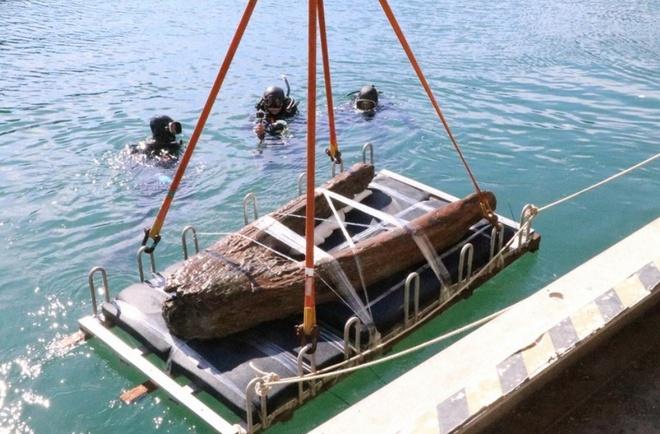
ARCHAEOLOGY & UNDERWATER EXPLORATION
Yoshifumi Ikeda — “Grants-in-Aid and Underwater Archaeological Research on the Mongol Invasions of Japan (Genko),” 2013 — Japan Society for the Promotion of Science.
Такэшима арлын усан доорх археологийн судалгааны түүх, 1281 оны флотын сүйрсэн хөлөг онгоц хайсан малтлага, олдворуудын талаар. 日本学術振興会Yoshifumi Ikeda, Randy Sasaki & Jun Kimura — “Recent Underwater Investigations at Takashima: Searching for the Lost Fleet of the Mongol Empire,” 2018 — Current Science.
Такэшимагаас илэрсэн Хятадын гаралтай хоёр хөлөг онгоцны үлдэгдэл болон тэдгээрийн Юань улсын довтолгооны флоттой холбоотой болохыг судалсан өгүүлэл. Teikyo UniversityTakashima-chō Board of Education — Takashima Underwater Site: The Fifth Report of Takashima-chō Cultural Asset Survey, 2001 — Takashima-chō Board of Education, Nagasaki, Japan.
1994–2000 оны усан доорх малтлага, модон зангуу, хөлөг онгоцны мод, шаазан, зэвсэг болон бусад олдворын талаарх үндсэн археологийн тайлан. ARIUAKyushu and Okinawa Society for Underwater Archaeology — Takashima Underwater Site X: Fourth Report of Cultural Asset Survey at Kozaki Harbor, 2004 — Takashima-chō Board of Education, Nagasaki, Japan.
2003 оны Козаки боомтын усан доорх малтлага. Модон хөлөг онгоцны хэсэг, олс, яс, тоосго, Хятадын шаазан зэрэг олдворыг судалсан. ARIUAS. Kunitake & E. E. Voytishek — “Results of Underwater Excavations at Takashima Island, Japan, Associated With the Mongol Invasion of 1281,” 2025 — Yearbook Japan, Vol. 54, pp. 79–88.
2024 оны олон улсын экспедицийн үр дүн болон Takashima-3 усан доорх дурсгалын судалгааг нэгтгэсэн хамгийн шинэ судалгаануудын нэг. ResearchGateYoshifumi Ikeda — “The Research and Study of the Shipwrecks at the Mongol Invasions Using the Underwater Archaeological Method,” 2011–2016 — University of the Ryukyus / KAKENHI.
Imari Bay дахь хөлөг онгоцны үлдэгдлийг remote sensing болон усан доорх археологийн аргаар илрүүлэх, флотын бүтэц, хадгалалт хамгаалалтын асуудлыг судалсан томоохон төсөл. Судалгааны явцад хоёр хөлөг онгоцны үлдэгдэл илэрсэн. CiNii ResearchDaniele Petrella — “The Archaeological Excavation of Takashima Island: From Finds to the First Scientific-Historical Reconstruction,” 2008 — Proceedings of the XXXI Conference on Japanese Studies.
Такэшимагаас олдсон археологийн баримтаар хөлөг онгоцны бүтэц, багийн бүрэлдэхүүн, зэвсэг, усан зам болон шуурганы үүргийг дахин авч үзсэн судалгаа. IrisRandall James Sasaki — The Origin of the Lost Fleet of the Mongol Empire, 2009 — Texas A&M University.
Такэшимагаас олдсон хөлөг онгоцны үлдэгдэл, хөлөг онгоцны төрөл, барилгын технологи, Хятад ба Солонгосын усан онгоцны үйлдвэрлэлийн асуудлыг археологийн талаас судалсан бүтээл.
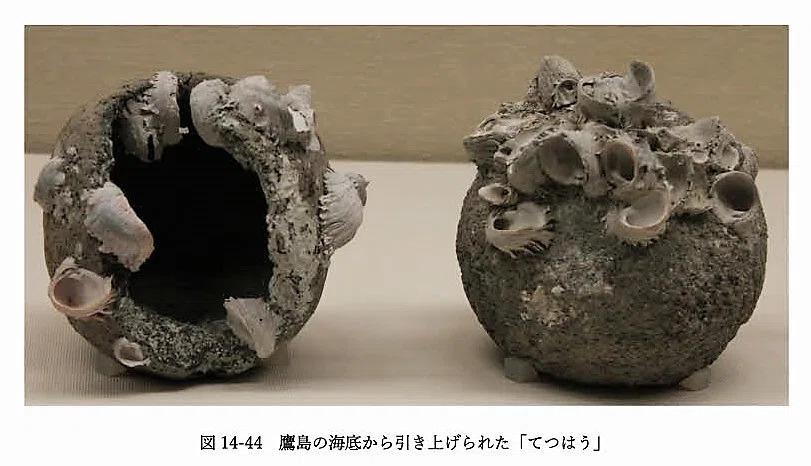
WEAPONS & MILITARY ARTIFACTS
Iron weapons, arrowheads, armor fragments, and explosive ceramic projectiles known as tetsuhau have been recovered from the Takashima area. These artifacts provide physical evidence of the weapons carried by the invasion fleet.