KNOWLEDGE
WHERE HISTORY BECOMES UNDERSTANDING
BOGD KHAN — THE LAST MONGOL KHAN
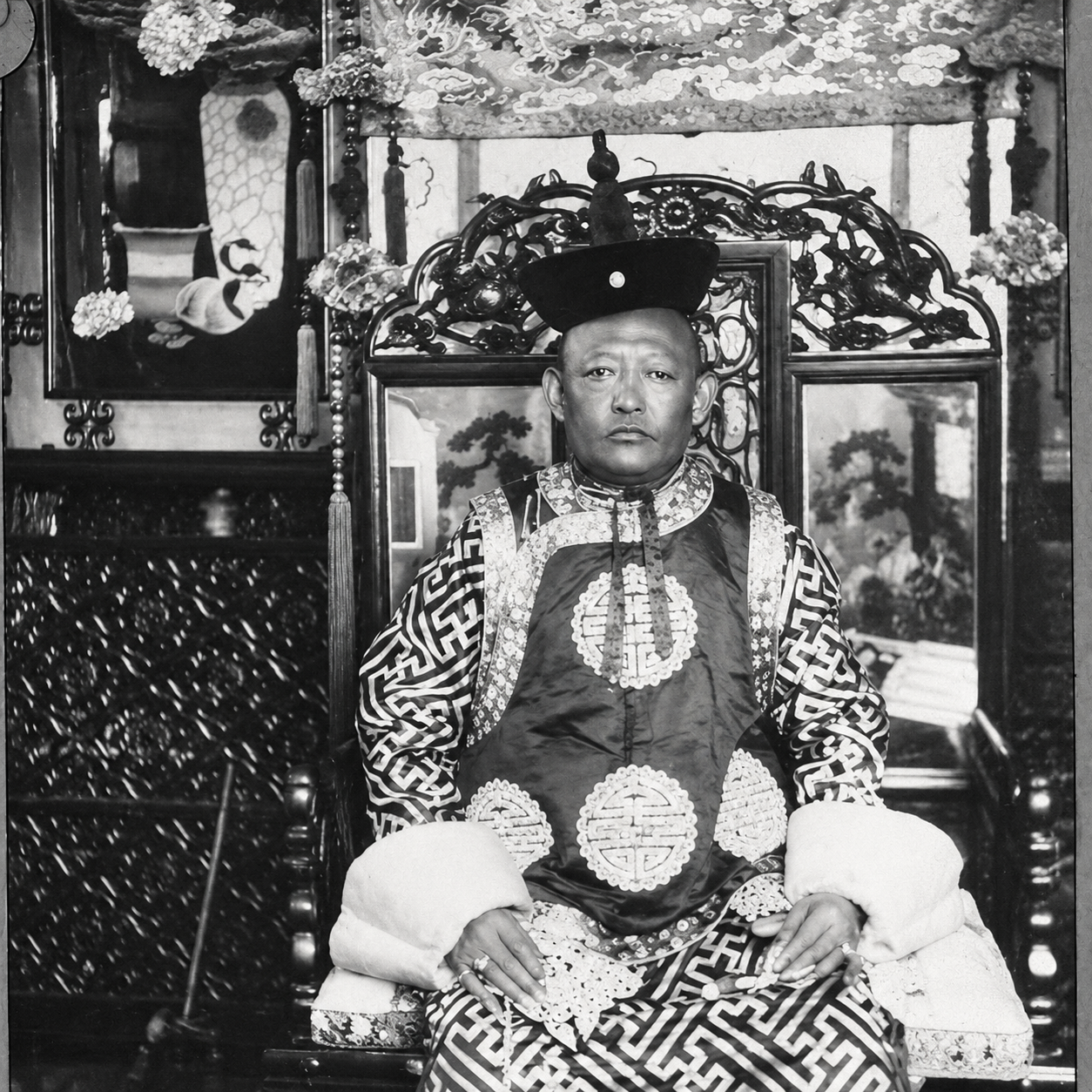
Bogd Khan (1869–1924)
Bogd Khan was the Eighth Jebtsundamba Khutuktu, the eighth incarnation in a religious lineage founded in seventeenth-century Mongolia by Öndör Gegeen Zanabazar (1635–1723). Zanabazar was enthroned as the first Jebtsundamba in 1639 and became the supreme religious authority of the Khalkha Mongols. The succession continued through recognized reincarnations; the first two were identified in Mongolia, while later incarnations were sought in Tibet. The Eighth Jebtsundamba was born in Tibet in 1869 and was recognized as the successor to this important religious tradition.
In 1911, following the collapse of Qing rule, Mongolian nobles and religious leaders declared independence and enthroned him as Bogd Khan. On December 29, 1911, he became the theocratic monarch of the restored Mongolian state. During his reign, Mongolia revived its state institutions, national symbols, diplomatic relations, and traditional ceremonies. His palace became an important center of religious and state affairs during the years of restored Mongolian sovereignty.
After the political changes of 1921, effective political power shifted toward the revolutionary government, while Bogd Khan remained the formal head of state and supreme Buddhist authority until his death in 1924. His legacy remains closely connected with Mongolia’s religious tradition and the restoration of its statehood. bogdkhaanpalacemuseum.mn
DID YOU KNOW?
A MONGOLIAN MONK BUILT A THEATRE IN THE GOBI.
DULDUITYN DANZANRAVJAA (1803–1856)
Poet • Philosopher • Religious Scholar • Cultural Innovator
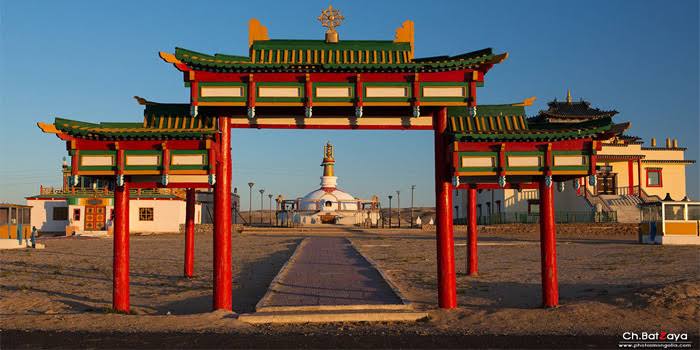
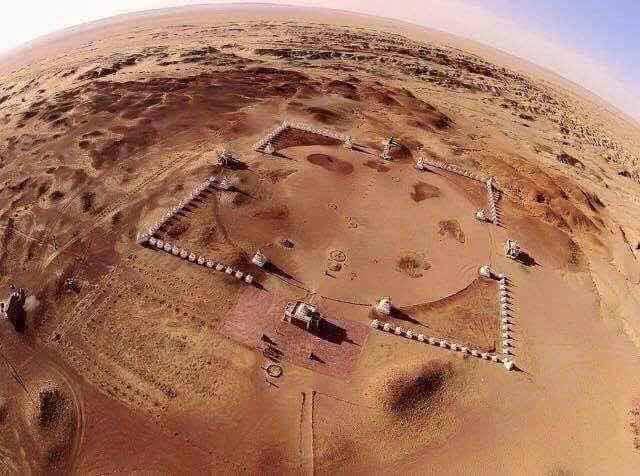
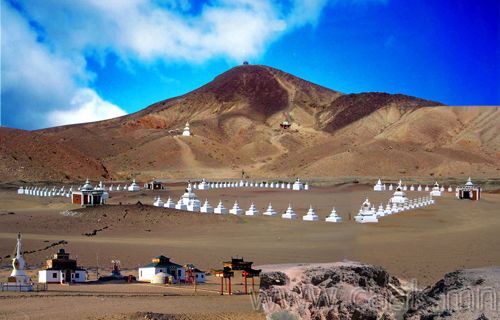
KHAMAR KHIID — GOBI, MONGOLIA
His legacy was not confined to religion. He created poetry, music, theatre, education, and a distinctive cultural world in the Gobi.
GALSANHÜÜGIIN VANDAN (1888–1935),
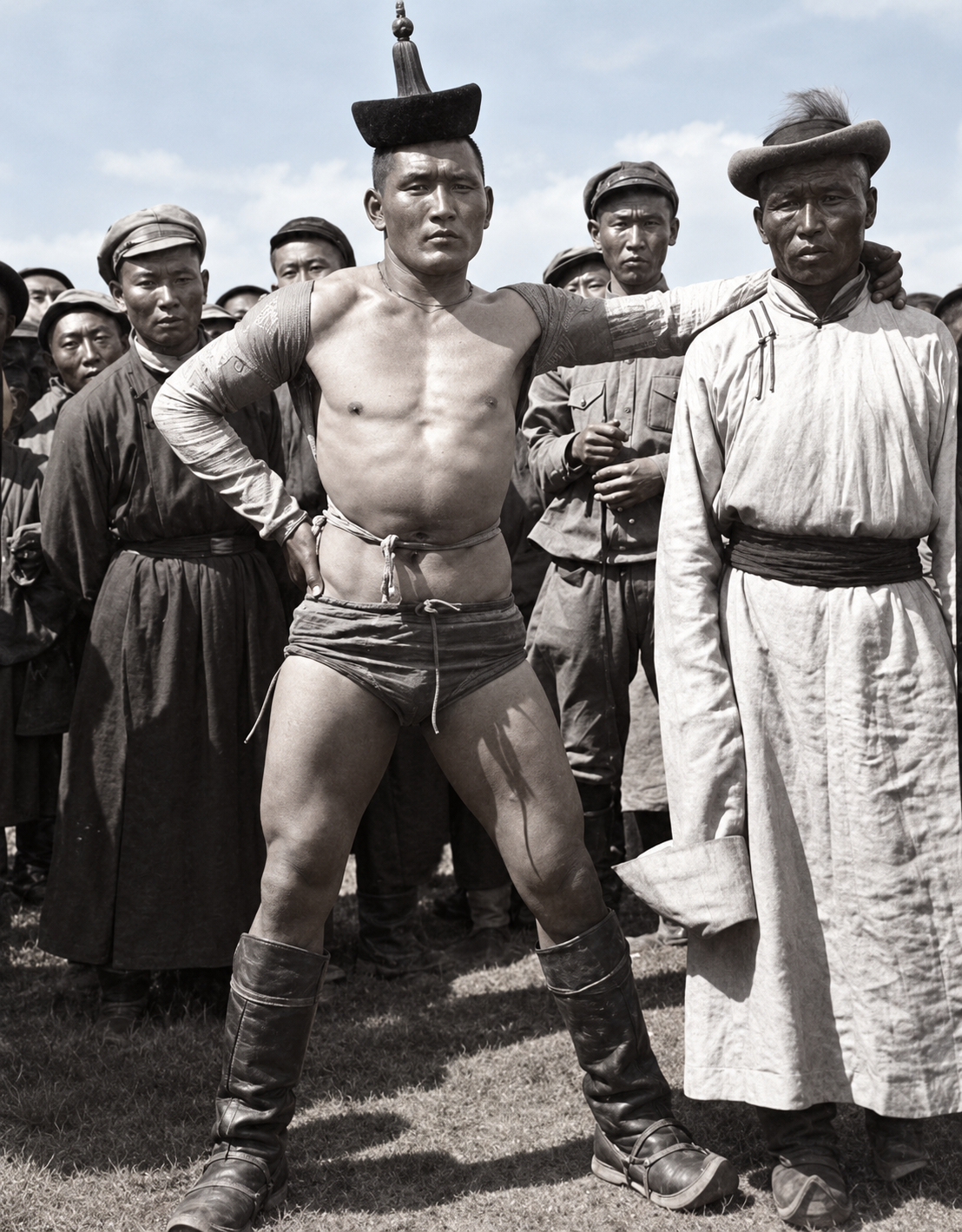
“LUU GÜNIIN VANDAN” – NATIONAL WRESTLING CHAMPION
Galsanhüügiin Vandan, known as Luu Güniin Vandan, was a celebrated champion in Mongolian national wrestling. Born in 1890 in Luu Güniin khoshuu, today’s Battsengel sum of Arkhangai Province, he became renowned for his physical strength, imposing stature, and record at major wrestling festivals.
Contemporary descriptions portray him as an exceptionally large man, reportedly standing about 215 centimeters tall, with a broad chest, prominent forehead and eyebrows, a wide jaw, and rounded cheekbones giving him a striking appearance.
Vandan achieved an extraordinary record during the late Qing and early revolutionary era. He won the Arvan Zasgiin naadam including eight consecutive victories from 1916 through 1923, and also won the 1922 and 1923 military festivals. Sources record numerous victories at national and local competitions, establishing his reputation among the dominant wrestlers of his era.
His strength was not limited to the wrestling arena. Vandan was remembered as a hardworking man who used an ox to transport goods by caravan, carrying food and merchandise for his local community. This detail offers a glimpse into his life beyond competition.
The photograph, taken during the 1926 national festival, preserves the presence of a legendary Mongolian champion and a historical figure of early twentieth-century Mongolian society.
JÜGDERDEMIDIIN GÜRRAGCHAA — MONGOLIA’S FIRST COSMONAUT
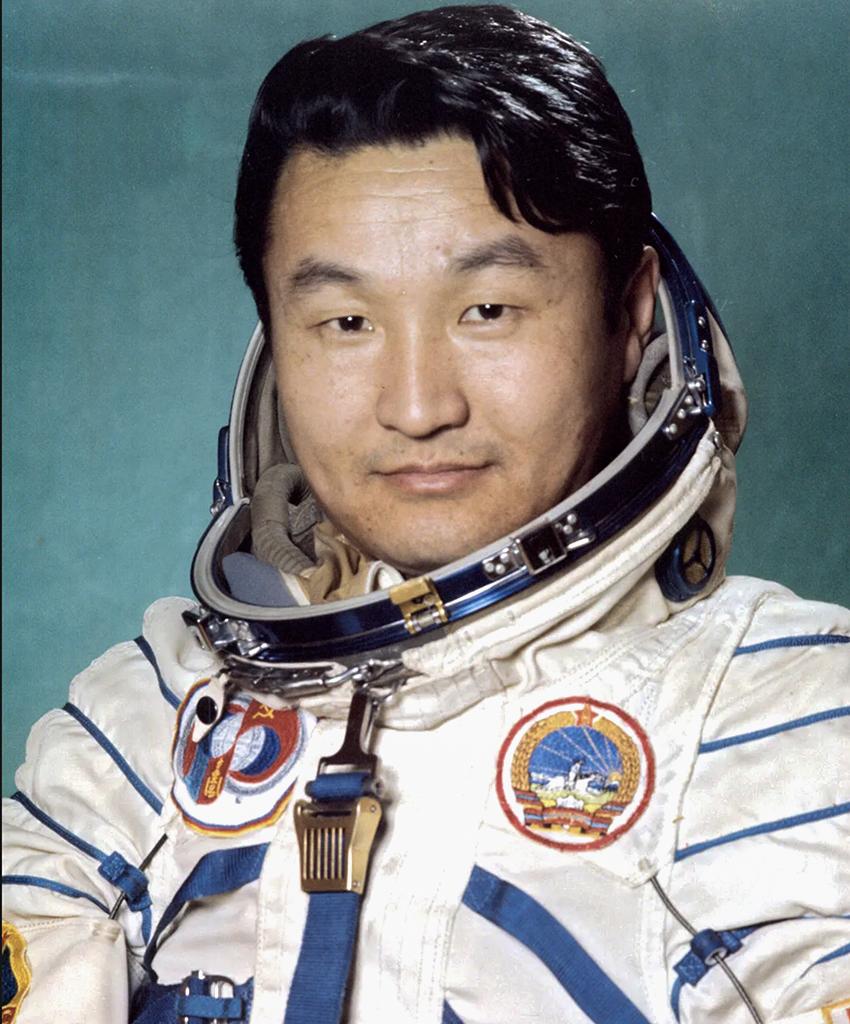
Jügderdemidiin Gurragchaa (1947–) is Mongolia’s first cosmonaut. Born in Gurvanbulag sum of Bulgan Province, he trained as a military pilot and later joined the Intercosmos program, preparing for spaceflight at the Yuri Gagarin Cosmonaut Training Center in the Soviet Union.
On 22 March 1981, Gurragchaa launched aboard Soyuz-39 with Soviet cosmonaut Vladimir Dzhanibekov. The crew worked aboard the Salyut 6 orbital station, conducting scientific experiments in medicine, biology, and Earth observation. Their mission lasted 7 days, 20 hours, and 42 minutes, completing 124 orbits around Earth before returning safely on 30 March 1981.
Gurragchaa’s flight made Mongolia the tenth country to send its own citizen into space and marked a major milestone in the country’s modern scientific history. He was later honored as a Hero of Mongolia and a Hero of the Soviet Union and attained the rank of Major General. His achievement remains a defining chapter in Mongolia’s history of science, aviation, international cooperation, and exploration. His mission opened a new chapter in Mongolia’s participation in international space science and technology.МҮОНРТ
QUICK FACTS
Born: 1947, Gurvanbulag, Bulgan, Mongolia
Mission: Soyuz-39
Launch: 22 March 1981
Return: 30 March 1981
Time in Space: 7 days, 20 hours, 42 minutes
Orbits: 124
Program: Intercosmos
SOURCE: MNB, MONTSAME, Government of Mongolia. МҮОНРТ