
BYAMBYN RINCHEN — THE POLYGLOT SCHOLAR WHO CONNECTED MONGOLIA WITH THE WORLD
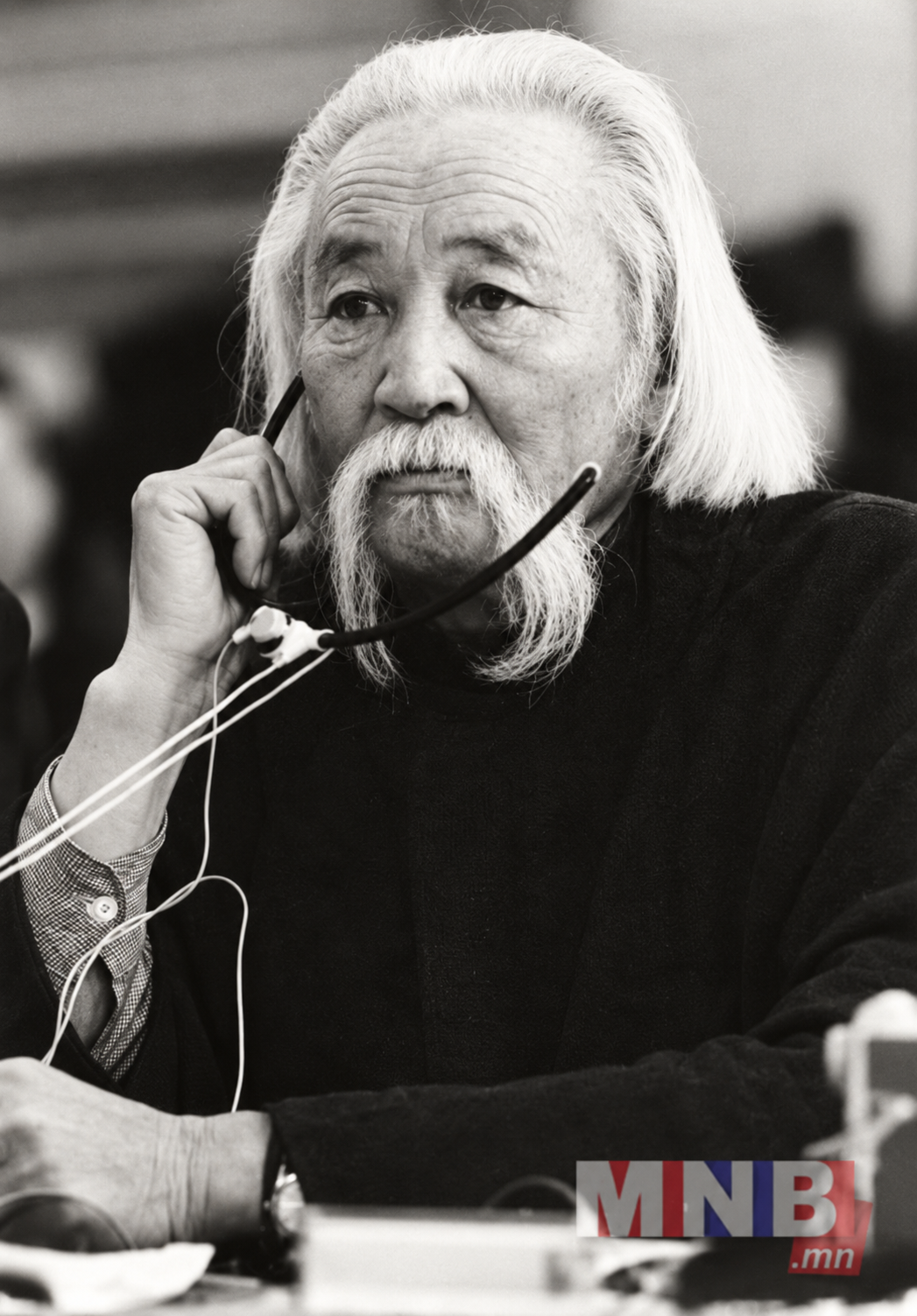
BIOGRAPHY
Full name: Rinchendorj, known as Byambyn Rinchen
Born: 21 November 1905 — Bulsarai, present-day Altanbulag, Selenge Province, Mongolia
Died: 4 March 1977 — Ulaanbaatar, Mongolia
Fields: Linguistics, literature, folklore, history, translation
Major scholarly work: Grammar of Written Mongolian
Literary works: Üüriin Tuya; screenplay for Tsogt Taij
Academic distinction: Founding member of the Mongolian Academy of Sciences, 1961
International connection: Scholarly cooperation with Czechoslovak researchers
SOURCES
National Museum of Natural History of Mongolia, biographical record of Byambyn Rinchen.
Luboš Bělka, “Stalin Had to Give Way to the First Czech-Speaking Mongol: Byambyn Rinchen and Czechoslovakia,” Masaryk University, 2023.
D. Tsend, Byambyn Rinchen, 1905–1977: Biography and Works, Mongolian Academy of Sciences, 2001.
Byambyn Rinchen (1905–1977) was a leading Mongolian linguist, writer, literary scholar, folklorist, and translator. His work explored the Mongolian language, historical texts, oral traditions, and the cultural heritage of the Mongolian people. He belonged to a generation of scholars who sought to understand Mongolia through its own intellectual traditions while engaging with international scholarship.
Rinchen received his early education in Mongolia before continuing his studies at the Institute of Oriental Languages in Leningrad in the 1920s. His education exposed him to comparative linguistics and the scholarly study of Asian languages. He became known for his multilingual abilities, including his command of Czech, which helped establish close scholarly connections between Mongolia and Czechoslovakia. He also worked with researchers from other countries, introducing them to Mongolian language, history, literature, and customs.
His academic interests extended from written Mongolian grammar to folklore, shamanic traditions, historical literature, and ethnographic materials. His research preserved valuable linguistic and cultural evidence that might otherwise have remained inaccessible to wider audiences. His multivolume study of written Mongolian grammar became one of his major scholarly achievements.
Rinchen was also an accomplished novelist, poet, essayist, and translator. His historical novel Üüriin Tuya and his screenplay for Tsogt Taij demonstrate how he brought historical subjects into modern Mongolian literature and cinema. Through translation and literary criticism, he helped broaden Mongolian readers’ access to world literature while defending the expressive richness of their own language.
His life was also shaped by political persecution. Arrested during the purges of 1937, he was sentenced to death, but the sentence was commuted and he was released in 1942. He later returned to scholarly and literary work. In 1956, he received a doctorate in philology from the Hungarian Academy of Sciences. In 1961, he became a founding member of the Mongolian Academy of Sciences.
Rinchen’s legacy rests on scholarship, literary creativity, and cultural preservation. He used languages not simply as instruments of communication, but as bridges between civilizations. His life remains an important example of how rigorous research and literary work can preserve a nation’s cultural memory while connecting it to the wider world.