
HEGEL — “WITH CHINA AND THE MONGOLS, HISTORY BEGINS”
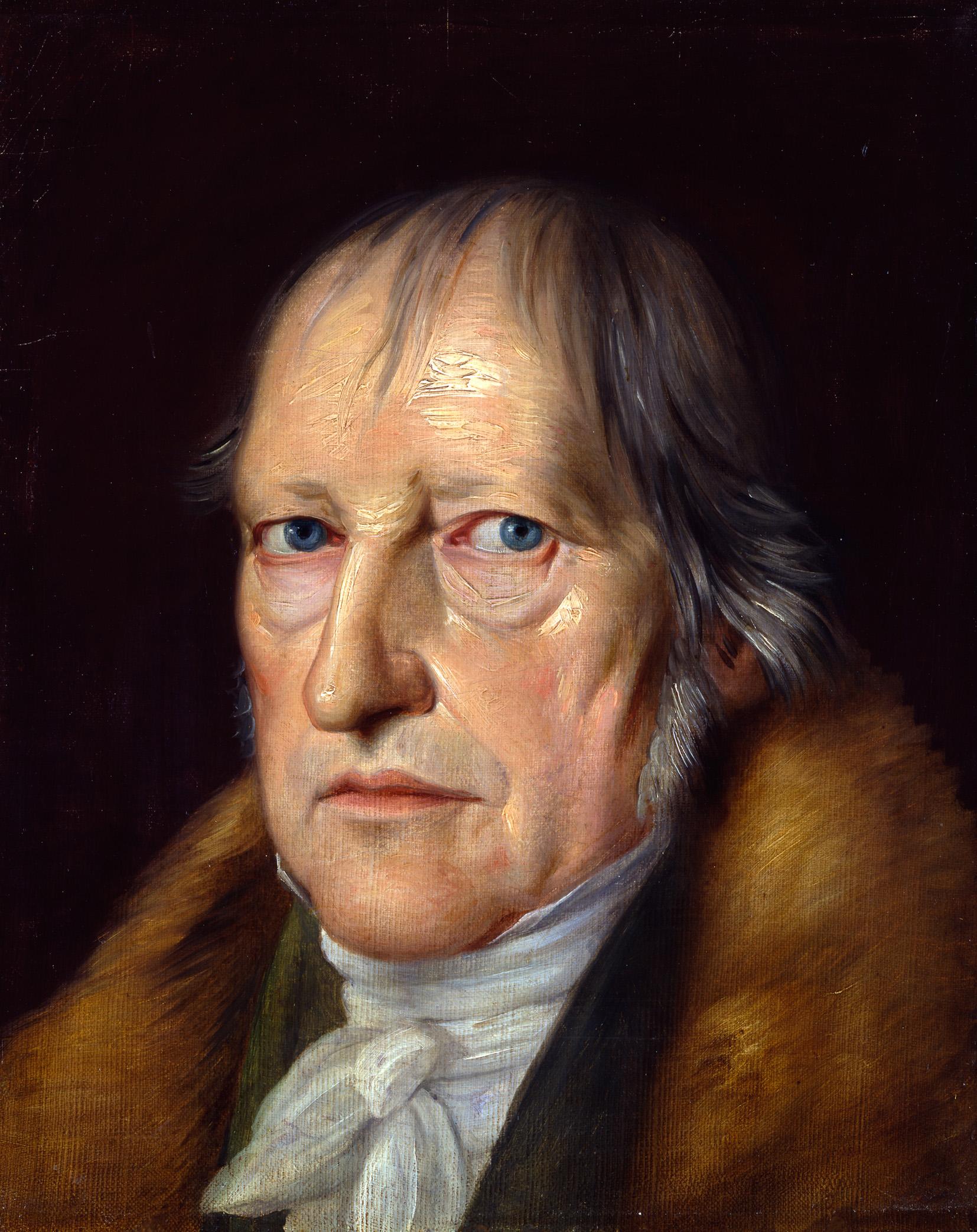
GEORG WILHELM FRIEDRICH HEGEL — PHILOSOPHER OF WORLD HISTORY
Georg Wilhelm Friedrich Hegel was one of the most influential philosophers of nineteenth-century Europe and a leading figure of German Idealism. He was born in Stuttgart in 1770 and studied philosophy and theology at the Tübingen seminary, where he became a close friend of the poet Friedrich Hölderlin and philosopher Friedrich Wilhelm Joseph Schelling.
After graduating, Hegel worked as a private tutor in Bern and Frankfurt. In 1801 he joined the University of Jena, where he developed his philosophical system and worked with Schelling. His first major work, Phenomenology of Spirit, appeared in 1807. After the French occupation of Jena, he worked as a newspaper editor in Bamberg and later became headmaster of a gymnasium in Nuremberg. There he married, raised a family, and wrote Science of Logic.
In 1816 Hegel became professor of philosophy at the University of Heidelberg. Two years later he moved to the University of Berlin, where he became one of Europe’s best-known philosophers. His Elements of the Philosophy of Right appeared in 1821, while his lectures on history, religion, aesthetics, and philosophy became highly influential.
Hegel developed a philosophical interpretation of world history in which human consciousness, freedom, political institutions, and culture developed through historical change. His lectures discussed civilizations across Asia, the Middle East, Europe, and the ancient world. His references to China and the Mongols are particularly relevant to the historical perspective explored by HEAVENLY WIND 750.
Hegel died in Berlin in 1831. His writings continued to influence philosophy, political theory, history, sociology, and later thinkers including Karl Marx.
BIOGRAPHY
Born: 27 August 1770 — Stuttgart, Württemberg
Died: 14 November 1831 — Berlin, Prussia
Field: Philosophy
Movement: German Idealism
Major Work: Phenomenology of Spirit (1807)
Later Work: Elements of the Philosophy of Right (1821)
Academic Posts: Jena, Heidelberg, Berlin
Historical significance: World history
German philosopher Georg Wilhelm Friedrich Hegel (1770–1831) placed Asia at the beginning of his philosophical interpretation of world history. In his Lectures on the Philosophy of History, he wrote that “with China and the Mongols … History begins,” placing them within his discussion of the earliest political forms of world history. Marxists
Hegel also famously argued that “Asia” was the beginning of world history, while Europe represented its later development. His interpretation was part of a philosophical theory in which world history was understood as the development of human consciousness and freedom. Marxists
A Mongolian version of this idea is often circulated as:
“Хүн төрөлхтний түүх Дорноос, тэр дундаа Монголчуудаас эхэлдэг. Учир нь тэнд төр байсан юм.”
However, this should not be presented as a verified word-for-word quotation from Hegel. The documented Hegel passages support the connection between the East, China, the Mongols, political organization, and the beginning of his philosophy of world history, but the popular Mongolian wording appears to be a later paraphrase or attribution. Marxists
For HEAVENLY WIND 750, this distinction matters: the question is not simply whether Hegel “praised Mongolia,” but how a major nineteenth-century European philosopher positioned China, the Mongols, Asia, and the East within his theory of world history.
SOURCE: G. W. F. Hegel, Lectures on the Philosophy of History.