LEO TOLSTOY — THE NOVELIST WHO EXPLORED THE HUMAN SOUL
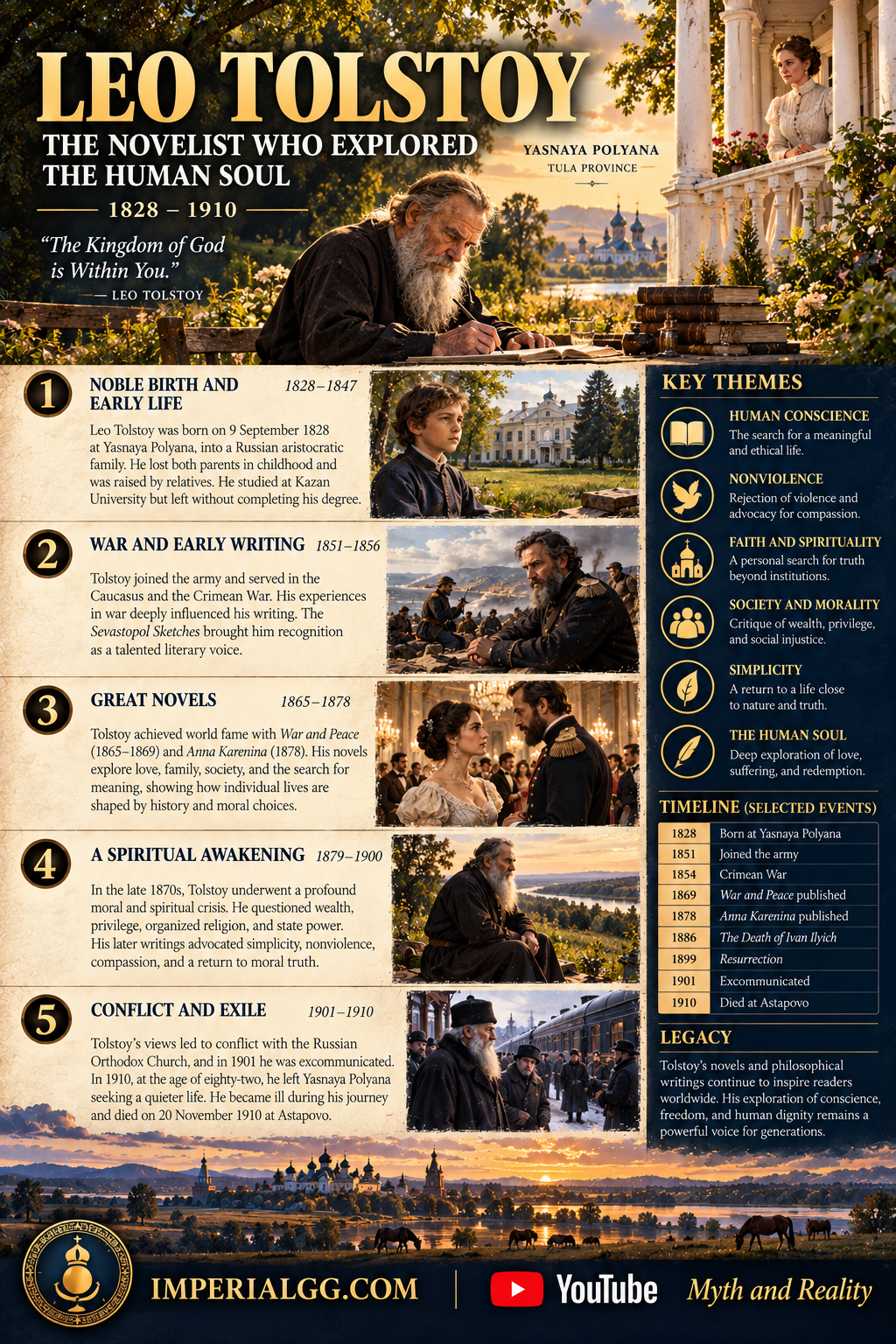
Leo Tolstoy (1828–1910) was a Russian novelist, philosopher, and social thinker whose writings profoundly influenced world literature and ethical thought. Best known for War and Peace and Anna Karenina, he created complex literary worlds in which individual lives unfold against the forces of history, family, society, and moral responsibility.
Born into an aristocratic family at Yasnaya Polyana, his family estate in Tula Province, Tolstoy lost both parents during childhood and was raised by relatives. He studied Oriental languages and law at Kazan University but left without completing his degree. In 1851, he joined his elder brother in the Caucasus and subsequently entered military service. His experiences in the Caucasus and the Crimean War provided material for his early stories and Sevastopol Sketches, establishing his reputation as a writer.
Tolstoy reached international literary prominence with War and Peace (1865–1869), an expansive novel examining Russian society during the Napoleonic Wars. Through the experiences of aristocratic families, soldiers, and ordinary people, he explored the relationship between individual choices and historical events. His later novel Anna Karenina (1875–1877, published in book form in 1878) examined marriage, desire, social expectations, and the search for a meaningful life.
In the late 1870s, Tolstoy underwent a profound spiritual and moral crisis. He increasingly questioned wealth, privilege, organized religion, and the institutions of state power. His later writings advocated simplicity, nonviolence, compassion, and resistance to injustice. Works such as The Kingdom of God Is Within You influenced religious and political thinkers internationally, including advocates of nonviolent resistance.
Tolstoy’s personal life reflected tensions between his aristocratic background and his commitment to moral simplicity. His philosophical convictions also created disagreements with religious authorities, and in 1901 the Russian Orthodox Church formally excommunicated him.
In October 1910, at the age of eighty-two, Tolstoy left Yasnaya Polyana seeking a quieter life away from family conflict and public attention. He became ill during the journey and died on 20 November 1910 at Astapovo railway station.
Tolstoy’s legacy extends beyond fiction. His exploration of conscience, suffering, freedom, and human dignity continues to challenge readers across cultures and generations.
BIOGRAPHY
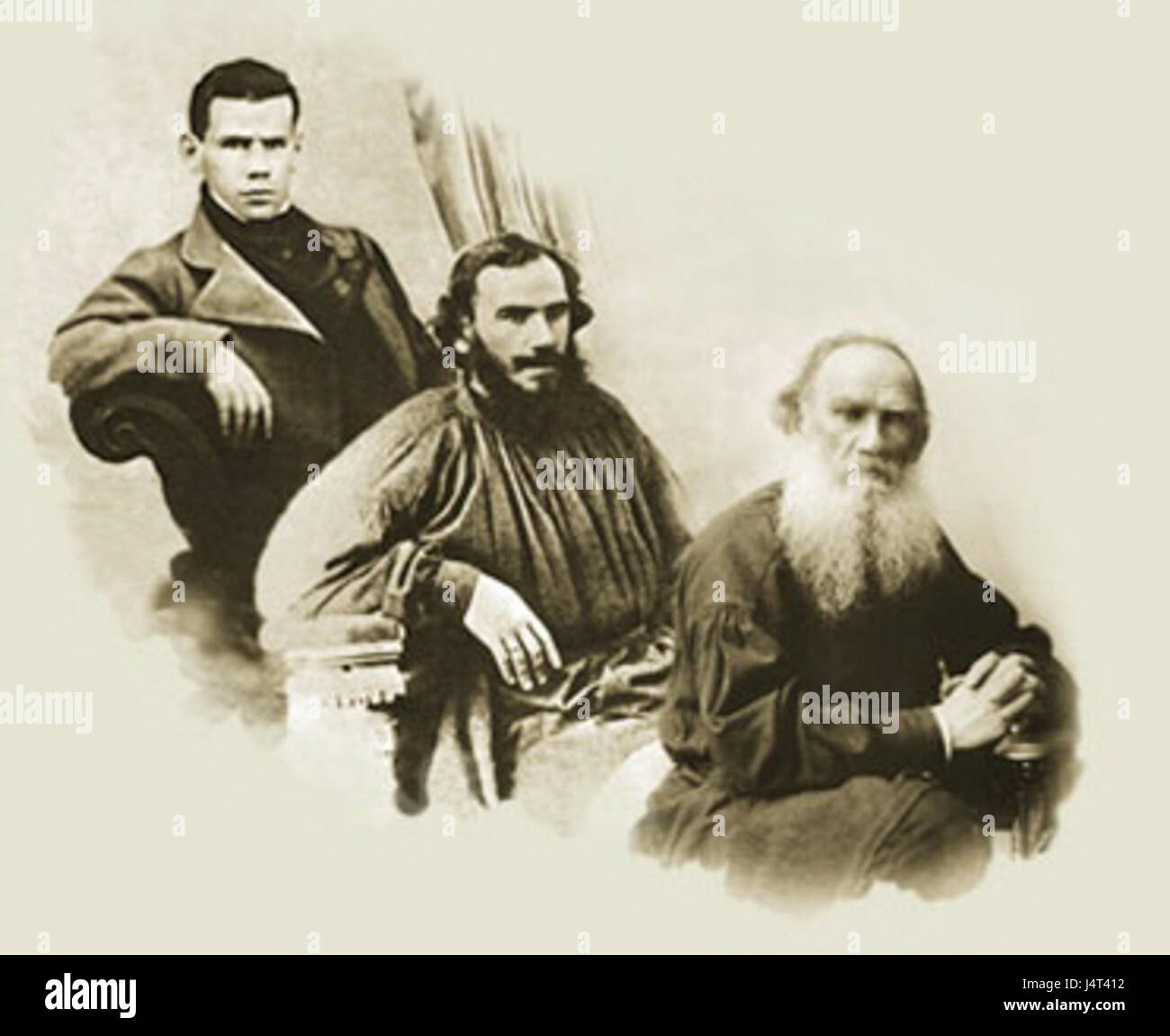
Full name: Lev Nikolayevich Tolstoy
Born: 9 September 1828 — Yasnaya Polyana, Russian Empire
Died: 20 November 1910 — Astapovo, Russian Empire
Nationality: Russian
Professions: Novelist, philosopher, social thinker
Literary movement: Realism
Major works: War and Peace (1869); Anna Karenina (1878); The Death of Ivan Ilyich (1886); Resurrection (1899)
Family: Married Sofya Behrs in 1862
Legacy: A major figure in world literature and the philosophy of nonviolence
SOURCES: Yasnaya Polyana State Museum-Estate; Encyclopaedia Britannica; Encyclopaedia Britannica, “Tolstoy, Leo.”