
THE MONGOL INVASIONS OF JAPAN IN 1274 AND 1281
By Altanbagana Baatar
DBA Candidate| Independent Historian
ImperialGG Historical Research Seriers
23 October 2026
Primary Sources, Military History, Maritime Archaeology, and Modern Scholarship
and examine the interaction of military resistance, logistics, naval operations, and weather.
Keywords: Mongol invasions of Japan, Kublai Khan, Yuan dynasty, Goryeo, Kamakura shogunate, Takezaki Suenaga, maritime archaeology, Takashima, kamikaze, medieval East Asia.
I. INTRODUCTION
The invasions of Japan in 1274 and 1281 were major attempts by Kublai Khan’s Yuan dynasty to project imperial power across the sea. They connected the military resources of the Mongol imperial world with the shipbuilding, manpower, and maritime capabilities of East Asia.
The campaigns are frequently described as confrontations between the Mongols and the Japanese. This formulation is understandable but incomplete. The expeditionary forces included troops and sailors mobilized from different regions, while the Korean kingdom of Goryeo played a significant role in the preparation and transport of the invading armies. The defending side was organized under the Kamakura shogunate, with warriors from several Japanese regions participating in the coastal defense.
The historical significance of the invasions extends beyond their immediate military outcomes. They reveal the challenges of conducting amphibious warfare in the thirteenth century, the relationship between imperial expansion and maritime logistics, and the ways societies transform military experiences into historical memory.
They also present an important methodological problem. The principal sources were produced for different purposes and at different times. Official dynastic histories recorded political and administrative events; Japanese warriors sought recognition and rewards for military service; religious narratives interpreted the invasions through the protection of deities; and archaeological remains preserve evidence of ships and material culture without necessarily revealing the intentions of their crews.
Consequently, reconstructing the invasions requires comparison rather than reliance on any single account.
Research questions
This study addresses five principal questions:
What can contemporary and near-contemporary sources establish about the diplomatic background and military operations of 1274 and 1281?
How did the Yuan dynasty, Goryeo, and the Japanese defenders organize their forces and resources?
What can maritime archaeology reveal about the invading fleets and the circumstances of their destruction?
How should historians evaluate the role of storms in the outcomes of the campaigns?
How did the invasions become associated with the idea of kamikaze, or “divine wind,” in Japanese historical memory?
II. HISTORICAL AND POLITICAL BACKGROUND
2.1. Kublai Khan and the Yuan dynasty
Kublai Khan established the Yuan dynasty in China in 1271, although his imperial authority and the political structures of the Mongol Empire had developed over a longer period. His government sought to consolidate control across East Asia and extend its diplomatic and political influence.
Japan’s position outside the Yuan imperial system became a source of conflict. Kublai’s government sent diplomatic missions demanding a response from the Japanese authorities. These missions formed part of a broader effort to establish relations according to the political expectations of the Yuan court.
Japanese resistance to these demands contributed to the deterioration of relations. Nevertheless, the path from diplomacy to invasion was not instantaneous. It involved repeated communications, political calculations, military preparations, and the mobilization of resources.
The diplomatic background is therefore essential to understanding why the invasions occurred. They were not simply spontaneous raids, but large-scale operations arising from an extended period of imperial pressure and unsuccessful diplomatic engagement.
2.2. Goryeo and the costs of imperial mobilization
Goryeo, the Korean kingdom that existed from 918 to 1392, occupied a central position in the Yuan campaigns. Its geographic location made it a crucial base for transporting troops and supplies toward Japan.
Goryeo’s participation involved shipbuilding, maritime transport, military manpower, provisions, and administrative mobilization. These requirements placed considerable demands on the kingdom and its population.
The role of Goryeo should not be reduced to that of a passive intermediary. Its government operated under substantial Yuan pressure, and its officials and military personnel had to meet the practical requirements of imperial campaigns.
A comprehensive history must therefore examine the invasions as a regional conflict involving Mongol imperial authority, Yuan state organization, Korean resources, and Japanese defense.
2.3. Japanese political and military organization
Japan was governed through the Kamakura shogunate, a military government that exercised substantial authority alongside the imperial court and aristocratic institutions.
The invasion threat required coordination among warriors and regional authorities. The defense of Kyushu, especially the northern coast around Hakata Bay, became strategically important because it provided a potential landing zone for forces approaching from Korea and the East Asian mainland.
The Japanese response involved military mobilization, coastal defense, and, after the first invasion, the construction of substantial defensive works.
The invasions thus reveal the importance of regional military organization. The outcome cannot be explained solely by the personal courage of individual warriors or by the environmental conditions encountered by the invading fleet.
III. PRIMARY SOURCES
A central requirement of this research is to distinguish between sources that document events, sources that interpret them, and later works that reconstruct them.
3.1. Yuan shi 元史: The History of the Yuan Dynasty
The Yuan shi is one of the principal written sources for the political and military history of the Yuan dynasty. Compiled under the early Ming dynasty in 1369–1370, it preserves information about imperial policies, military campaigns, officials, and administrative institutions.
Although it contains material relating to the thirteenth century, the Yuan shi is not a contemporary diary of the invasions. Its information must be assessed in light of its later compilation and the sources available to its editors.
For the invasions of Japan, relevant passages should be examined for:
Kublai Khan’s diplomatic policy toward Japan.
The mobilization of forces and resources.
The participation of Goryeo.
The organization and movement of the expeditionary fleets.
The outcomes of the campaigns and subsequent imperial decisions.
The Yuan shi should be compared with Korean and Japanese evidence wherever possible. Numerical claims about troops, ships, or casualties require particular caution because historical records may use different categories, may preserve rounded figures, and may reflect administrative or rhetorical purposes.
Research resource: Search the Yuan shi for entries concerning Japan, Goryeo, Kublai Khan, and the expeditions of 1274 and 1281.
3.2. Goryeosa 高麗史: The History of Goryeo
The Goryeosa is indispensable for examining Korea’s involvement in the invasions. It preserves information about political relations with the Yuan court, administrative decisions, military mobilization, and the resources required for maritime expeditions.
Its evidence is particularly important for questions that cannot be fully answered through Chinese or Japanese records alone.
Researchers should investigate:
The construction and preparation of ships.
The mobilization of sailors and soldiers.
The transportation of provisions and military equipment.
The responsibilities imposed on Goryeo by the Yuan government.
The consequences of the campaigns for Korean society and administration.
The Goryeosa, like the Yuan shi, was compiled after the events it describes. Its accounts must therefore be read critically, with attention to chronology, editorial structure, and the political circumstances in which historical information was preserved.
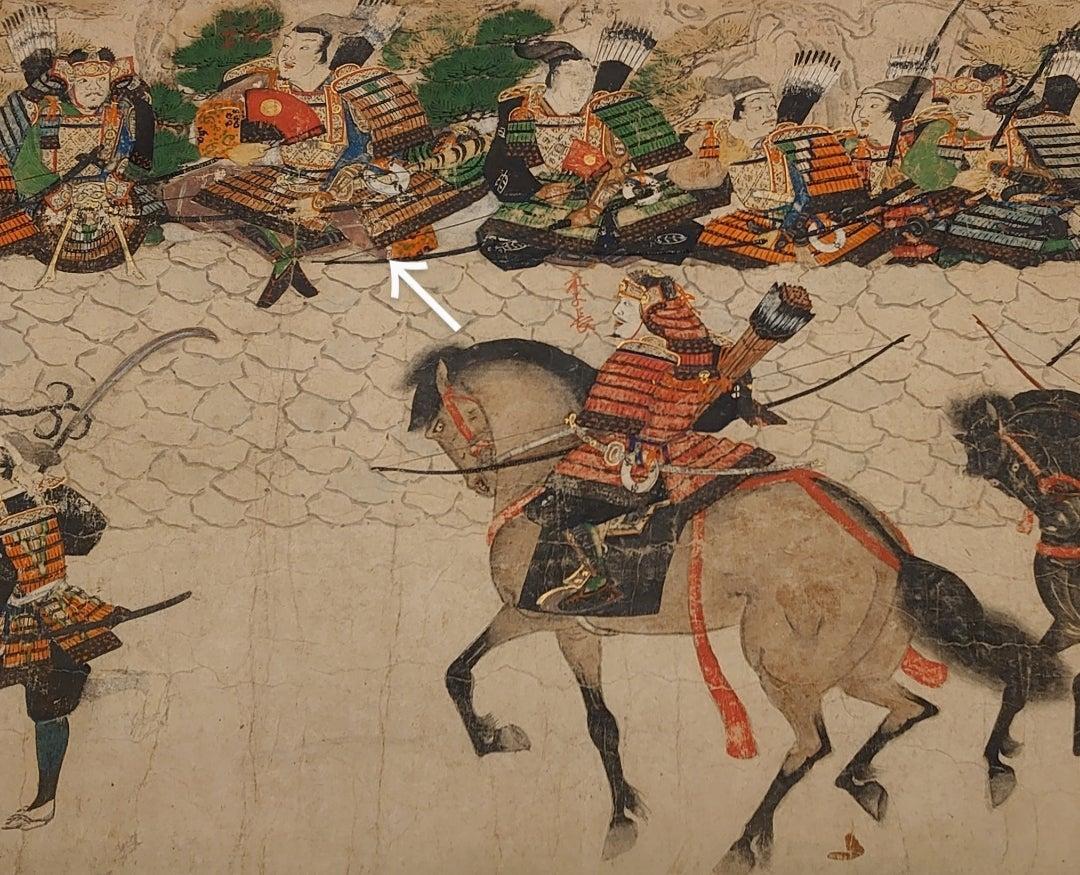
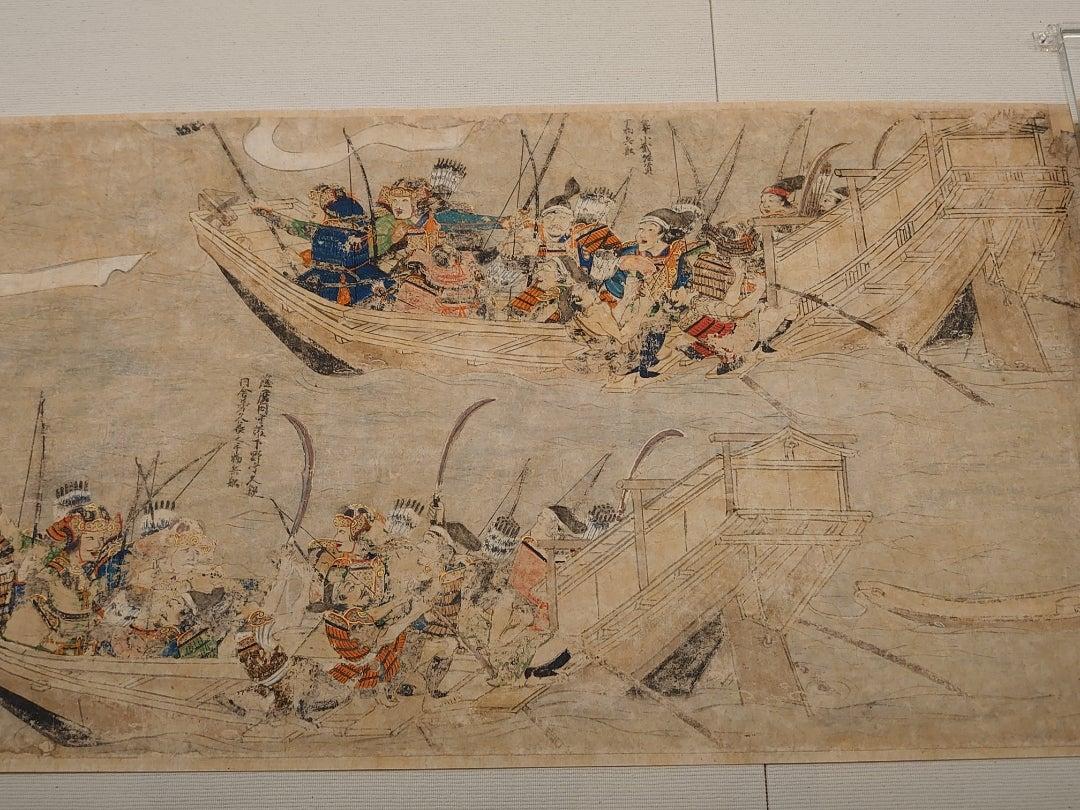
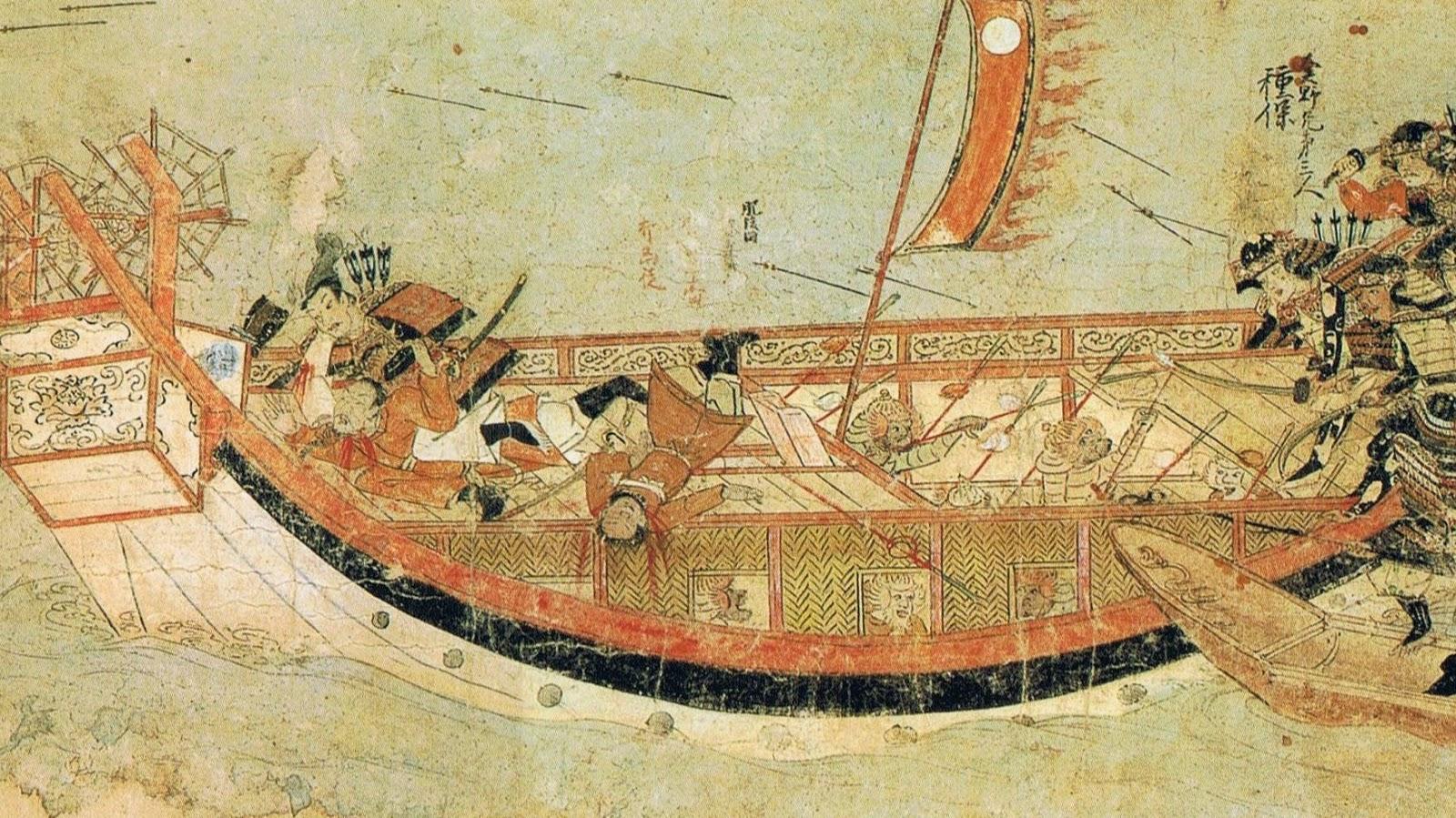
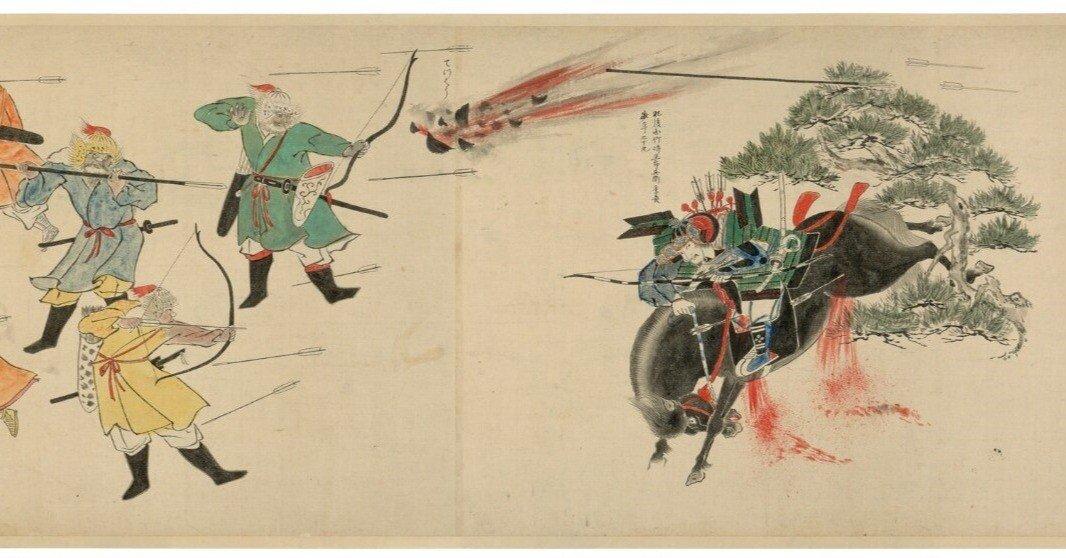
3.3. Mōko Shūrai Ekotoba 蒙古襲来絵詞: The Illustrated Account of the Mongol Invasions
One of the most important Japanese visual sources is the illustrated handscroll associated with Takezaki Suenaga (1246–1314), a warrior from Higo Province who participated in the defense against the invasions.
The scrolls are especially valuable because they connect representations of warfare with the personal experience and social interests of a participant. Suenaga sought recognition for his military service, and the narrative is closely associated with the pursuit of rewards and acknowledgment.
This context is essential. The scroll should not be treated as an impartial, comprehensive record of every battle. It presents events from a particular warrior’s perspective and must be compared with other documentary evidence.
Nevertheless, it provides important material for studying:
Representations of Mongol and allied troops.
Weapons, armor, banners, and combat practices.
Japanese warrior identity and claims to military distinction.
The relationship between battlefield service and the reward system.
The later preservation and reinterpretation of memories of the invasions.
The history of the scroll itself also requires scrutiny. Its present form reflects a complex transmission history, and researchers must distinguish early material from later copying, restoration, and reinterpretation.
Research resource: Giuseppina Aurora Testa’s study of the Mōko Shūrai Ekotoba examines its representations of outsiders and the problems associated with its visual transmission.
3.4. Hachiman Gudōkun 八幡愚童訓
The Hachiman Gudōkun is a religious narrative associated with the cult of Hachiman and the interpretation of the invasions through divine protection.
Its importance lies partly in what it reveals about the religious meaning assigned to the military events. The narrative connects the defense of Japan with prayers, sacred institutions, and the intervention of protective deities.
It should not, however, be treated as a straightforward military report. Religious narratives have their own aims, conventions, and explanatory frameworks.
The work is particularly valuable for examining the early development of the belief that Japan’s survival was evidence of divine favor. This tradition later became associated with the term kamikaze, or “divine wind.”
Historians must distinguish the historical occurrence of severe weather from the religious interpretation of that weather.
3.5. Diplomatic correspondence and Japanese court records
The invasions were preceded by a series of diplomatic exchanges between the Yuan court and Japanese authorities.
Japanese archival materials include records relating to the Yuan diplomatic missions and the responses—or lack of formal responses—of the Japanese political leadership. Such documents provide evidence for the diplomatic context of the campaigns and the decisions that preceded military action.
They also help clarify that the invasions were part of a longer political process rather than isolated military events.
The National Archives of Japan’s online exhibition, “Japan and Mongolia: Our History through Archival Records,” provides an accessible starting point for exploring diplomatic documents, court records, and representations of the invasions.
Archival resource: https://www.archives.go.jp/about/activity/international/jp_mn50/english/ch01.html
IV. THE FIRST INVASION, 1274: BUN’EI NO EKI
4.1. From diplomacy to military action
The first invasion followed years of unsuccessful diplomatic engagement. The Yuan government sought to bring Japan into its regional political order, while Japanese authorities declined to accept the demands conveyed through Yuan diplomatic missions.
The invasion of 1274 should therefore be understood within the context of imperial diplomacy and military planning.
The campaign involved the movement of an expeditionary force from the Korean peninsula toward the Japanese islands. Tsushima and Iki, located along the maritime approach to Kyushu, were important early points of contact.
The route illustrates the strategic geography of the invasion. Control of the sea lanes, access to landing sites, and the ability to transport troops across open water were central to the operation.
4.2. Tsushima and Iki
The invading forces attacked Tsushima and subsequently Iki before moving toward northern Kyushu.
These encounters were not merely preliminary episodes. They involved local defenders and communities, demonstrated the reach of the expeditionary force, and formed part of the wider struggle over access to the Japanese mainland.
A detailed reconstruction should distinguish the sequence of operations at each location rather than compressing them into a single event.
The relevant questions include the strength and organization of local resistance, the movement of the invading fleet, and the relationship between the island operations and the subsequent attack on Kyushu.
4.3. The Battle of Hakata Bay
Hakata Bay, on the northern coast of Kyushu, was a strategically significant area for the invading force and the Japanese defenders.
The expeditionary army encountered Japanese resistance in a region where coastal geography, landing opportunities, and access to inland routes were important considerations.
The Mōko Shūrai Ekotoba provides visual evidence relating to the fighting, but its representation must be interpreted alongside written records.
Important research questions include:
How did the invading force organize its landing operations?
What weapons and battlefield practices were used?
How did the Japanese defenders coordinate their resistance?
What difficulties arose in maintaining supplies and communication?
What evidence survives concerning the decision to withdraw?
The available evidence does not justify reducing the entire campaign to a simple confrontation between two homogeneous armies. The invading forces included personnel from different regions, while the Japanese defense depended on a broader network of warriors and local authorities.
4.4. Why did the first expedition withdraw?
The withdrawal of the invading force remains a subject requiring careful evaluation.
Storms and adverse maritime conditions are frequently invoked in popular explanations of the invasion. However, a satisfactory historical analysis must distinguish the evidence for weather from evidence concerning combat, logistical limitations, operational objectives, and command decisions.
The first invasion should not automatically be explained through the same narrative used for the second campaign in 1281. The two expeditions differed in organization, scale, circumstances, and available evidence.
A rigorous investigation should establish what the earliest sources actually report, identify contradictions between accounts, and assess whether particular explanations are supported by independent evidence.
The conclusion should remain proportionate to the surviving documentation.
V. BETWEEN THE INVASIONS, 1275–1280
5.1. Japanese preparations
Following the first invasion, Japanese authorities strengthened their preparations against another attack.
One of the most important defensive measures was the construction of a substantial coastal stone wall around parts of Hakata Bay. The fortification was intended to make landings more difficult and to restrict the freedom of movement of an invading force along the shore.
The wall demonstrates that the Japanese response was not limited to waiting for another expedition. It involved the construction of defensive infrastructure and the mobilization of resources to protect likely landing areas.
Its precise length, construction chronology, and operational effectiveness should be established through archaeological and documentary research rather than repeated uncritically from general historical summaries.
5.2. The logistical challenge of a second expedition
The preparations for 1281 involved an even larger mobilization of personnel and resources.
Large-scale maritime expeditions required more than ships and soldiers. They depended on provisions, equipment, command arrangements, the coordination of different contingents, and the ability to maintain an army far from its principal bases.
The following issues are central to understanding the second invasion:
Shipbuilding and the availability of suitable vessels.
The transportation of troops, horses, weapons, and provisions.
Coordination between fleets departing from different regions.
The timing of departures and rendezvous.
The ability to communicate and reorganize at sea.
The effects of delays, illness, fatigue, and damage to vessels.
These questions should be examined through the Yuan shi, the Goryeosa, Japanese records, and archaeological evidence.
VI. THE SECOND INVASION, 1281: KŌAN NO EKI
6.1. The two major fleets
The 1281 expedition is generally described as involving two principal forces, commonly identified as the Eastern Route Army and the Jiangnan Army.
The Eastern Route force operated from the Korean peninsula, while the Jiangnan force was organized in southern China. The two forces were expected to participate in a coordinated campaign against Japan.
The existence of these separate forces raises important operational questions. Their departures, routes, arrival times, rendezvous arrangements, and ability to cooperate all affected the practical execution of the campaign.
It is therefore insufficient to describe the invasion simply as a single enormous fleet moving toward Japan. The timing and coordination of the separate contingents must be reconstructed from the available evidence.
Research on the second invasion has questioned aspects of earlier reconstructions of fleet movements and the concentration of forces around Takashima. These debates illustrate the importance of examining chronology and geography closely.
6.2. Japanese coastal defense
The Japanese defense in 1281 benefited from the preparations undertaken after the first invasion.
The coastal wall at Hakata Bay and the mobilization of warriors complicated the invading force’s ability to secure landing sites. A fleet could possess numerical strength without being able to deploy that strength effectively on land.
This distinction is fundamental to amphibious warfare. The successful movement of troops across the sea does not guarantee a successful landing, and the ability to land does not guarantee the capacity to sustain a campaign inland.
The Japanese defense should therefore be studied as an organized military response involving fortifications, local forces, and control of strategically important coastal areas.
6.3. Takashima Island and Imari Bay
The waters around Takashima Island in Nagasaki Prefecture, within Imari Bay, are among the most important archaeological areas associated with the invasions.
Underwater investigations have recovered ship remains and other materials relevant to the maritime expeditions. These discoveries have created opportunities to investigate ship construction, materials, manufacturing techniques, and the movement of goods and equipment across the East Asian maritime world.
Archaeological research does not simply confirm written narratives. It provides an independent category of evidence that can support, complicate, or challenge interpretations derived from texts.
The identification of a wreck with the Yuan fleet requires a combination of evidence, including dating, ship construction, associated artifacts, archaeological context, and comparison with historical records.
A wreck by itself cannot establish the size of the entire fleet, the total number of casualties, or the precise meteorological conditions that caused a vessel to sink.
6.4. The significance of recent underwater archaeology
Research at Takashima has included underwater survey, excavation, preservation, and scientific analysis of ship remains and artifacts.
The results are important because they provide material evidence for the technological and logistical dimensions of the expedition.
However, archaeological interpretation must remain cautious. Researchers should distinguish between the discovery of a shipwreck, its attribution to a particular historical campaign, and the reconstruction of the circumstances in which it sank.
These are related but separate claims, requiring different levels of evidence.
Future research combining archaeological context, radiocarbon dating, timber analysis, artifact studies, and documentary comparison may further clarify the relationship between individual wrecks and the 1281 campaign.
VII. KAMIKAZE: WEATHER, MILITARY FAILURE, AND HISTORICAL MEMORY
The term kamikaze, commonly translated as “divine wind,” is strongly associated with the Japanese interpretation of the Mongol invasions.
Yet the subject requires a distinction between three questions.
First, the meteorological question: What storms or severe maritime conditions affected the fleets, and what evidence establishes their timing and intensity?
Second, the military question: What were the positions and condition of the fleets before the storms, and how did combat, logistics, and the coordination of the expeditionary forces contribute to the outcome?
Third, the historiographical question: How did accounts of divine protection develop, and how were they used by religious institutions, political authorities, and later writers?
These questions cannot be answered through the same evidence.
Religious narratives such as the Hachiman Gudōkun are important for studying the interpretation of the invasions as evidence of divine protection. They are not, by themselves, scientific records of weather conditions.
Thomas D. Conlan’s In Little Need of Divine Intervention challenges interpretations that give overwhelming explanatory weight to divine intervention and emphasizes the importance of Japanese military action and documentary evidence.
Judith Vitale’s The Historical Writing of the Mongol Invasions in Japan examines the later construction of historical memory, including the relationship between the invasions, local sites, ancestral claims, and historical writing.
Taken together, these works encourage a distinction between the events of the thirteenth century and the meanings assigned to them by later generations.
The term kamikaze should therefore be investigated not only as a description of weather, but also as a historical concept whose meaning developed over time.
VIII. ARCHAEOLOGICAL AND VISUAL EVIDENCE: METHODS AND LIMITATIONS
The principal categories of material evidence provide different kinds of information.
| Evidence | Research value | Principal limitation |
|---|---|---|
| Shipwreck remains | Ship construction, materials, maritime technology, and possible provenance | Cannot independently establish the size or operational plan of the entire fleet |
| Timber, rope, ceramics, and metal artifacts | Manufacturing techniques, trade connections, material culture, and dating | Requires secure archaeological context and scientific analysis |
| Mōko Shūrai Ekotoba | Warrior representations, weapons, combat imagery, and claims to military recognition | Reflects a particular perspective and a complex transmission history |
| Hakata Bay coastal wall | Defensive planning, construction techniques, and the organization of coastal protection | Requires separate investigation of chronology, extent, and effectiveness |
| Administrative documents | Mobilization, rewards, land grants, military service, and official decisions | Must be interpreted according to the purpose and legal context of each document |
A sound archaeological interpretation should not treat artifacts merely as illustrations of a predetermined historical story.
Instead, it should identify precisely what each discovery can establish, what remains uncertain, and how the evidence compares with written accounts.
The underwater archaeology of Takashima is particularly valuable because it allows researchers to study the material conditions of the expeditionary fleets. Nevertheless, the full reconstruction of the campaigns requires integration with textual history, maritime studies, and the history of climate and weather.
IX. MAJOR MODERN SCHOLARSHIP
The following studies provide important starting points for a detailed investigation.
9.1. Military history and documentary evidence
Thomas D. Conlan. In Little Need of Divine Intervention: Takezaki Suenaga’s Scrolls of the Mongol Invasions of Japan: Translation with an Interpretive Essay. Cornell East Asia Series 113. Ithaca, NY: East Asia Program, Cornell University, 2001.
This is a central work for studying the Japanese documentary record and the illustrated scrolls associated with Takezaki Suenaga. It includes translations and an interpretive discussion that challenges simplified accounts of the invasions.
Stephen Turnbull. The Mongol Invasions of Japan 1274 and 1281. Oxford: Osprey Publishing, 2010.
An illustrated military history that introduces the campaigns, military organization, principal locations, and course of the invasions. It is useful for orientation, but detailed academic arguments should be checked against primary sources and specialist scholarship.
Thomas D. Conlan. “Mongol Invasions of Japan.” In The Encyclopedia of War. Wiley, 2012.
DOI: https://doi.org/10.1002/9781444338232.wbeow425
9.2. Visual culture and the Mōko Shūrai Ekotoba
Giuseppina Aurora Testa. “Mōko Shūrai Ekotoba (‘Illustrated Handscroll of the Mongol Invasions’): A Case Study of Encounter with the Other in Japan.” Eikón / Imago 9 (2020): 35–57.
DOI: https://doi.org/10.5209/eiko.73275
This article investigates the representation of outsiders in the scroll and the complexities of its visual transmission.
Yong-chol Kim. “The Mōko Shūrai Ekotoba and Painting of Mongol Invasions in Modern Japan.” Hallym Japanese Studies 33 (2018): 149–171.
DOI: https://doi.org/10.18238/HALLYM.33.6
This study examines the later representation of the invasions in Japanese visual culture.
9.3. Maritime archaeology
Ikeda, Yoshifumi. Grasping and Analyzing Mongolian-Expedition-Related Archaeological Sites and Remains on the Seabed of Takashima (Kitamatsuura-county, Nagasaki Prefecture, Japan). Research project report.
The Research and Study of the Shipwrecks at the Mongol Invasions Using the Underwater Archaeological Method. KAKEN research project, 2011–2016.
Official research project record
Nagoya University Academic Repository. Research on underwater remains at Takashima and radiocarbon dating.
Kunitake, S., and E. E. Voytishek. “Results of Underwater Excavations at Takashima Island, Japan, Associated With the Mongol Invasion of 1281.” Yearbook Japan 54 (2025): 79–88.
DOI: https://doi.org/10.55105/2687-1440-2025-54-79-88
This recent study discusses underwater archaeological research at Takashima, including the 2024 expedition.
9.4. Historiography and historical memory
Judith Vitale. The Historical Writing of the Mongol Invasions in Japan. Harvard East Asian Monographs 474. Cambridge, MA: Harvard University Asia Center, 2024.
DOI: https://doi.org/10.2307/jj.29895196
Vitale examines the development of historical writing about the invasions, including the relationship between historical memory, local places, ancestral claims, and later interpretations.
9.5. General historical overview
Mark Cartwright. “The Mongol Invasions of Japan, 1274 and 1281.” World History Encyclopedia, July 2, 2019.
https://www.worldhistory.org/article/1415/the-mongol-invasions-of-japan-1274-and-1281/
This article provides a useful introductory overview, but it should be treated as a starting point rather than as a substitute for specialist research.
X. RESEARCH PRIORITIES FOR FUTURE STUDY
A comprehensive study of the invasions should proceed through six interconnected research stages.
1. Critical examination of primary sources. Compare the relevant sections of the Yuan shi, Goryeosa, Mōko Shūrai Ekotoba, and Hachiman Gudōkun. Establish their dates, textual histories, intended audiences, and limitations.
2. Reconstruction of the 1274 campaign. Examine the operations at Tsushima, Iki, and Hakata Bay, with particular attention to the sequence of events, military organization, and the reasons for withdrawal.
3. Reconstruction of the 1281 expedition. Investigate the movements of the Eastern Route and Jiangnan fleets, their logistical requirements, and the extent to which the forces coordinated their operations.
4. Archaeological investigation. Study the Takashima wreck sites, dating evidence, ship construction, associated artifacts, and the methods used to attribute remains to the Yuan expedition.
5. The history of the kamikaze narrative. Distinguish the thirteenth-century evidence for storms from the development of religious explanations, medieval historical writing, early modern interpretations, and modern national memory.
6. Comparative regional history. Integrate Mongolian, Chinese, Korean, and Japanese evidence to reconstruct the invasions as a regional conflict rather than a simple bilateral confrontation.
XI. CONCLUSION
The invasions of Japan in 1274 and 1281 cannot be adequately explained through a single cause. Their outcomes emerged from the interaction of imperial strategy, military organization, maritime logistics, Japanese coastal defenses, command coordination, environmental conditions, and the limitations of sustaining a major expedition across the sea.
The primary sources offer different and sometimes conflicting perspectives. The Yuan shi and Goryeosa provide evidence for political and military mobilization; the Mōko Shūrai Ekotoba preserves a warrior’s representation of the conflict; the Hachiman Gudōkun illuminates religious interpretations of Japan’s survival; and archaeology provides material evidence concerning the ships and equipment associated with the expeditions.
Modern scholarship has increasingly emphasized the importance of reading these sources together. Military history, textual criticism, archaeology, and the study of historical memory contribute different forms of evidence, none of which can independently answer every question.
The most productive interpretation is therefore a comparative one. It recognizes the importance of weather without treating it as a complete explanation, acknowledges Japanese military resistance without ignoring the operational difficulties of the invading forces, and distinguishes the events of the thirteenth century from the later narratives through which they were remembered.
The invasions remain a significant case study in the history of Eurasian imperial expansion, medieval maritime warfare, and the relationship between historical events and collective memory.
SELECTED PRIMARY SOURCES AND BIBLIOGRAPHY
Primary sources
Yuan shi 元史. History of the Yuan dynasty, compiled 1369–1370.
Goryeosa 高麗史. History of Goryeo.
Mōko Shūrai Ekotoba 蒙古襲来絵詞. Illustrated account associated with Takezaki Suenaga.
Hachiman Gudōkun 八幡愚童訓. Japanese religious narrative concerning the invasions and divine protection.
National Archives of Japan. “Japan and Mongolia: Our History through Archival Records.” https://www.archives.go.jp/about/activity/international/jp_mn50/english/ch01.html
Modern scholarship
Conlan, Thomas D. In Little Need of Divine Intervention: Takezaki Suenaga’s Scrolls of the Mongol Invasions of Japan. Ithaca, NY: Cornell University, 2001.
Turnbull, Stephen. The Mongol Invasions of Japan 1274 and 1281. Oxford: Osprey Publishing, 2010.
Testa, Giuseppina Aurora. “Mōko Shūrai Ekotoba.” Eikón / Imago 9 (2020): 35–57. https://doi.org/10.5209/eiko.73275
Kim, Yong-chol. “The Mōko Shūrai Ekotoba and Painting of Mongol Invasions in Modern Japan.” Hallym Japanese Studies 33 (2018): 149–171. https://doi.org/10.18238/HALLYM.33.6
Vitale, Judith. The Historical Writing of the Mongol Invasions in Japan. Harvard East Asian Monographs 474. Cambridge, MA: Harvard University Asia Center, 2024. https://doi.org/10.2307/jj.29895196
Ikeda, Yoshifumi. Grasping and Analyzing Mongolian-Expedition-Related Archaeological Sites and Remains on the Seabed of Takashima. Research project report.
Kunitake, S., and E. E. Voytishek. “Results of Underwater Excavations at Takashima Island, Japan, Associated With the Mongol Invasion of 1281.” Yearbook Japan 54 (2025): 79–88. https://doi.org/10.55105/2687-1440-2025-54-79-88
Cartwright, Mark. “The Mongol Invasions of Japan, 1274 and 1281.” World History Encyclopedia, July 2, 2019. https://www.worldhistory.org/article/1415/the-mongol-invasions-of-japan-1274-and-1281/