THE SECOND MONGOL-LED INVASION OF JAPAN IN 1281
KOREAN HISTORICAL SOURCES AND THE ROLE OF GORYEO
By Altanbagana Baatar
DBA Candidate| Founder & Organizer
Heavenly Wind 750 International Conference
Heavenlywind750.com | Imperilagg.com
03 November 2026
A Source-Based Study of the Goryeo–Yuan Expedition, Naval Mobilization, Military Operations, and the Collapse of the Campaign
ABSTRACT
The second Mongol-led invasion of Japan in 1281 was a major maritime military operation organized by the Yuan Empire under Kublai Khan. It involved two principal expeditionary formations: the Eastern Route Army, assembled through Goryeo, and the Jiangnan Army, recruited primarily from territories formerly belonging to the Southern Song dynasty.
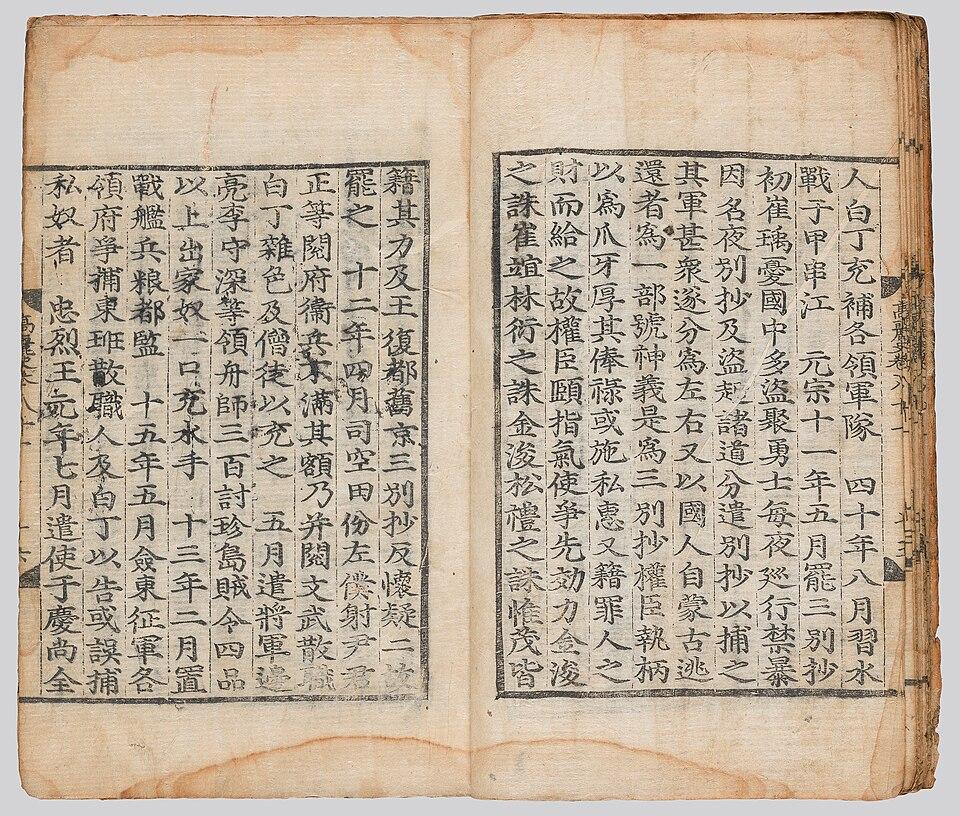
This article reconstructs the campaign through Korean historical records, particularly the Goryeosa (高麗史) and Goryeosa Jeolyo (高麗史節要), with additional comparison to the Yuan Shi (元史) and contemporary Japanese documentary records.
The Korean sources preserve a detailed sequence of events: the mobilization of Goryeo forces, the departure of the naval expedition, encounters with Japanese defenders, the loss of sailors in a storm, the outbreak of disease, disagreements among commanders over whether to continue the campaign, the delayed arrival of the Jiangnan Army, and the eventual destruction of a substantial part of the expeditionary fleet.
The article argues that the failure of the 1281 expedition cannot be adequately explained by the storm alone. The surviving records reveal a combination of military resistance, disease, deteriorating ships, exhausted provisions, coordination difficulties, and severe weather.
Keywords: 1281 invasion of Japan, Goryeo, Yuan dynasty, Kublai Khan, Kim Bang-gyeong, Hong Tagu, Fan Wenhu, Eastern Route Army, Jiangnan Army, Korean historical sources, maritime warfare.
1. INTRODUCTION: WHY THE KOREAN RECORDS MATTER
The second Mongol-led invasion of Japan in 1281 is frequently remembered in Japanese historical narratives through the concept of kamikaze, or the divine wind. The storm that damaged the invading fleet became one of the most influential episodes in the historical memory of the Mongol invasions.
However, the campaign was not simply a confrontation between Mongol forces and Japanese defenders. It was a multinational imperial operation whose military organization depended substantially on Goryeo.
The Korean historical records are particularly valuable because they preserve the activities of the Eastern Route Army from the perspective of the Goryeo court. They record the names of commanders, the movement of naval forces, the participation of Goryeo officers, and the difficulties experienced during the campaign.
Two Korean historical compilations are central to this investigation:
Goryeosa (高麗史), the official history of the Goryeo dynasty.
Goryeosa Jeolyo (高麗史節要), a chronological compilation of Goryeo history.
The relevant records are preserved in the National Institute of Korean History’s Korean History Database. The database provides original Chinese-character texts, Korean translations, chronological information, and access to historical source images.
The following study places these primary sources directly within the historical discussion rather than relying exclusively on modern summaries.
2. THE STRATEGIC PREPARATION: TWO EXPEDITIONARY ARMIES
The Yuan court prepared the second expedition after the failure of the 1274 campaign and the continued refusal of Japan to accept Yuan diplomatic demands.
The conquest of the Southern Song in 1279 changed the military balance. Yuan authorities could now mobilize additional troops and maritime resources from the former Southern Song territories.
The second expedition was organized around two principal formations:
The Eastern Route Army (東路軍)
This force was assembled through Goryeo and included Yuan military commanders, Goryeo soldiers, sailors, and naval personnel.
The Jiangnan Army (江南軍)
This force was assembled from former Southern Song territories and was commanded by Fan Wenhu (范文虎).
The two armies were expected to meet in Japanese waters and conduct a coordinated military operation.
PRIMARY SOURCE 1 — THE YUAN COURT’S PREPARATIONS
<AsyncImage query=”Yuan dynasty historical Chinese manuscript Yuan Shi woodblock printed page” aspectRatio=”16:9″ width=”100%” maxHeight={260}/>
<caption>Illustrative image of a historical Chinese printed chronicle. The primary source for this section is the Yuan Shi, volume 11, available through the National Institute of Korean History’s digital historical database.</caption>
The Yuan Shi, volume 11, records the preparations made in the first lunar month of 1281.
Original Chinese text:
命忻都·洪茶丘軍陸行抵日本,兵甲則舟運之。
English translation:
“The forces of Xindu and Hong Tagu were ordered to proceed by land toward Japan, while their weapons and armor were to be transported by ship.”
The same entry records additional Han Chinese troops being assigned to the expedition and describes logistical arrangements for supplying the forces along their route.[1]
This passage is important because it shows that the expedition required more than ships carrying soldiers. Weapons, armor, horses, provisions, and other military resources had to be transported through an organized supply system.
Consult the original record: National Institute of Korean History — Yuan Shi, volume 11, January 1281.
The source page provides the original Chinese text and its Korean translation.
3. GORYEO’S MILITARY MOBILIZATION AND THE MOVEMENT TOWARD HAPPO
Goryeo’s role in the second expedition began before the fleet departed.
The Goryeosa records that on the seventeenth day of the third lunar month, Kim Bang-gyeong (金方慶), together with the commanders Park Gu (朴球) and Kim Ju-jeong (金周鼎), led troops toward Happo (合浦).
Two days later, Yuan commanders Xindu (忻都) and Hong Tagu (洪茶丘) arrived in Goryeo.
The king subsequently discussed the Japanese expedition with the Yuan commanders.
PRIMARY SOURCE 2 — 《高麗史》卷二十九
Original Chinese text:
壬子 元帥金方慶、萬戶朴球·金周鼎,帥師向合浦。
English translation:
“On the day Renzi, the commander-in-chief Kim Bang-gyeong, together with the commanders Park Gu and Kim Ju-jeong, led the troops toward Happo.”
Source: Goryeosa (高麗史), volume 29, King Chungryeol, seventh year, third lunar month, seventeenth day.[2]
The same historical sequence records the arrival of Xindu and Hong Tagu and the subsequent discussion of military matters with the Goryeo king.
Original historical record: Goryeosa, volume 29 — March 1281.
The record demonstrates that Goryeo’s military mobilization was already underway before the main expedition departed.
Happo served as an important staging point for the Eastern Route Army. Its location on the southeastern Korean coast provided access to the maritime routes toward Tsushima, Iki, and Kyushu.
4. THE DEPARTURE OF THE EASTERN ROUTE ARMY: MAY 4, 1281
<AsyncImage query=”Mongol Yuan invasion Japan 1281 Korean peninsula Tsushima Iki historical route map” aspectRatio=”16:9″ width=”100%” maxHeight={300}/>
<caption>Modern geographical reconstruction of the principal maritime theater of the 1281 campaign. The route shown is interpretive and is not a contemporary thirteenth-century map.</caption>
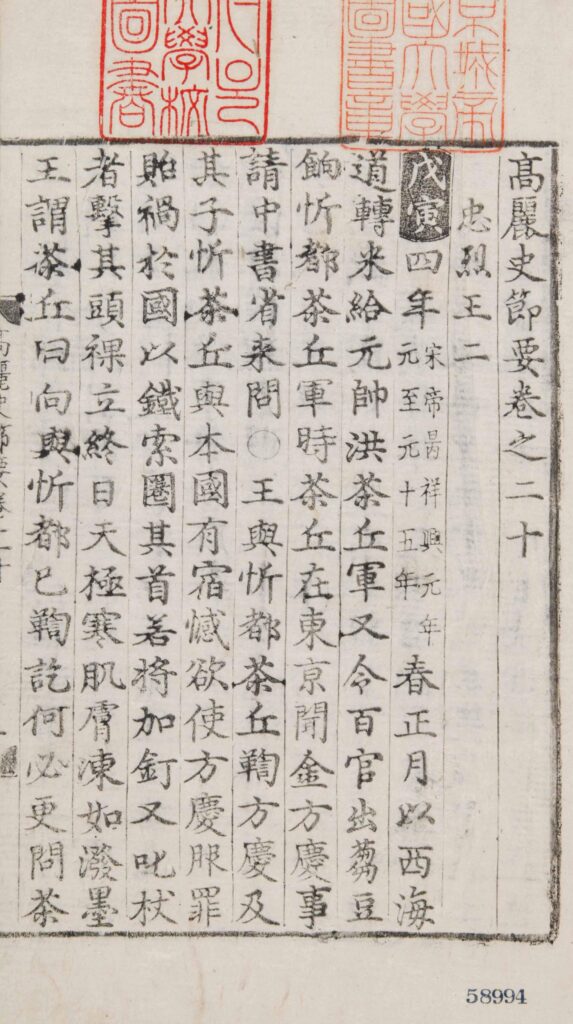
One of the clearest Korean records of the expedition’s departure is preserved in both the Goryeosa and the Goryeosa Jeolyo.
PRIMARY SOURCE 3 — 《高麗史節要》卷二十
Original Chinese text:
五月戊戌。忻都茶丘及金方慶朴球金周鼎等以舟師征日本。
English translation:
“In the fifth month, on the day Wuxu, Xindu, Hong Tagu, together with Kim Bang-gyeong, Park Gu, and Kim Ju-jeong, led the naval forces on an expedition against Japan.”
Date: Fourth day of the fifth lunar month, May 22, 1281, in the Gregorian calendar conversion used by the Korean historical database.[3]
Primary source image and original text: National Institute of Korean History — Goryeosa Jeolyo, volume 20, fifth month, 1281.
The source page includes an original historical image, the Chinese-character text, and the Korean translation.
The Goryeosa independently records the same departure:
五月戊戌 忻都·茶丘,及金方慶·朴球·金周鼎等,以舟師征日本。
Source: Goryeosa, volume 29, King Chungryeol, seventh year, fifth lunar month.[4]
View the corresponding Goryeosa record.
The agreement between these two Korean compilations is important. Both identify the same commanders and explicitly describe the expedition as a naval operation.
The term 舟師 (naval force) is particularly significant. It confirms that the historical record understood the expedition as a coordinated maritime military campaign.
5. THE FIRST MARITIME DIFFICULTIES: THE LOSS OF SAILORS
The Korean records reveal that the Eastern Route Army encountered maritime difficulties before the major engagements of the campaign.
On the twenty-seventh day of the fifth lunar month, the expedition reached the Japanese coastal area identified in the source as Sekai Village and Daimyo Port (世界村大明浦).
The Goryeosa Jeolyo records that Kim Ju-jeong first engaged the Japanese forces. Other troops subsequently disembarked and joined the fighting.
The expedition then prepared to move toward Iki Island.
PRIMARY SOURCE 4 — 《高麗史節要》卷二十
Original Chinese text:
諸軍向一歧島,船軍一百十三人、梢工三十六人遭風,失其所之。
English translation:
“When the forces proceeded toward Iki Island, 113 sailors and 36 ship pilots encountered a storm and disappeared.”
Date: Twenty-seventh day of the fifth lunar month, June 14, 1281, Gregorian calendar conversion.[5]
Original source: National Institute of Korean History — Goryeosa Jeolyo, May 27, 1281.
The corresponding Goryeosa entry records that 113 sailors and 36 ship pilots from the unit associated with Holumultap (忽魯勿塔) were reported missing after encountering a storm.[6]
View the original Goryeosa record.
This is a significant detail.
The expedition’s maritime difficulties did not begin only with the catastrophic storm traditionally associated with the final destruction of the fleet. The Korean sources already record the disappearance of sailors and navigators during the movement toward Iki.
The difference between the two compilations in the wording of the report should also be preserved: both record 113 sailors and 36 pilots, but the Goryeosa Jeolyo and Goryeosa present the reporting details somewhat differently.
6. THE BATTLE AND THE OUTBREAK OF DISEASE
<AsyncImage query=”Mongol invasion Japan 1281 Moko Shurai Ekotoba Japanese samurai battle illustrated scroll” aspectRatio=”16:9″ width=”100%” maxHeight={300}/>
<caption>A scene from the medieval Japanese illustrated tradition associated with the Mongol invasions. The *Mōko Shūrai Ekotoba* reflects the Japanese warrior perspective and should be interpreted as a historical visual source rather than a neutral battlefield photograph.</caption>
The most detailed Korean account of the fighting is preserved in the Goryeosa Jeolyo, volume 20, under the eighth day of the sixth lunar month.
PRIMARY SOURCE 5 — 《高麗史節要》卷二十
Original Chinese text:
六月壬申。金方慶、金周鼎、朴球、朴之亮等與日本兵力戰,斬首三百餘級。
English translation:
“In the sixth month, on the day Renshen, Kim Bang-gyeong, Kim Ju-jeong, Park Gu, Park Ji-ryang, and others fought fiercely against the Japanese forces and took more than 300 heads.”
Source: Goryeosa Jeolyo, volume 20, King Chungryeol, seventh year, sixth lunar month, eighth day.[7]
The original entry continues by describing a Japanese counterattack, the scattering of Yuan forces, Hong Tagu’s retreat, and a subsequent engagement in which the expeditionary forces suffered another defeat.
The same entry then records the spread of disease:
軍中大疫,死于兵疫者,凡三千餘人。
English translation:
“A severe epidemic spread through the army; those who died from battle and disease numbered more than 3,000.”
Important qualification: The source’s wording combines deaths in battle and from disease. The figure must not be presented as a confirmed number of disease victims alone.
Original source and full passage: National Institute of Korean History — Goryeosa Jeolyo, volume 20, June 8, 1281.
The historical passage is especially important because it records several factors affecting the expedition before the final storm.
These included:
Direct military resistance by Japanese forces.
A counterattack that caused Yuan forces to scatter.
The retreat of Hong Tagu.
A subsequent defeat.
A serious outbreak of disease.
More than 3,000 combined deaths from fighting and disease.
The record therefore contradicts any interpretation that the expedition remained militarily intact until a single storm suddenly destroyed it.
7. THE CRISIS OF THE EXPEDITION: ROTTEN SHIPS AND EXHAUSTED PROVISIONS
One of the most revealing passages in the Goryeosa Jeolyo concerns the discussion among the commanders about whether to continue the campaign.
After repeated military difficulties, Xindu, Hong Tagu, and other commanders considered withdrawing.
Their concern was not limited to the Japanese defenders.
The historical account specifically mentions the failure of the Jiangnan Army to arrive on schedule, deteriorating ships, and exhausted food supplies.
PRIMARY SOURCE 6 — THE COMMANDERS’ DISCUSSION
Original Chinese text:
船腐糧盡,其將柰何。
English translation:
“The ships are deteriorating and the provisions are exhausted. What are we to do?”
Source: Goryeosa Jeolyo, volume 20, sixth lunar month, 1281.[7]
The full passage explains that the Jiangnan Army had been expected to meet the Eastern Route Army at Iki Island before the middle of the sixth lunar month.
However, the southern force had not arrived by the expected time.
The commanders therefore faced a serious operational problem: the Eastern Route Army had already fought several engagements, experienced casualties, and lost sailors, while its ships and provisions were deteriorating.
Kim Bang-gyeong opposed an immediate withdrawal. He argued that the imperial order had provided three months of provisions and that one month’s supply remained. He proposed waiting for the Jiangnan Army and then continuing the attack.
This disagreement is historically significant.
It reveals that the campaign was affected by logistical conditions and command disagreements before the final maritime disaster.
It also demonstrates that the Eastern Route Army was not operating in isolation. Its strategic plan depended on coordination with the Jiangnan Army.
The complete primary passage should be read directly rather than relying on a shortened modern summary.
Read the full original passage — Goryeosa Jeolyo, volume 20.
8. THE ARRIVAL OF THE JIANGNAN ARMY AND THE GREAT STORM
<AsyncImage query=”Takashima Japan Mongol invasion 1281 underwater archaeological shipwreck artifacts museum” aspectRatio=”16:9″ width=”100%” maxHeight={300}/>
<caption>Archaeological remains associated with the 1281 Mongol-led invasion discovered in the waters around Takashima, Japan. These underwater discoveries provide material evidence of the maritime campaign. Image credit and individual object identification should be checked against the holding institution before publication.</caption>
The Goryeosa Jeolyo continues its account by recording the arrival of Fan Wenhu’s force.
The source states that Fan Wenhu arrived with 3,500 warships and more than 100,000 southern troops.
The arrival coincided with severe weather.
PRIMARY SOURCE 7 — 《高麗史節要》卷二十
Original Chinese text:
旣而文虎以戰艦三千五百艘、蠻軍十餘萬至,適値大風,蠻軍皆溺死。
English translation:
“Afterward, Fan Wenhu arrived with 3,500 warships and more than 100,000 southern troops. They encountered a great storm, and the southern troops drowned.”
Source: Goryeosa Jeolyo, volume 20, sixth lunar month, 1281.[7]
The Goryeosa also records the arrival of Fan Wenhu’s force and the storm-related losses.[8]
Original Goryeosa record, volume 29, sixth month, 1281.
The figures of 3,500 ships and more than 100,000 soldiers are the numbers transmitted by the historical chronicle. They should not be treated as independently verified modern counts.
The account also does not establish that every ship and every soldier was destroyed.
The wording of the source should be distinguished from the precise reconstruction of the disaster.
9. THE YUAN IMPERIAL ORDER TO WITHDRAW
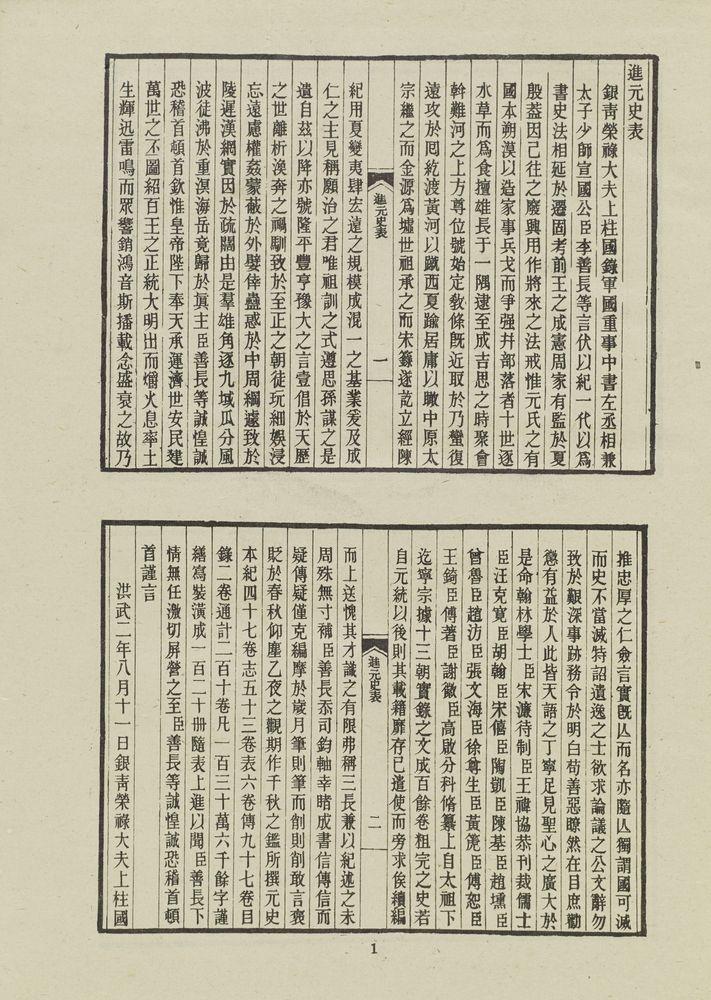
The Yuan court’s decision to recall the expedition is recorded in the Yuan Shi, volume 11.
PRIMARY SOURCE 8 — 《元史》卷十一
Original Chinese text:
詔征日本軍還,所在官給糧。
English translation:
“An imperial edict ordered the army campaigning against Japan to return, and the local authorities were instructed to provide provisions.”
The same record names the commanders Xindu, Hong Tagu, Fan Wenhu, Li Ting, and Kim Bang-gyeong.
It states that their ships were overwhelmed by wind and waves and that the surviving forces returned toward the Goryeo frontier.
The source includes the striking statement that only one or two out of every ten remained.[9]
Date: Twenty-ninth day of the eighth lunar month, September 13, 1281, Gregorian calendar conversion.
Original Chinese text, Korean translation, and historical source record: National Institute of Korean History — Yuan Shi, volume 11, recall of the Japanese expedition.
The statement concerning the surviving troops is a report preserved in the Yuan Shi. It should not be treated as an exact statistical survival rate for every individual unit.
Nevertheless, the record confirms the catastrophic condition of the expedition and the Yuan court’s decision to terminate the operation.
10. THE YUAN GENERAL’S BIOGRAPHY: A SECOND ACCOUNT OF THE DISASTER
A separate account appears in the Yuan Shi, volume 154, in the biography of a Yuan military commander.
PRIMARY SOURCE 9 — 《元史》卷一百五十四
Original Chinese text:
至元十八年,與右丞欣都將舟師四萬,由高麗金州合浦以進。
English translation:
“In the eighteenth year of Zhiyuan, he accompanied the Right Commissioner Xindu, leading a naval force of 40,000, advancing from Happo in Geumju, Goryeo.”
The account continues by describing Fan Wenhu’s force of approximately 100,000, which was to cross the sea from the southern Chinese ports and meet the Eastern Route Army near Iki and Hirado.
It concludes:
兵未交,秋八月,風壞舟而還。
English translation:
“Before the armies engaged, in the autumn, in the eighth month, the wind destroyed the ships, and they returned.”
Source: Yuan Shi, volume 154, biography 41.[10]
Original source: National Institute of Korean History — Yuan Shi, volume 154.
This passage is particularly important because it provides another Yuan historical account of the campaign.
It identifies Happo in Goryeo as the point of departure for the Eastern Route Army and gives a separate figure of 40,000 for the force led by Xindu.
The difference between this figure and other numerical descriptions of the expedition illustrates why the army’s size should not be represented through a single unquestioned total.
The passage also emphasizes the storm’s role in the final destruction of the ships.
11. JAPANESE DOCUMENTARY EVIDENCE: THE RESPONSE TO THE INVASION
The Korean and Yuan records should be compared with Japanese documentary evidence.
One relevant source is the Kanemika Kyōki (勘仲記), also referred to as Kane-naka Kyōki, a Japanese court diary.
The National Institute of Korean History preserves an entry dated the fourth day of the sixth lunar month of Kōan 4, corresponding to June 21, 1281.
PRIMARY SOURCE 10 — 《勘仲記》
Original Japanese text:
異賊舟一艘自日本令夜討之由,自鎭西飛脚到來。
English translation:
“A messenger arrived from Chinzei reporting that a vessel belonging to the foreign enemy had launched a night attack from Japan.”
The record describes the Japanese court’s response, including religious ceremonies and prayers for protection against the foreign forces.[11]
Original Japanese record and Korean historical explanation: National Institute of Korean History — Japanese documentary source, 1281.
The accompanying scholarly explanation identifies the two Yuan expeditionary formations:
The Eastern Route Army, consisting of Mongol and Goryeo forces.
The Jiangnan Army, consisting largely of former Southern Song troops.
It also describes the Eastern Route Army’s departure from Happo, the difficulties around Hakata, the movement toward Iki, and the later arrival of the Jiangnan Army.
The original diary entry and the Korean editorial explanation should be distinguished: the diary itself records the Japanese court’s response, while the accompanying explanation reconstructs the wider military campaign from multiple sources.
12. WHY THE EXPEDITION FAILED: A MULTI-FACTOR EXPLANATION
The surviving Korean and Yuan sources reveal a more complex sequence than the conventional single-storm explanation.
The campaign experienced several overlapping difficulties:
Military resistance: The Korean records describe direct fighting with Japanese forces and the defeat of Yuan troops in a subsequent engagement.
Loss of personnel: The records identify sailors and ship pilots who disappeared during an earlier storm.
Disease: The Goryeosa Jeolyo records more than 3,000 combined deaths from combat and disease.
Logistical deterioration: The commanders explicitly complained that ships were deteriorating and provisions were exhausted.
Failure of coordination: The Jiangnan Army did not arrive at the expected time, creating disagreement among the commanders over whether to withdraw or wait.
Severe weather: The arrival of Fan Wenhu’s fleet coincided with a great storm, which the historical sources associate with catastrophic losses.
These factors should be examined together.
The storm was a major element in the destruction of the expedition, but the historical records show that the military operation was already under considerable pressure.
13. GORYEO’S ROLE: A CENTRAL MARITIME BASE WITHIN THE YUAN IMPERIAL SYSTEM
The second expedition demonstrates the strategic importance of Goryeo.
Its contribution included military commanders, soldiers, sailors, ship pilots, ports, and maritime infrastructure.
The records specifically identify Kim Bang-gyeong, Park Gu, and Kim Ju-jeong as commanders of the Eastern Route Army.
They also preserve the names of additional Goryeo officers who participated in the fighting.
However, Goryeo’s involvement should not be described as an equal partnership with the Yuan Empire.
The Goryeo court retained its royal institutions but operated under substantial Yuan political and military pressure. The mobilization of its population and resources took place within this unequal relationship.
The historical record therefore presents two realities at once:
Goryeo was a major military and maritime participant in the campaign.
Its participation occurred within the political framework of Yuan imperial authority.
This distinction is essential for an accurate understanding of thirteenth-century East Asian history.
14. AUTHOR’S THESIS
The second Mongol-led invasion of Japan in 1281 should be understood as a multinational maritime military operation whose outcome was shaped by more than the destruction of ships in a storm.
The Korean historical sources reveal the structure and experience of the Eastern Route Army in unusual detail.
The Goryeosa and Goryeosa Jeolyo document the mobilization of Goryeo forces, the departure of the naval expedition, the battles against Japanese defenders, the loss of sailors, the outbreak of disease, and the serious logistical problems faced by the commanders.
The Yuan Shi adds an imperial perspective on the final withdrawal and the catastrophic condition of the surviving expeditionary forces.
Read together, these sources reveal a campaign affected by military resistance, disease, deteriorating vessels, exhausted supplies, delayed coordination, and severe maritime weather.
Goryeo was not simply a geographical passageway between the Yuan Empire and Japan. Its commanders, soldiers, sailors, and ports formed an essential part of the expeditionary system.
At the same time, the political circumstances of Goryeo’s participation must be acknowledged. Its contribution took place under Yuan imperial authority and within an unequal political relationship.
For the Heavenly Wind 750 research initiative, the Korean records are indispensable to understanding the 1281 campaign.
The history of the Mongol–Japanese expeditions must be examined not only through Japanese memories of the divine wind or Yuan imperial ambitions, but also through the historical experience of Goryeo.
The storm destroyed ships, but the historical record reveals a much wider story: military resistance, disease, failing logistics, and the central role of Goryeo in the maritime history of East Asia.
REFERENCES AND SOURCE NOTES
PRIMARY SOURCES
Yuan Shi (元史), volume 11, Shizu, eighth year of Zhiyuan, first lunar month, 1281. National Institute of Korean History, Korean History Database.
https://db.history.go.kr/goryeo/level.do?levelId=cnkb_060r_0110_0150Goryeosa (高麗史), volume 29, King Chungryeol, seventh year, third lunar month, seventeenth day, 1281.
https://db.history.go.kr/goryeo/itemLevelKrList.do?parentId=kr_029_0030_0030&types=oGoryeosa Jeolyo (高麗史節要), volume 20, King Chungryeol, seventh year, fifth lunar month, fourth day, 1281.
https://db.history.go.kr/id/kj_020_0010_0040_0050_0010Goryeosa (高麗史), volume 29, King Chungryeol, seventh year, fifth lunar month, fourth day, 1281.
https://db.history.go.kr/id/kr_029_0030_0050_0010Goryeosa Jeolyo (高麗史節要), volume 20, King Chungryeol, seventh year, fifth lunar month, twenty-seventh day, 1281.
https://db.history.go.kr/goryeo/itemLevelKrList.do?itemId=kj&parentId=kj_020r_0010_0040_0050&types=rGoryeosa (高麗史), volume 29, King Chungryeol, seventh year, fifth lunar month, twenty-ninth day, 1281.
https://db.history.go.kr/goryeo/itemLevelKrList.do?parentId=kr_029r_0030_0050&types=rGoryeosa Jeolyo (高麗史節要), volume 20, King Chungryeol, seventh year, sixth lunar month, eighth day, 1281.
https://db.history.go.kr/id/kj_020_0010_0040_0060_0010Goryeosa (高麗史), volume 29, King Chungryeol, seventh year, sixth lunar month, 1281.
https://db.history.go.kr/goryeo/itemLevelKrList.do?parentId=kr_029r_0030_0060&types=rYuan Shi (元史), volume 11, Shizu, eighth year of Zhiyuan, eighth lunar month, twenty-ninth day, 1281.
https://db.history.go.kr/goryeo/level.do?levelId=cnkb_060r_0110_0270Yuan Shi (元史), volume 154, biography 41, account of the 1281 expedition.
https://db.history.go.kr/goryeo/level.do?levelId=cnkb_060_0850_0260Kanemika Kyōki (勘仲記), Kōan 4, sixth lunar month, fourth day, 1281. National Institute of Korean History, Japanese sources related to Goryeo.
https://db.history.go.kr/id/jpkr_0060_0100
MODERN SCHOLARSHIP
Yoon, Yong-hyuk (윤용혁). “여원 연합군의 일본 침입과 고려 軍船” [The Goryeo and Mongol Combined Forces Invasion against Japan and Military Ships of the Goryeo Dynasty]. Military History, no. 69 (2008): 69–114.
https://www.kci.go.kr/kciportal/ci/sereArticleSearch/ciSereArtiView.kci?sereArticleSearchBean.artiId=ART001297115
Yoon, Yong-hyuk (윤용혁). “日本에 있어서 ‘元寇’ 연구의 현황(1976~2011)” [The State of Research on the Mongol Invasions in Japan, 1976–2011]. Island Culture, no. 41 (2013): 131–162.
https://www.kci.go.kr/kciportal/landing/article.kci?arti_id=ART001784770
IMPERIALGG.COM
HEAVENLYWIND750.COM