
TSENDIIN DAMDINSÜREN — THE SCHOLAR WHO BROUGHT THE SECRET HISTORY OF THE MONGOLS TO MODERN READERS
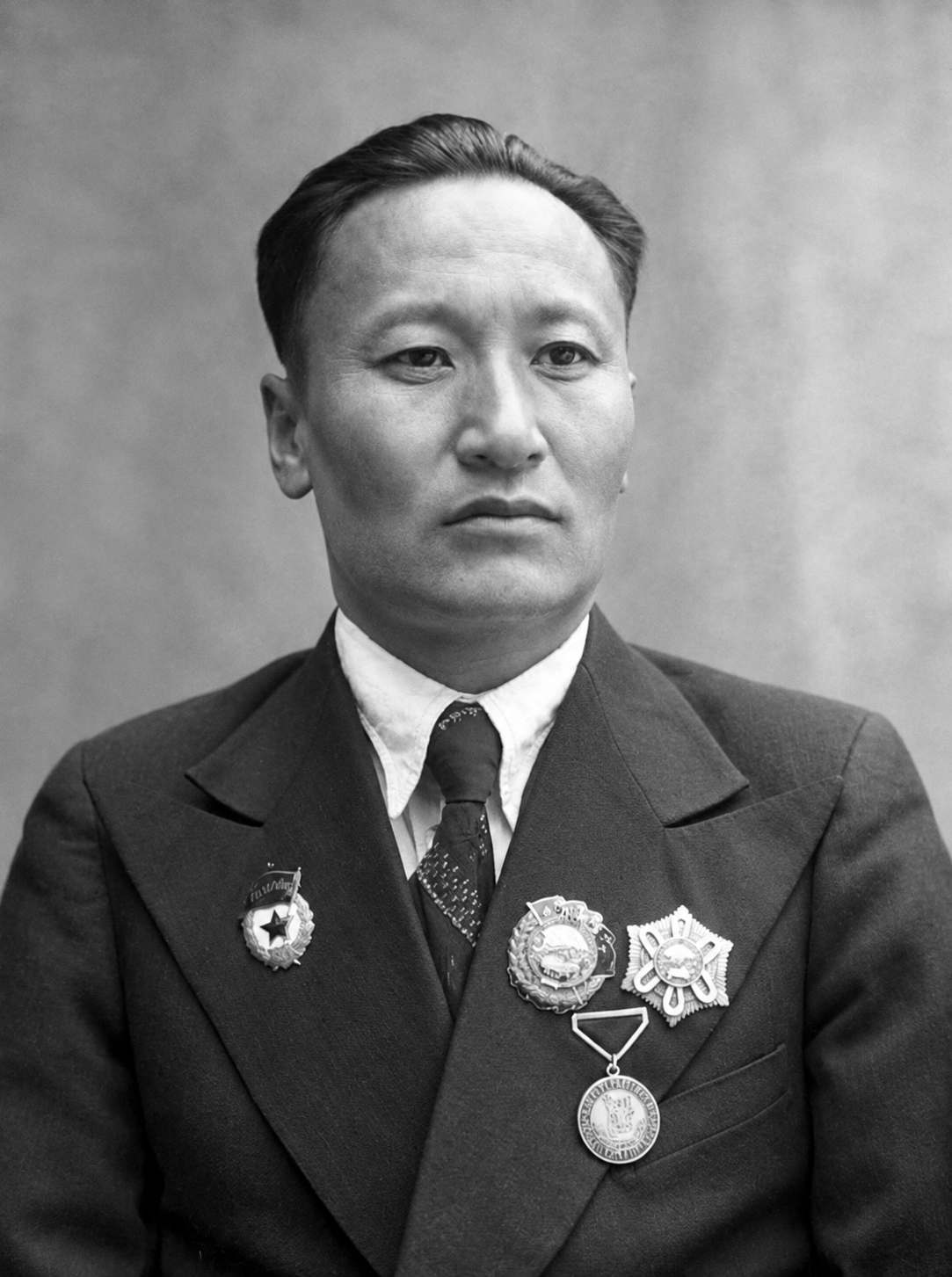
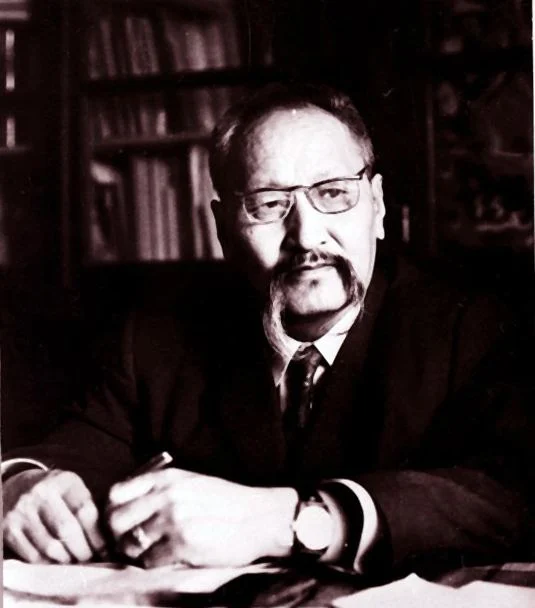
Damdinsüren was born on September 14, 1908, in the territory of present-day Matad sum, Dornod Province, Mongolia. One of Damdinsüren’s most enduring achievements was his translation of The Secret History of the Mongols, the foundational medieval narrative of Chinggis Khan and the early Mongol Empire.
He translated works by Russian and other foreign authors, including Alexander Pushkin’s The Tale of the Fisherman and the Fish and Samuil Marshak’s The Cat’s House.
Tsendiin Damdinsüren (1908–1986) was one of Mongolia’s most influential writers, linguists, literary scholars, and translators. His work helped shape modern Mongolian literature, strengthen the written language, and make important works of Mongolian and world literature accessible to new generations. Among his greatest achievements was his translation of The Secret History of the Mongols into modern Mongolian, a landmark contribution to the preservation and transmission of Mongolia’s historical heritage.
EARLY LIFE AND EDUCATION
Damdinsüren was born on September 14, 1908, in the territory of present-day Matad sum, Dornod Province, Mongolia. His father, Tsend, taught him to read and write in traditional Mongolian script. This early education laid the foundation for a lifetime devoted to language, literature, and scholarship.
From 1933 to 1938, Damdinsüren studied in Leningrad, where he pursued Oriental studies. He later continued his academic training and earned an advanced degree through research on the historical foundations of the Epic of Geser. His scholarly interests encompassed Mongolian literature, folklore, historical texts, linguistics, and the cultural connections between Mongolia and other civilizations.
THE SECRET HISTORY OF THE MONGOLS
One of Damdinsüren’s most enduring achievements was his translation of The Secret History of the Mongols, the foundational medieval narrative of Chinggis Khan and the early Mongol Empire.
Composed in the thirteenth century, the Secret History preserves accounts of Mongol origins, political alliances, family relationships, warfare, leadership, and the formation of imperial power. Its language and narrative style make it both an essential historical source and a major work of world literature.
Damdinsüren’s translation made this medieval text accessible to modern Mongolian readers. Published in complete form in Ulaanbaatar in 1947 in traditional Mongolian script, it became one of the most influential modern Mongolian versions of the work. It was also reprinted in Ulaanhot, Inner Mongolia, in 1948. His translation helped carry the historical and literary world of the medieval Mongols into modern literary culture. <Cite refs={[“turn433938search18”]}/>
Translating the Secret History required more than replacing unfamiliar words with modern equivalents. The translator had to convey the rhythm, expressions, cultural references, and narrative power of a text written many centuries earlier. Damdinsüren’s work became an important bridge between Mongolia’s medieval literary heritage and its modern reading public.
MODERN MONGOLIAN LANGUAGE AND LITERATURE
Damdinsüren also made a major contribution to the development of modern Mongolian writing. The modern orthographic rules he helped formulate came into nationwide use on January 1, 1946, during Mongolia’s transition to the new Cyrillic-based writing system. His linguistic work contributed to the standardization of written Mongolian and the development of modern literary and educational materials. <Cite refs={[“turn433938search2″,”turn433938search5”]}/>
As a creative writer, he produced poetry, short stories, and prose that became part of Mongolia’s literary canon. His notable works include Gologdson Khüükhen (The Rejected Girl), Buurаl Eej Min (My Dear Old Mother), and Khachin Khurim (The Strange Wedding). His writing explored human relationships, social change, and everyday life, combining literary expression with a close understanding of Mongolian society.
His literary career began in the late 1920s. Gologdson Khüükhen, published in 1929, became one of the early works of modern Mongolian prose. His poems and stories subsequently appeared in collections and educational publications, reaching a broad readership. <Cite refs={[“turn433938search1″,”turn433938search7”]}/>
A TRANSLATOR BETWEEN CULTURES
Damdinsüren’s contribution extended beyond Mongolian literature. He translated works by Russian and other foreign authors, including Alexander Pushkin’s The Tale of the Fisherman and the Fish and Samuil Marshak’s The Cat’s House. These translations introduced generations of Mongolian children and readers to international literary traditions. <Cite refs={[“turn433938search7″,”turn433938search8”]}/>
He also worked on dictionaries, folklore, and classical literature. His Russian–Mongolian Dictionary, published in the twentieth century, formed part of his broader effort to strengthen linguistic understanding and support education. His research on the Epic of Geser and other traditional texts demonstrated his commitment to studying Mongolian literary heritage through both historical scholarship and textual analysis.
RECOGNITION AND LEGACY
Damdinsüren received Mongolia’s State Prize three times, in 1946, 1947, and 1951. In 1986, he received the title of People’s Writer, becoming the first recipient of this distinction in Mongolia. He was also elected a full member of the Mongolian Academy of Sciences in 1961 and received a doctorate in philological sciences in 1971. <Cite refs={[“turn433938search0″,”turn433938search2”]}/>
He died in June 1986, leaving behind a substantial legacy of literary works, translations, linguistic research, and scholarship.
Tsendiin Damdinsüren’s importance lies in the way his different roles reinforced one another. As a writer, he enriched modern Mongolian literature. As a linguist, he helped shape the written language. As a translator, he opened paths between Mongolian and international literature. As a scholar, he helped bring a foundational medieval text into the intellectual life of modern Mongolia.
His translation of The Secret History of the Mongols remains a particularly powerful example of how scholarship can preserve a nation’s literary heritage while making it accessible to new generations.
BIOGRAPHY
Full name: Tsendiin Damdinsüren (Tsendiin Damdinsuren)
Born: September 14, 1908
Birthplace: Present-day Matad sum, Dornod Province, Mongolia
Died: June 1986
Nationality: Mongolian
Professions: Writer, poet, linguist, literary scholar, translator
Major contribution: Modern Mongolian translation of The Secret History of the Mongols
Other notable works: Gologdson Khüükhen , Buurаl Eej Min , Khachin Khurim
Honors: Three-time recipient of Mongolia’s State Prize; People’s Writer; full member of the Mongolian Academy of Sciences
SOURCES
Mongolian Historical Dictionary, “Damdinsüren, Tsendiin.”
Mongolian digital library, author biography and works of Tsendiin Damdinsüren.
Research publication on Mongolian historical literature and the publication history of The Secret History of the Mongols.
ImperialGG.com | History · Literature · Cultural Heritage