
JULES VERNE — THE WRITER WHO MADE THE IMPOSSIBLE FEEL REAL
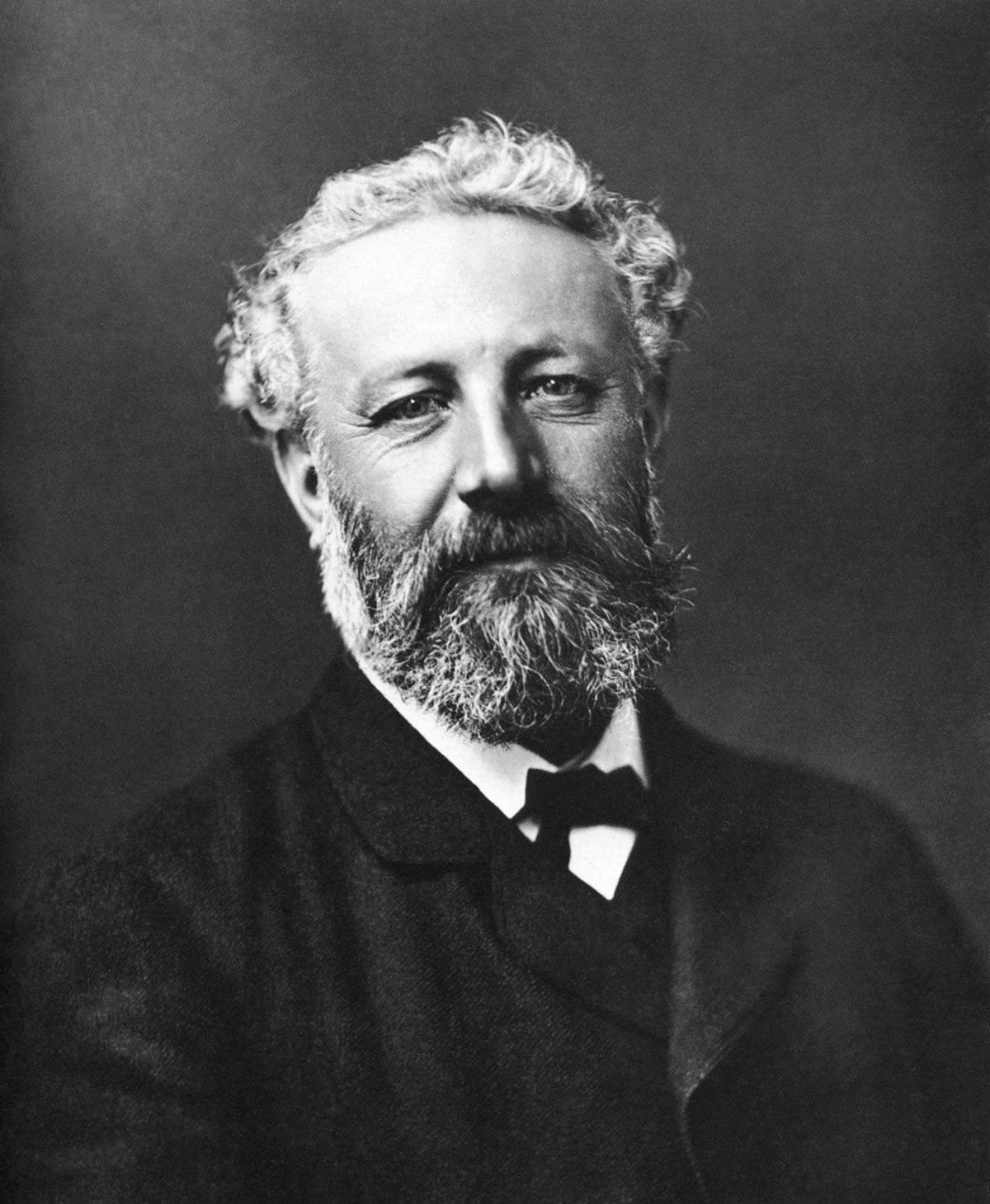
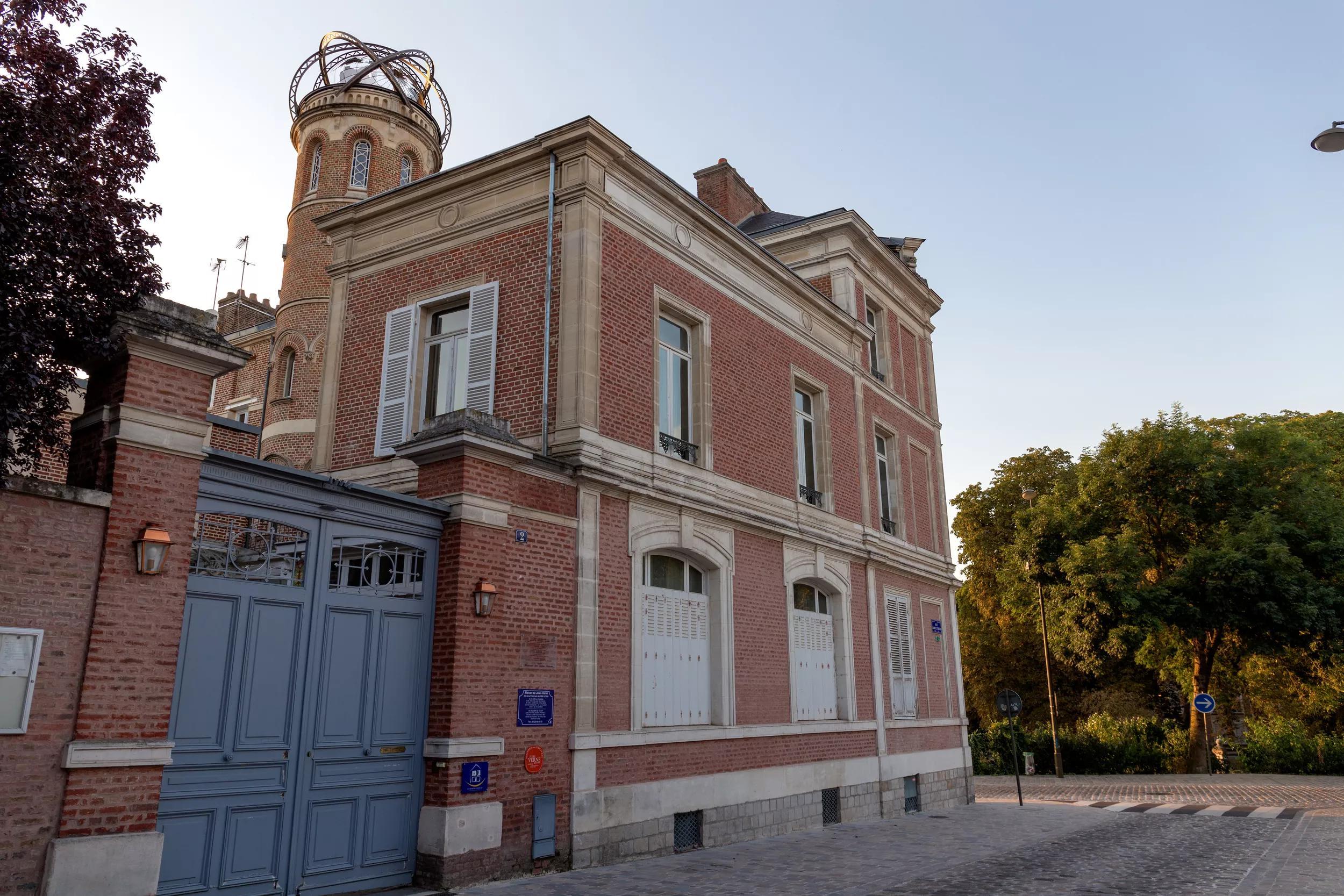
THE HOUSE OF JULES VERNE — AMIENS, FRANCE
Jules Verne moved into this distinctive house at 2 Rue Charles-Dubois in Amiens in October 1882 and lived there with his wife, Honorine, until 1900. Built in the nineteenth century, the house is recognizable by its red-brick exterior and distinctive tower. During these years, Verne was internationally famous for his Extraordinary Voyages, the literary series that included Twenty Thousand Leagues Under the Seas, Around the World in Eighty Days, and other celebrated adventures.
The house reflected both his public success and his private working life. Visitors and journalists came to see his extensive personal library, while his own study was notably modest. The building is now a museum where visitors can explore the writer’s life, work, and connection to Amiens.
Location: 2 Rue Charles-Dubois, Amiens, France
Residence: 1882–1900
Today: Maison de Jules Verne museum
Some writers enter our lives as names in a book. Others open a door to an entirely new world. For me, Jules Verne was one of those writers.
When I was between twelve and fifteen years old, I read his novels with deep fascination. The Mysterious Island and Twenty Thousand Leagues Under the Seas were among the books that drew me into his extraordinary world of exploration, scientific imagination, adventure, and human endurance. At that age, reading Verne was more than following a story. It was an invitation to travel beyond the boundaries of the world I knew.
A WORLD BEYOND THE IMAGINATION
Born in Nantes, France, on February 8, 1828, Jules Verne became one of the most influential writers of adventure and early science fiction. His novels carried readers beneath the oceans, toward the center of the Earth, into the skies, and across distant continents. He combined imaginative storytelling with scientific knowledge and geographical detail, making extraordinary journeys feel remarkably possible.
In Twenty Thousand Leagues Under the Seas, first published in book form in 1870, Verne introduced readers to Captain Nemo and the submarine Nautilus. The ocean became a vast, mysterious world waiting to be explored. Through the eyes of Professor Aronnax and his companions, readers encountered unfamiliar marine life, underwater landscapes, and the possibilities of technology far ahead of its time. <Cite refs={[“turn433182search12″,”turn433182search0”]}/>
In The Mysterious Island, published in book form in 1875, a group of castaways must survive on an unknown island. Their survival depends on knowledge, ingenuity, cooperation, and the ability to transform natural resources into practical solutions. The novel celebrates not only adventure but also the human capacity to think, build, adapt, and persevere. <Cite refs={[“turn433182search13″,”turn433182search0”]}/>
THE POWER OF A BOOK READ IN YOUTH
Looking back, I understand why these stories made such a strong impression on me as a young reader. Verne’s books encouraged curiosity about the natural world and the inventions that might change it. His characters confronted uncertainty with observation, courage, and knowledge. They made exploration an intellectual adventure as much as a physical one.
A novel read at twelve or fifteen can remain in one’s memory for decades. Its significance may become clearer only with time. What first appears to be an exciting story can later be understood as an invitation to think more deeply about science, civilization, human resilience, and the relationship between people and nature.
Verne did not simply describe fantastic machines and distant places. He imagined how knowledge could expand the boundaries of human experience. His works helped establish a literary tradition in which scientific possibilities became the foundation for adventure and philosophical reflection.
A LEGACY THAT CROSSES BORDERS
Jules Verne’s novels have been translated, republished, adapted for film and television, and read by generations of readers around the world. Their enduring appeal lies in the combination of suspense, imagination, scientific curiosity, and timeless human questions. His influence continues to be discussed in the history of science fiction and adventure literature. <Cite refs={[“turn433182search4″,”turn433182search15”]}/>
For me, remembering Verne means returning to the wonder of those early reading years—to the mysterious island, the silent depths of the ocean, and the feeling that the world was larger and more astonishing than I had imagined.
Some books entertain us for an afternoon. Others remain with us throughout our lives. Jules Verne gave me stories of distant worlds when I was young, and the memory of reading them remains a lasting part of my own journey through literature.
JULES VERNE (1828–1905)
Nationality: French
Profession: Novelist and playwright
Literary significance: Pioneer of modern science fiction and adventure literature
Major works: Twenty Thousand Leagues Under the Seas, The Mysterious Island, Journey to the Center of the Earth, Around the World in Eighty Days
ImperialGG.com | Myth and Reality