MARCO POLO’S CIPANGU
By Altanbagana Baatar
DBA Candidate| Founder & Organizer
Heavenly Wind 750 International Conference
Heavenlywind750.com | Imperilagg.com
27 October 2026
HOW THE IMAGE OF A GOLD-RICH JAPAN SHAPED EUROPEAN HISTORICAL IMAGINATION
Abstract: In the late thirteenth century, Marco Polo introduced European readers to an extraordinary account of an island called Cipangu, situated far to the east of the Asian mainland. According to his narrative, this independent island possessed immense quantities of gold, an exceptionally wealthy ruler, and a magnificent palace covered in precious metal. Although Polo never visited Japan himself, his account became one of medieval Europe’s most influential descriptions of the distant archipelago. This article examines the historical context of Polo’s account, distinguishes reported information from verifiable observation, and investigates how the image of a wealthy Japan influenced European geographical imagination and later maritime ambitions. Particular attention is given to the relationship between medieval travel literature, the transmission of geographical knowledge, and Christopher Columbus’s search for an eastward route to Asia.
Keywords: Marco Polo, Cipangu, Japan, Kublai Khan, medieval travel literature, European geographical imagination, Christopher Columbus, maritime exploration.
1. Introduction: An Island of Extraordinary Wealth
When Marco Polo’s travel narrative circulated in Europe around the end of the thirteenth century, it presented readers with a vision of Asia that extended beyond the familiar commercial and geographical horizons of the Mediterranean world. Among its most remarkable descriptions was that of Cipangu, the name through which Polo’s account introduced Japan to a broad European readership.
In Book III, Chapter II of the Travels, Polo describes Cipangu as a large island in the eastern ocean, approximately 1,500 miles from the Asian mainland according to his account. He portrays its inhabitants as independent, its ruler as powerful, and its wealth in gold as extraordinary. He also describes a royal palace whose golden surfaces seem almost beyond belief.
These details were more than colorful elements in a travel narrative. They contributed to an enduring European image of Japan as a distant, wealthy, and politically independent land. Polo’s account became an important part of the geographical knowledge through which Europeans imagined East Asia before sustained direct contact with Japan.
The historical significance of this description, however, requires an essential distinction: Polo’s account of Japan was not based on a journey he personally made to the Japanese islands. Its importance lies instead in what it reveals about the circulation of information across Mongol-ruled Asia and the power of travel literature to shape European expectations.
2. Marco Polo and the World of Kublai Khan
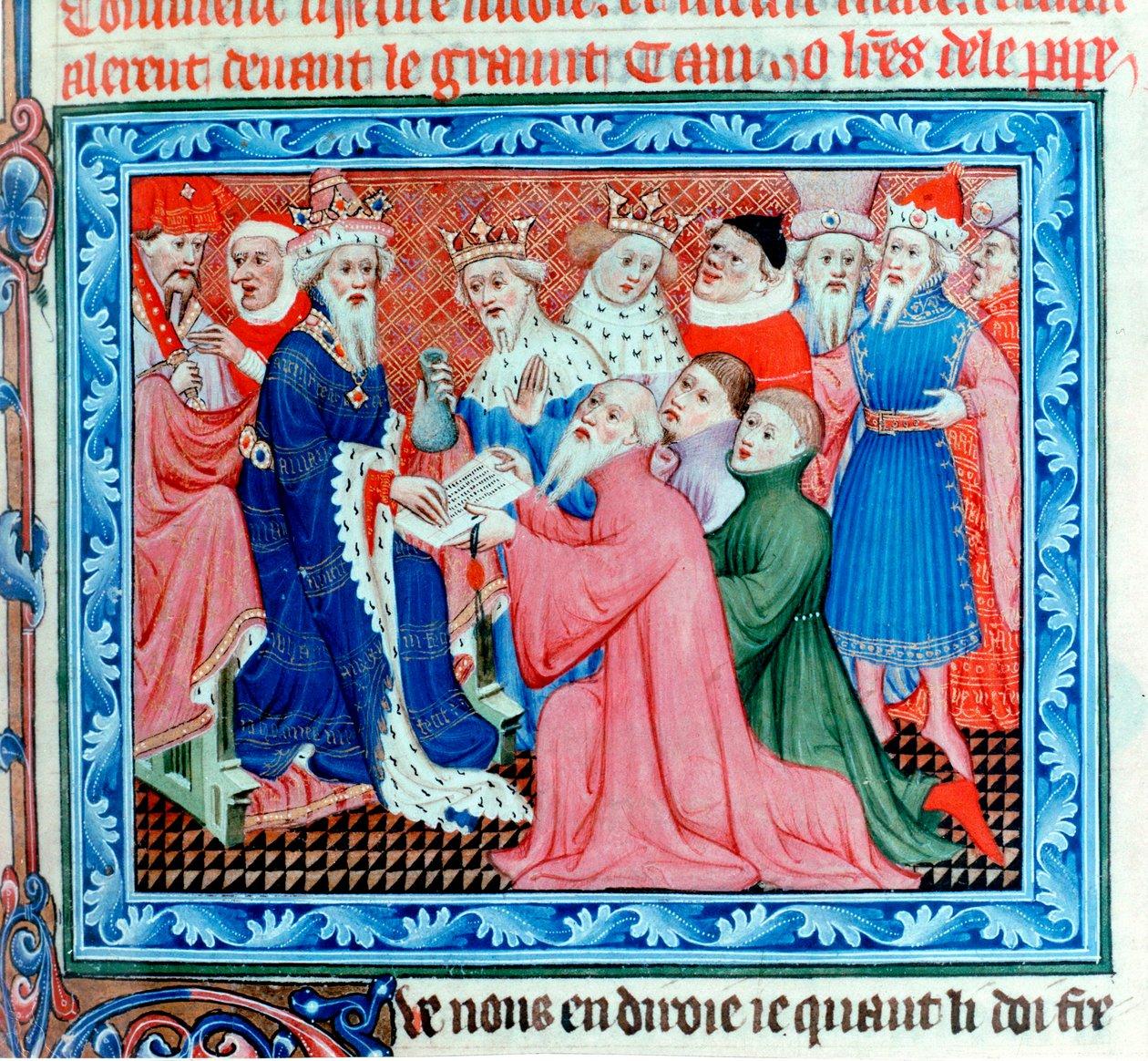
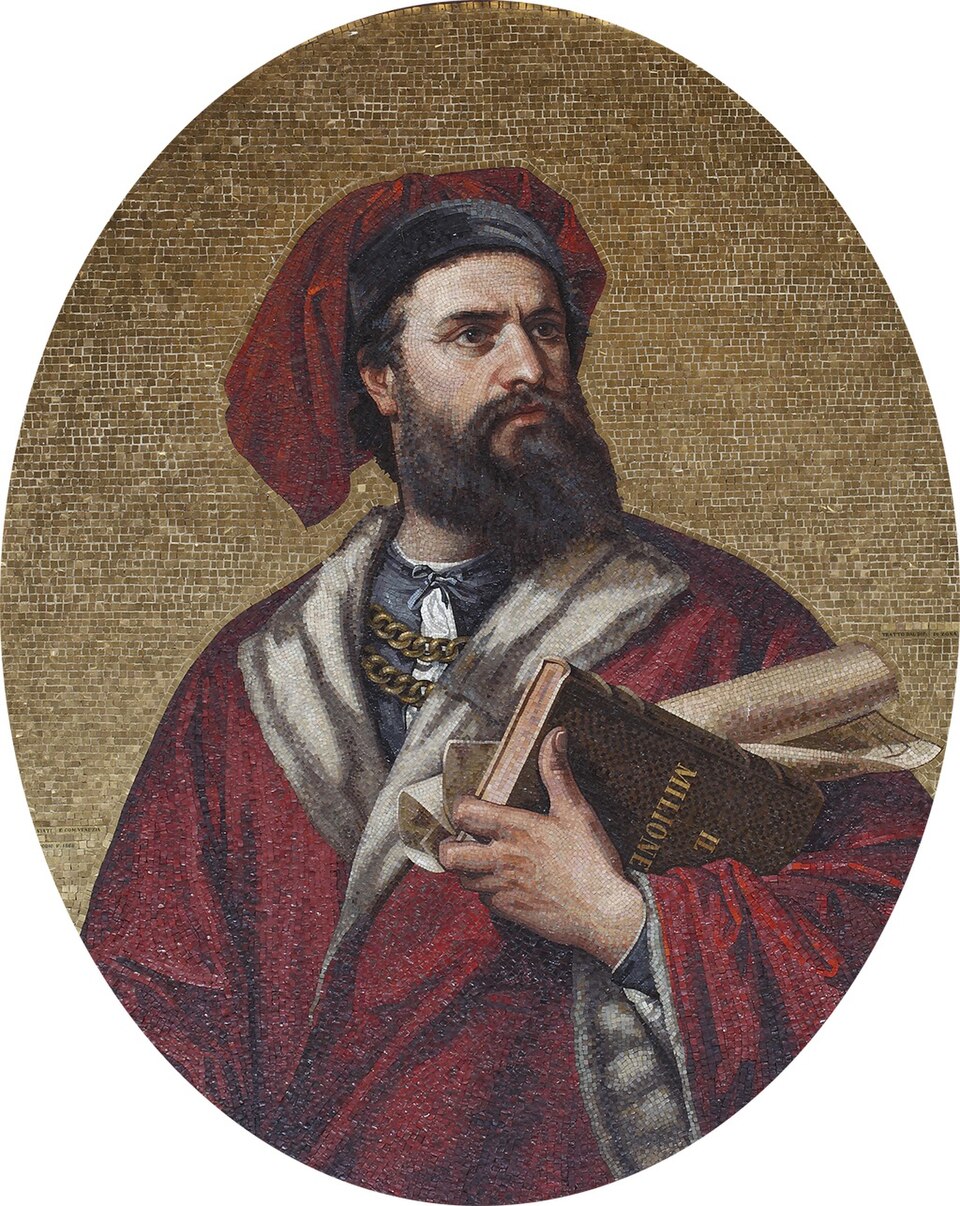
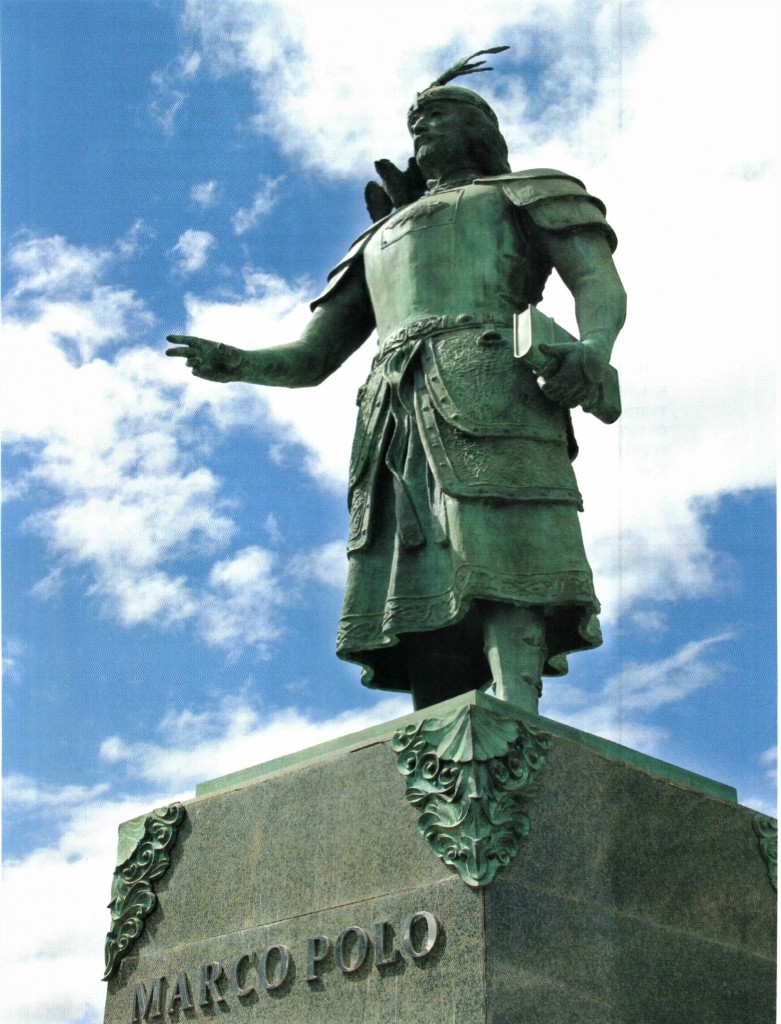
Marco Polo was a Venetian merchant and traveler who journeyed across Asia with his father, Niccolò, and uncle, Maffeo. His narrative describes extensive travel through territories connected to the Mongol Empire and the court of Kublai Khan, the Yuan emperor who ruled China from the late thirteenth century.
Polo’s association with the Mongol imperial world gave his narrative a distinctive position in European literature. Unlike writers who described Asia primarily through inherited classical traditions, religious accounts, or secondhand geographical compilations, Polo claimed extensive familiarity with Asian societies, commercial networks, political authorities, and customs.
His account was dictated to Rustichello da Pisa while the two men were prisoners in Genoa, traditionally dated to approximately 1298. The surviving textual tradition is complex: the original version does not survive, and the narrative circulated through numerous manuscripts, translations, and later editions.
Consequently, the Travels should not be treated as a single, perfectly preserved eyewitness report. It is a historical text whose claims must be evaluated in relation to its transmission, its narrative conventions, and the sources of its information.
Polo’s proximity to the Mongol imperial world nevertheless matters. The Yuan Empire connected regions through diplomacy, commerce, military campaigns, and networks of officials and travelers. Information about distant territories could travel through these channels even when the person recording it had never visited the place being described.
Japan entered Polo’s narrative through this wider world of transmitted knowledge.
3. Cipangu: The Image of a Country Rich in Gold
Polo’s description of Cipangu contains several recurring themes: geographical distance, political independence, abundant gold, and extraordinary royal wealth.
He writes that the island possessed gold in seemingly inexhaustible quantities and explains that its ruler restricted the export of this precious metal. He then describes the royal palace as covered in gold, comparing its roof to the lead-covered roofs of European churches.
The description reaches beyond ordinary claims about mineral resources. Gold becomes the defining characteristic of the country and the principal measure of its prosperity. The palace, in particular, transforms an account of wealth into an image of almost unimaginable magnificence.
Yet the passage itself provides an important clue about the reliability of the information. When introducing the palace’s riches, Polo attributes the description to people who knew the country. This wording indicates that at least some of the information came from reported testimony rather than his own direct observation.
The distinction is fundamental. Polo’s description is evidence that accounts of Japan’s wealth circulated through the information networks available to him. It is not, by itself, proof that Japan possessed a palace matching his description or that its gold reserves were as limitless as his narrative suggests.
Historical research must therefore separate three questions:
What did Polo’s text claim about Japan?
What information could have reached him through Asian commercial, diplomatic, or courtly networks?
How closely did those reports correspond to conditions in Japan itself?
The first question can be answered directly from the text. The second requires contextual research, while the third demands comparison with Japanese, Chinese, Korean, and other historical evidence.
This approach does not diminish Polo’s significance. It identifies the precise historical value of his account.
4. From Reported Information to European Geographical Knowledge
Polo’s description of Cipangu became significant because it entered a literary environment in which Europeans possessed limited direct knowledge of East Asia.
His narrative offered readers a detailed image of a distant island associated with independence, wealth, and royal magnificence. The account also placed Japan within a wider geographical picture of Asian kingdoms, maritime routes, and commercial opportunities.
The influence of such literature extended beyond the immediate question of whether every detail was accurate. Travel narratives helped readers imagine places they could not visit, supplied geographical names to mapmakers and compilers, and encouraged later readers to consider the practical possibilities of reaching distant regions.
The textual transmission of Polo’s work is therefore central to its historical importance. The Travels circulated in multiple manuscript versions and eventually appeared in printed editions. Its descriptions became available to readers who had no personal experience of Asia and who relied on books, maps, merchants’ reports, and other forms of mediated knowledge.
Polo’s Cipangu was consequently both a geographical reference and a literary image. Its reputation depended not only on what might have existed in Japan but also on how the description was repeated, interpreted, and incorporated into European ideas about the East.
This distinction is especially important when studying the development of European geographical imagination. A place could influence exploration through the expectations associated with its name even when those expectations were exaggerated or only partially grounded in reality.
5. Cipangu and Christopher Columbus
The relationship between Polo’s description of Japan and Christopher Columbus’s Atlantic voyage is one of the most compelling aspects of this history.
By the late fifteenth century, Columbus sought a westward maritime route to Asia. His geographical expectations were shaped by inherited ideas about the size of the Earth, the distances separating Europe from Asia, and the locations of Asian lands described in earlier literature.
The image of Cipangu as an exceptionally wealthy island formed part of the body of geographical knowledge available to Europeans contemplating routes to Asia. The prospect of reaching the riches of the East helped sustain the commercial appeal of maritime exploration.
William R. Nester’s discussion of early European-Japanese relations identifies the connection between Polo’s account, the European image of a gold-rich Cipangu, and Columbus’s search for Asia. This connection is historically meaningful, but it should not be reduced to the claim that a single passage in Polo’s book caused Columbus to undertake his voyage.
Columbus’s plans emerged from a combination of geographical calculations, inherited authorities, commercial expectations, and personal ambitions. Polo’s narrative was one element in that intellectual environment rather than a sufficient explanation for the expedition.
It is also important to distinguish Columbus’s expectations from the actual results of his voyage. In 1492, he crossed the Atlantic but did not reach Japan. His journey instead initiated sustained European contact with the Americas, transforming the geographical context in which earlier accounts of Asia would subsequently be interpreted.
Cipangu thus illustrates a broader historical process: geographical expectations could motivate exploration even when the information supporting them was incomplete, exaggerated, or misunderstood.
6. The Limits of Polo’s Account
A critical reading of Marco Polo must acknowledge the limitations of medieval travel literature.
First, Polo did not personally visit Japan. His description of Cipangu should therefore be treated as reported geographical knowledge rather than eyewitness testimony.
Second, the claim of extraordinary gold wealth may reflect exaggeration, the selective transmission of information, or a narrative convention that emphasized the wonders of distant lands. Establishing the precise origin of each detail requires further evidence.
Third, the surviving versions of the Travels differ. Modern readers often encounter the narrative through later translations and editions, which may introduce editorial decisions and interpretive differences. Quotations should therefore identify the edition and translator used.
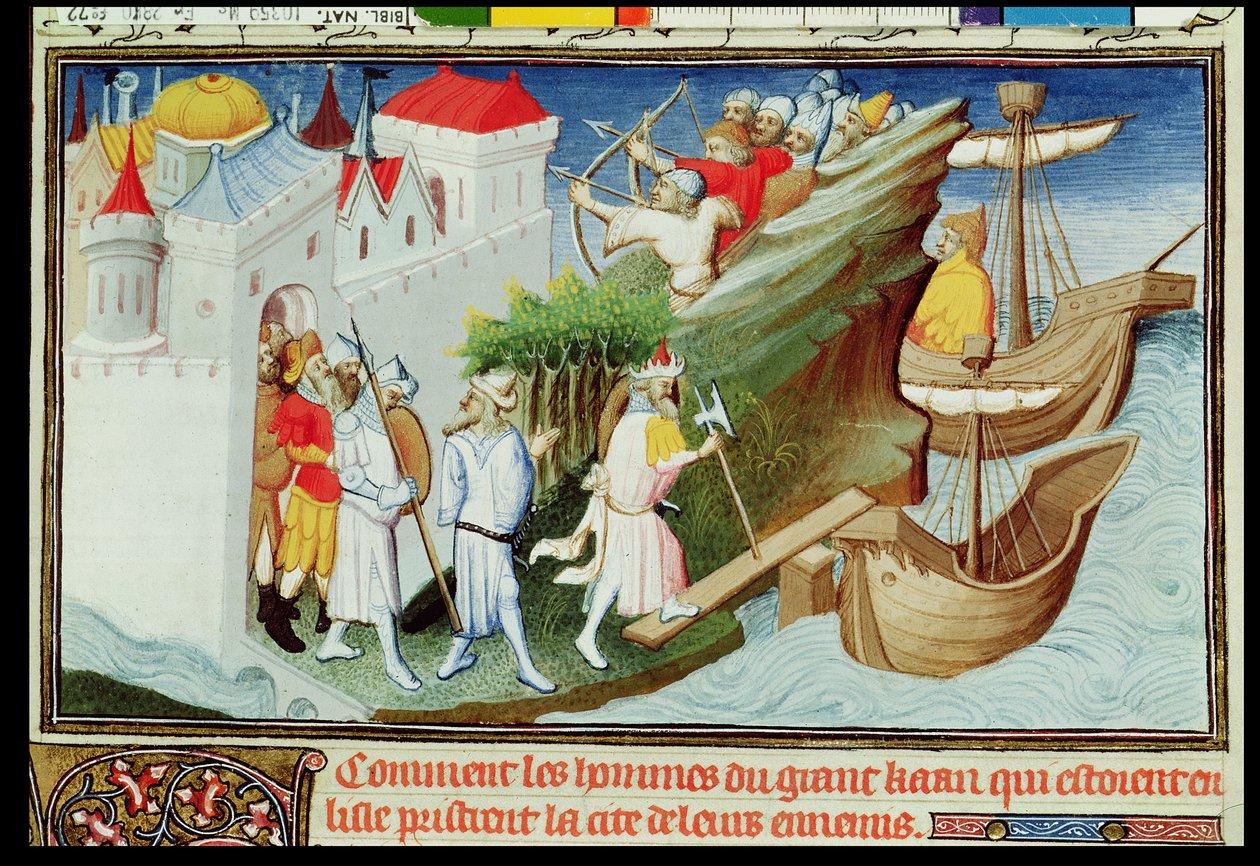
Finally, Polo’s account cannot independently establish the motives behind Kublai Khan’s attempts to conquer Japan in 1274 and 1281. Japan’s reported wealth may be relevant to a discussion of imperial interest, but it does not prove that gold was the decisive cause of either expedition. The emperor’s strategic calculations must be examined through Mongol-Yuan records, Japanese and Korean sources, diplomatic correspondence, and modern historical scholarship.
These limitations make source criticism indispensable. They also demonstrate why Polo’s account should be studied alongside other evidence rather than accepted or dismissed as a whole.
7. Historical Significance: The Power of an Unvisited Place
The significance of Cipangu lies not simply in whether Polo accurately described Japan’s resources. It lies in the way his narrative helped make a distant country imaginable within European intellectual and commercial life.
Through his account, Japan appeared as a sovereign island kingdom with immense wealth and a distinctive political identity. The description supplied European readers with a memorable geographical image that could be transmitted across generations.
That image reveals an important feature of historical knowledge: information does not need to be entirely accurate to have consequences. Reports about distant places can influence expectations, encourage commercial interest, and shape decisions long after the original information has been recorded.
Polo’s account also demonstrates that medieval Eurasia was not a collection of isolated civilizations. Information traveled through interconnected networks of merchants, envoys, rulers, and travelers. A description of Japan could reach a Venetian writer through channels operating within the Mongol imperial world and later enter European discussions of geography and exploration.
The story of Cipangu is therefore part of a larger history of how knowledge moved between Asia and Europe—and how that knowledge was transformed as it crossed cultural, linguistic, and geographical boundaries.
8. Conclusion
Marco Polo’s account of Cipangu occupies an important place in the history of European perceptions of Japan. His description of an independent island rich in gold, crowned by a magnificent royal palace, gave European readers a striking image of a country that few could directly observe.
Polo did not witness Japan’s landscapes or royal institutions firsthand. His narrative instead preserves information that circulated through the interconnected world of late thirteenth-century Asia. Its historical value lies in both the claims it records and the insight it provides into the transmission of geographical knowledge.
The later association between Cipangu and European maritime exploration illustrates the potential consequences of such descriptions. Polo’s account formed part of the geographical imagination within which Columbus and other Europeans considered the possibility of reaching Asia by sea. It did not single-handedly determine their decisions, but it helped sustain the image of the East as a region of extraordinary opportunity.
Ultimately, the history of Cipangu is not merely a story about gold. It is a story about the relationship between information and imagination, between reported knowledge and historical reality, and between the medieval networks that connected Asia and Europe and the voyages that later reshaped their relationship.
A distant country did not need to be visited to become influential. Sometimes, the image of a place was enough to change how people imagined the world—and where they chose to sail.
References
Cruse, Mark. “A Quantitative Analysis of Toponyms in a Manuscript of Marco Polo’s Devisement du monde (London, British Library, MS Royal 19 D 1).” Speculum 92, no. S1 (2017). https://doi.org/10.1086/694170.
Nester, William R. “European Community-Japan Relations.” In European Power and the Japanese Challenge, 191–254. Palgrave Macmillan, 1993. https://doi.org/10.1007/978-1-349-12995-9_6.
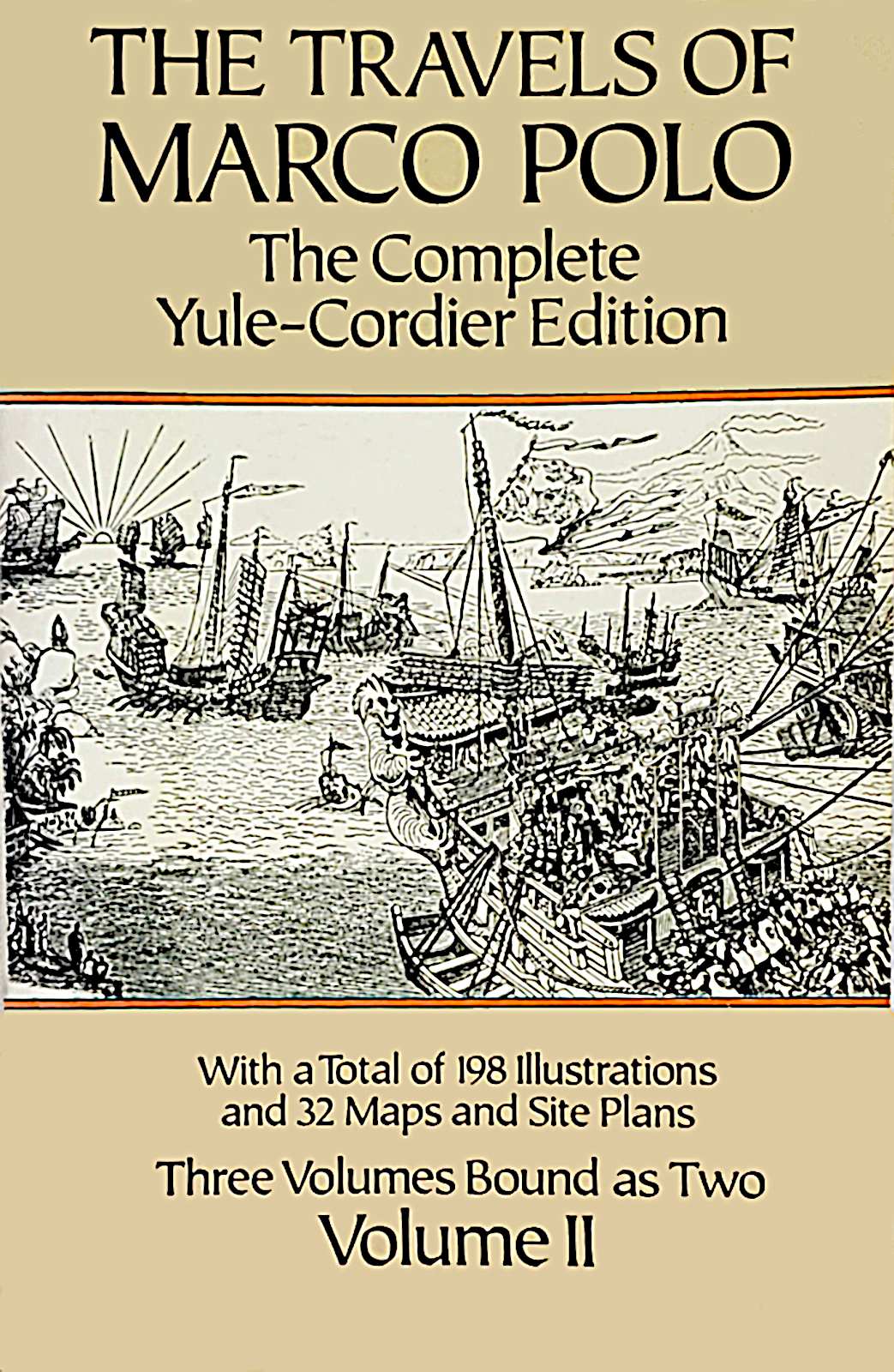
Polo, Marco. The Travels of Marco Polo. Translated and edited by Henry Yule; revised by Henri Cordier. 3rd ed., 1903. Complete Yule-Cordier edition, digitized by Project Gutenberg. See vol. II, Book III, chapters II–III. https://www.gutenberg.org/files/12410/12410-h/12410-h.htm.
Kowner, Rotem. From White to Yellow: The Japanese in European Racial Thought, 1300–1735. McGill-Queen’s University Press, 2014. https://www.jstor.org/stable/j.ctt130hch6.
Source note
The primary text for this article is Marco Polo’s Travels, especially Book III, chapters II and III, concerning Cipangu and Kublai Khan’s expedition against it. The modern works by Cruse, Nester, and Kowner provide scholarly context for the transmission of geographical knowledge and the development of European representations of Japan. Claims about the causes of the Mongol invasions, the actual extent of Japanese gold resources, and the specific influence of Polo on Columbus require additional corroboration from contemporary records and specialist historical studies.