
THE MONGOL INVASIONS OF JAPAN, 1274 AND 1281
By Altanbagana Baatar
DBA Candidate| Founder & Organizer
Heavenly Wind 750 International Conference
Heavenlywind750.com | Imperilagg.com
26 October 2026
A YUAN-DYNASTY PERSPECTIVE
ABSTRACT
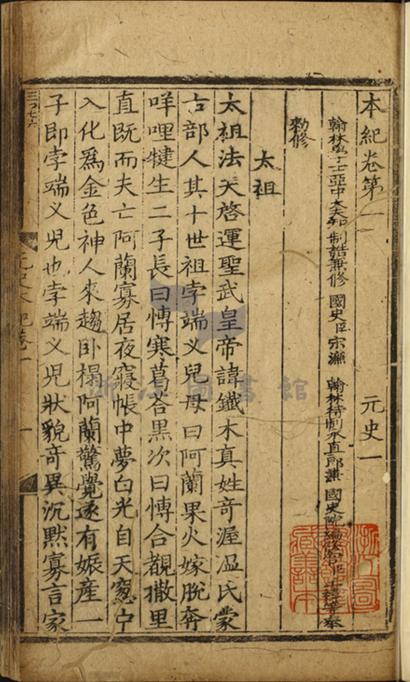
The Mongol-led expeditions against Japan in 1274 and 1281 were among the most consequential military operations of thirteenth-century East Asian history. Yet their historical interpretation has frequently been dominated by Japanese narratives of national defense, the celebrated exploits of individual warriors, and the later legend of the kamikaze, or “divine wind.” A fuller reconstruction requires close examination of the records produced within the Yuan dynasty and comparison with Korean and Japanese sources.
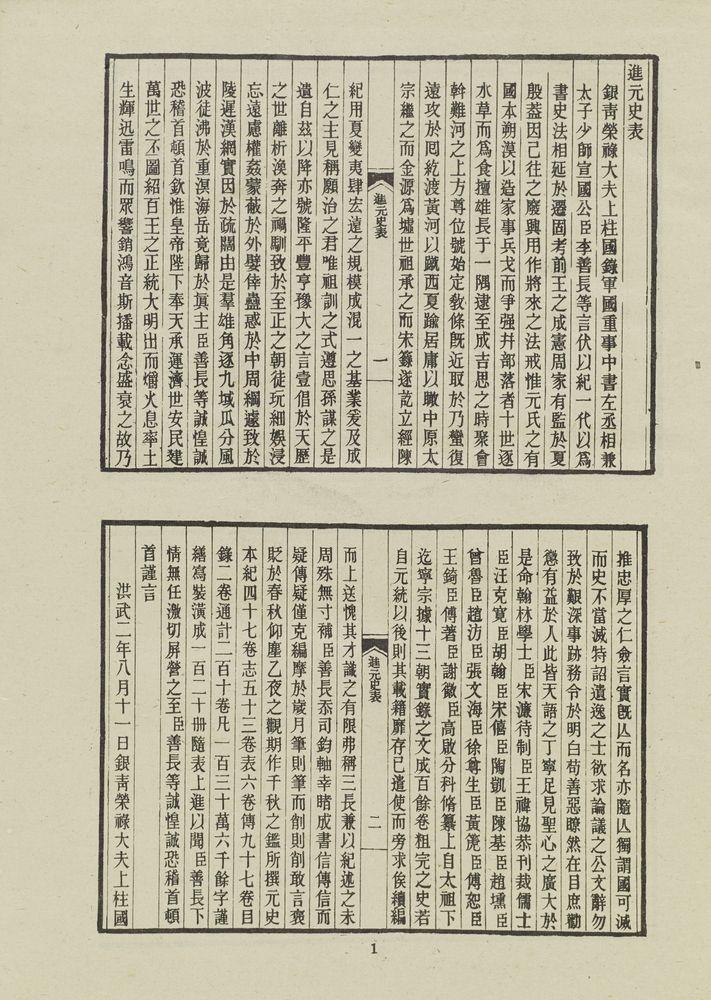
This article examines the two expeditions through the Yuan historical tradition, particularly the Yuanshi (元史, History of Yuan), while drawing on modern scholarship concerning diplomatic negotiations, military logistics, maritime operations, and the transmission of historical memory. It argues that the invasions should be understood not as isolated attempts to conquer an island nation, but as operations arising from the political relationships among the Yuan court, Goryeo Korea, and the Kamakura shogunate. It further argues that the Yuan account must be read critically: although indispensable, it was compiled under the succeeding Ming dynasty and does not provide an unmediated transcript of every event.
The distinction between the 1274 withdrawal and the catastrophic maritime losses of 1281 is essential. So, too, is the distinction between evidence for the historical events and later interpretations that transformed them into symbols of divine protection or national identity.
Keywords: Yuan dynasty; Kublai Khan; Mongol Empire; Japan; Goryeo; Yuanshi; 1274 invasion; 1281 invasion; maritime history; kamikaze.
I. INTRODUCTION: WHY THE YUAN RECORDS MATTER
In 1274 and 1281, forces organized under the authority of Kublai Khan, ruler of the Yuan dynasty, crossed the sea toward Japan. Their expeditions involved Mongol imperial power, Korean manpower and maritime resources, Chinese personnel and ships, and military forces assembled across different regions of East Asia. The campaigns were therefore not simply encounters between “Mongols” and “Japanese.” They were complex multinational operations within an imperial political system.
The National Archives of Japan identifies the two expeditions as attacks by allied Yuan and Goryeo forces and preserves materials relating to the diplomatic correspondence that preceded the first invasion. These records demonstrate that the military operations were preceded by years of negotiation and demands for formal relations. Japan’s refusal to accept the Yuan court’s diplomatic overtures formed part of the political context in which the expeditions developed.
For the historian, the central question is not merely why the invasions failed. It is how the available records explain their planning, execution, difficulties, and eventual termination.
The Yuan historical tradition is indispensable to that investigation. It offers a perspective different from Japanese warrior narratives and temple accounts. Yet it must not be treated as an entirely transparent account of events. The Yuanshi was compiled in 1369–1370 under the early Ming dynasty, approximately a century after the campaigns. Its entries preserve information from earlier records, but the work also reflects the circumstances and conventions of dynastic historiography.
A rigorous study must therefore distinguish three levels of evidence:
Contemporary or near-contemporary evidence: diplomatic documents, court diaries, administrative records, and accounts associated with participants.
Later historical compilations: including the Yuanshi and the Goryeosa (History of Goryeo), which preserve earlier information but were compiled after the events.
Retrospective interpretations: including later religious narratives, warrior commemorations, and national histories that assigned broader meanings to the invasions.
This distinction is fundamental to understanding what the sources establish—and what remains uncertain.
II. THE YUAN COURT AND THE DIPLOMATIC ROAD TO WAR
The invasions did not begin with the appearance of fleets off the Japanese coast. They emerged from a prolonged diplomatic process shaped by the Yuan court’s expansion and its efforts to establish recognized political relationships across East Asia.
Following the Mongol conquest of Goryeo, the Korean kingdom occupied a strategically important position between the Yuan imperial center and Japan. It provided access to maritime routes, shipbuilding capacity, sailors, soldiers, and logistical support. Consequently, Goryeo was not merely a geographical passageway. It was an essential participant in the political and military arrangements surrounding the expeditions.
The Yuan court sought to establish relations with Japan through diplomatic missions and formal communications. The surviving Japanese archival materials include a copy of an imperial letter associated with Kublai Khan’s diplomatic initiative. The correspondence sought communication and friendly relations while also conveying the possibility of military consequences if the request was rejected.
The Japanese response was shaped by the political structure of medieval Japan, in which the imperial court and the Kamakura shogunate did not occupy identical positions of authority. The refusal to establish the relationship demanded by the Yuan court should therefore be considered within the broader political circumstances of both states.
Lina Nie’s study, “Before the Storm: A Transrealm History of the Decades Leading Up to the First Mongol Invasion of Japan,” emphasizes the importance of the negotiations preceding the 1274 expedition. By examining Mongol, Korean, and Japanese evidence together, Nie demonstrates why the history cannot be adequately explained through a narrative concerned exclusively with Mongol expansion or the final battles.
The diplomatic background changes the historical question. Rather than asking only why Kublai Khan attacked Japan, we must investigate how imperial expectations, diplomatic refusals, strategic calculations, and the political position of Goryeo combined to make military intervention appear possible or necessary to the Yuan court.
The surviving evidence does not justify reducing this process to a single motive. Imperial prestige, political submission, strategic security, and the extension of Yuan authority all require consideration.
III. THE FIRST EXPEDITION, 1274: AN OPERATION THAT DID NOT ACHIEVE ITS OBJECTIVE
The first expedition reached the Japanese islands in October 1274. Yuan-led forces attacked Tsushima and Iki before reaching the Hakata Bay region of northern Kyushu.
The Japanese warrior Takezaki Suenaga later recorded his own participation in the fighting through the illustrated scroll known as the Mōko Shūrai Ekotoba, or Illustrated Account of the Mongol Invasions. The scroll provides important evidence concerning battlefield encounters, warrior conduct, weapons, and the pursuit of military recognition.
However, Suenaga’s account is not a comprehensive operational history. It was concerned substantially with his own actions and achievements. It must be read alongside other evidence rather than used as a complete representation of the entire campaign.
The 1274 expedition did not establish Yuan control over Japan. The forces withdrew, leaving historians to consider the relationship between battlefield resistance, military losses, command decisions, maritime conditions, and the expedition’s objectives.
One important methodological caution concerns the role of weather. Later accounts sometimes place both invasions within a single narrative in which storms saved Japan from conquest. Yet the circumstances of the two withdrawals must be examined separately. Evidence concerning the devastating storm associated with the 1281 campaign cannot automatically be transferred to 1274.
Thomas D. Conlan’s research on the invasions challenges interpretations that attribute the outcome primarily to divine or meteorological intervention. His work encourages historians to examine the military situation and the evidence for the decisions made by the expeditionary forces.
The first expedition should therefore be understood as a failed attempt to achieve its political and military objective, not simply as a battle interrupted by a miraculous storm.
A careful reconstruction must ask what the Yuan records say about the operation’s termination, what other contemporary sources reveal about losses and resistance, and whether the available evidence supports the explanation adopted by later historians.
IV. THE SECOND EXPEDITION, 1281: IMPERIAL AMBITION AND MARITIME LOGISTICS
The second expedition was considerably larger and more complicated than the first. It required the coordination of forces and resources from different regions, including the Korean peninsula and southern China.
The campaign involved distinct military formations commonly identified in modern scholarship as the Eastern Route Army and the Jiangnan Army. Their operations depended on assembling troops, preparing vessels, transporting provisions, coordinating schedules, and bringing separate forces together across a difficult maritime environment.
These requirements created vulnerabilities that could not be resolved by numerical superiority alone.
An expeditionary force operating across the sea faced challenges different from those encountered by a land army. Troops and horses required transport; food and equipment had to be supplied; ships had to remain seaworthy; commanders needed to coordinate movements over considerable distances; and delays could disrupt the entire operational plan.
The second expedition’s failure must be considered against this logistical background.
The Yuan records are particularly important because they preserve a court-centered account of the campaign and its aftermath. Nevertheless, the historian must examine individual entries in context. An official report about a commander’s actions, a court judgment concerning responsibility, and a later dynastic summary do not necessarily serve the same purpose.
The distinction matters when interpreting the reports associated with commanders such as Fan Wenhu (范文虎) and the officers responsible for the different expeditionary formations. Their actions and the explanations for the campaign’s failure should be reconstructed by comparing the relevant passages of the Yuanshi with Korean and Japanese evidence.
The storm of 1281 caused catastrophic losses among the expeditionary fleet. But the existence of a devastating storm does not, by itself, explain every aspect of the campaign’s failure. The timing of the fleet’s movements, the coordination of its component forces, the condition of the ships, and the Japanese defensive response remain essential elements of the analysis.
The central historical issue is thus broader than whether a storm occurred. It is how a major imperial expedition, despite the resources assembled for it, proved unable to achieve its strategic objective.
V. READING THE YUANSHI: VALUE AND LIMITATIONS
The Yuanshi is an essential starting point for investigating the Yuan court’s perspective, but it must be used with source-critical discipline.
First, it was compiled under the Ming dynasty after the fall of the Yuan. Its accounts should not automatically be treated as verbatim contemporary testimony. The compilers drew on earlier materials, but the relationship between the surviving text and the original administrative records must be considered wherever possible.
Second, a dynastic history is not a modern campaign report. Its purpose was to organize the history of a ruling house through political, military, institutional, and biographical categories. Its treatment of an expedition may therefore emphasize imperial decisions, officials’ conduct, administrative consequences, or the attribution of responsibility.
Third, the Yuan account represents only one side of the historical record. It cannot independently establish every Japanese battlefield experience, every Korean logistical difficulty, or every maritime event. Those questions require comparison with other documentary traditions.
Finally, the terminology of the sources requires attention. The political categories used by medieval imperial administrations do not always correspond neatly to modern national identities. The Yuan expedition was organized under imperial authority but involved people from different regions and political communities. Calling every participant simply “Mongol” may obscure the composition of the forces and the responsibilities of the institutions involved.
These limitations do not diminish the importance of the Yuanshi. On the contrary, they clarify how it should be used: as a foundational historical source whose evidence becomes more powerful when tested against other records.
VI. COMPARING YUAN, GORYEO, AND JAPANESE EVIDENCE
A comparative approach offers a more reliable reconstruction than reliance on a single narrative.
The Yuanshi provides a dynastic account of imperial decisions, military operations, officials, and the aftermath of the campaigns. The Goryeosa preserves a Korean historical perspective on a kingdom deeply involved in the expeditions. Japanese sources include court records, warrior accounts, religious narratives, and later historical compilations.
Each tradition has its own strengths and limitations.
The Japanese illustrated scroll of Takezaki Suenaga is especially valuable for studying individual warrior experience. It records scenes associated with the two invasions and reveals how a participant represented his military service. However, it should not be mistaken for an objective visual record of every phase of the campaigns.
The scroll’s transmission history also complicates its use. Modern scholarship has shown that the work was copied, restored, and altered over time. Giuseppina Aurora Testa’s study of the Mōko Shūrai Ekotoba examines how later changes to the depictions of foreigners reflected evolving Japanese ways of imagining and representing outsiders.
This is a reminder that historical sources have histories of their own. A document can preserve information about a thirteenth-century event while also reflecting the concerns of the people who copied, interpreted, and modified it in later centuries.
The same critical principle applies to the Yuan and Goryeo historical traditions. Their accounts should be examined not only for the events they describe, but also for the institutional purposes and historical circumstances through which those events reached us.
A comparative analysis should therefore proceed passage by passage. Where the Yuan record mentions a commander, the Korean record may illuminate the mobilization of forces or the burdens placed on Goryeo. Where the Japanese scroll emphasizes a warrior’s conduct, other records may clarify the larger operational context. Where a later narrative attributes an outcome to divine intervention, earlier evidence may help establish what can actually be said about the weather and the military situation.
Agreement between independent sources can strengthen a historical conclusion. Disagreement is equally important: it may reveal differences in perspective, political interest, chronology, or the preservation of evidence.
VII. THE “DIVINE WIND”: EVENT, INTERPRETATION, AND MEMORY
The Japanese term kamikaze, commonly translated as “divine wind,” became closely associated with the failure of the Mongol-led expeditions. The storms of 1281, in particular, acquired enduring religious and cultural significance.
Yet three separate questions must be distinguished.
First: What happened? This is a question of historical reconstruction. It requires evidence concerning weather, ship movements, military operations, losses, and the timing of the withdrawal.
Second: How did people interpret the event? Medieval religious institutions and communities could understand the outcome through beliefs about divine protection, ritual, and the relationship between the sacred and political authority.
Third: How was the event remembered in later centuries? The story of the invasions was repeatedly adapted to new circumstances and used to articulate ideas about Japan’s identity, its relationship with outsiders, and the meaning of national survival.
Judith Vitale’s 2024 study, The Historical Writing of the Mongol Invasions in Japan, traces the changing representation of these events across later periods. Her work demonstrates that the historical memory of the invasions cannot be separated from the political and cultural contexts in which writers and institutions recalled them.
The notion of a divine wind should therefore be studied as both a historical interpretation and a developing tradition of memory. Its importance does not require historians to accept divine intervention as a demonstrated cause of the campaigns’ failure.
Nor should the famous storm of 1281 overshadow the military and logistical evidence. A historical explanation must account for the human decisions and material circumstances through which an expedition succeeded or failed.
VIII. BEYOND A TWO-NATION NARRATIVE
The invasions are often presented as a confrontation between the Mongol Empire and Japan. Although this framing captures the broad political opposition, it can obscure the wider East Asian system in which the campaigns took place.
Goryeo’s position was especially important. Its territory, ports, shipbuilding resources, sailors, and military manpower contributed to the operations. The Korean kingdom also had its own political relationship with the Yuan court, which shaped its participation.
Likewise, the Yuan forces should not be treated as a homogeneous body of Mongol warriors. They belonged to a large imperial military system that drew on different populations and regional resources.
A transregional approach makes it possible to examine the campaigns as connected histories of empire, diplomacy, warfare, maritime technology, and political negotiation.
This approach also changes the meaning of the invasions. Their failure was not merely a Japanese victory or a Mongol defeat in isolation. It was the outcome of a complex interaction between imperial strategy, allied participation, local resistance, logistical constraints, and maritime conditions.
The historical significance of the campaigns lies partly in the limits they exposed within a powerful empire’s ability to project military force across the sea.
IX. CONCLUSION: WHAT THE CHINESE RECORDS CAN TELL US
The Yuan dynasty’s historical tradition provides an indispensable starting point for understanding the invasions of Japan in 1274 and 1281. It allows historians to investigate the campaigns from the perspective of the imperial government that organized them, while comparison with Korean and Japanese evidence helps reveal the limits of any single narrative.
The first expedition must be examined through its own operational circumstances, including the resistance encountered and the reasons for its withdrawal. The second must be studied as a much larger maritime operation whose failure involved the interaction of military coordination, logistical challenges, Japanese defense, and a devastating storm.
Neither campaign can be adequately explained through a simple story of Mongol invincibility or Japanese divine protection. Both require close attention to the evidence, its origins, and its later interpretation.
For Heavenly Wind 750, the broader lesson is methodological as well as historical. The events of the thirteenth century should be studied through the convergence of documentary history, maritime archaeology, environmental research, military analysis, and the critical study of historical memory.
The Yuan, Goryeo, and Japanese records do not always tell the same story. Their differences are not obstacles to historical inquiry; they are among its most valuable resources.
A rigorous history of the invasions begins not by choosing one national narrative over another, but by asking what each source can establish, what it leaves unanswered, and how independent evidence can bring the larger picture into focus.
The past becomes clearer when its surviving voices are examined together.
SELECTED BIBLIOGRAPHY
Primary and historical source collections
Yuanshi 元史 (History of Yuan). Compiled under the early Ming dynasty, 1369–1370. The foundational dynastic history for the Yuan period. Relevant campaign entries should be verified against the Chinese text and its edition.
Goryeosa 高麗史 (History of Goryeo). A Korean historical compilation completed in the fifteenth century, preserving material relevant to Goryeo’s political and military involvement.
Mōko Shūrai Ekotoba 蒙古襲来絵詞 (Illustrated Account of the Mongol Invasions). A Japanese illustrated warrior narrative associated with Takezaki Suenaga.
Modern scholarship
Conlan, Thomas D. In Little Need of Divine Intervention: Takezaki Suenaga’s Scrolls of the Mongol Invasions of Japan. Cornell East Asia Series 113. Ithaca, NY: Cornell University East Asia Program, 2001.
Conlan, Thomas D. “Myth, Memory, and the Scrolls of the Mongol Invasions of Japan.” Princeton University research paper. Available through the author’s Princeton University research page: https://tconlan.scholar.princeton.edu/document/41
Nie, Lina. “Before the Storm: A Transrealm History of the Decades Leading Up to the First Mongol Invasion of Japan.” Monumenta Nipponica 78, no. 2 (2023): 157–187. https://dept.sophia.ac.jp/monumenta/article/before-the-storm-a-transrealm-history-of-the-decades-leading-up-to-the-first-mongol-invasion-of-japan/
Testa, Giuseppina Aurora. “‘Mōko Shūrai Ekotoba’ (Illustrated Handscroll of the Mongol Invasions): A Case Study of Encounter with the Other in Japan.” Eikón / Imago 9, no. 1 (2020): 35–57. https://doi.org/10.5209/eiko.73275
Vitale, Judith. The Historical Writing of the Mongol Invasions in Japan. Harvard East Asian Monographs 474. Cambridge, MA: Harvard University Asia Center, 2024. https://doi.org/10.2307/jj.29895196
Archival resources
National Archives of Japan. “Japan and Mongolia—Our History through Archival Records: Relations in the Thirteenth Century.” https://www.archives.go.jp/about/activity/international/jp_mn50/english/ch01.html
Princeton University. “Scrolls of the Mongol Invasions of Japan.” Manuscript, Rare Book and Archive Studies. https://marbas.princeton.edu/resource-links/scrolls-mongol-invasions-japan
Editorial note: This article establishes the comparative framework and identifies the principal sources. Before publication as a fully documented source study, exact Yuanshi chapter and passage references, original Chinese quotations, and page-specific citations should be verified against a reliable edition. No reconstructed Chinese quotation is presented here as a verbatim primary-source passage